
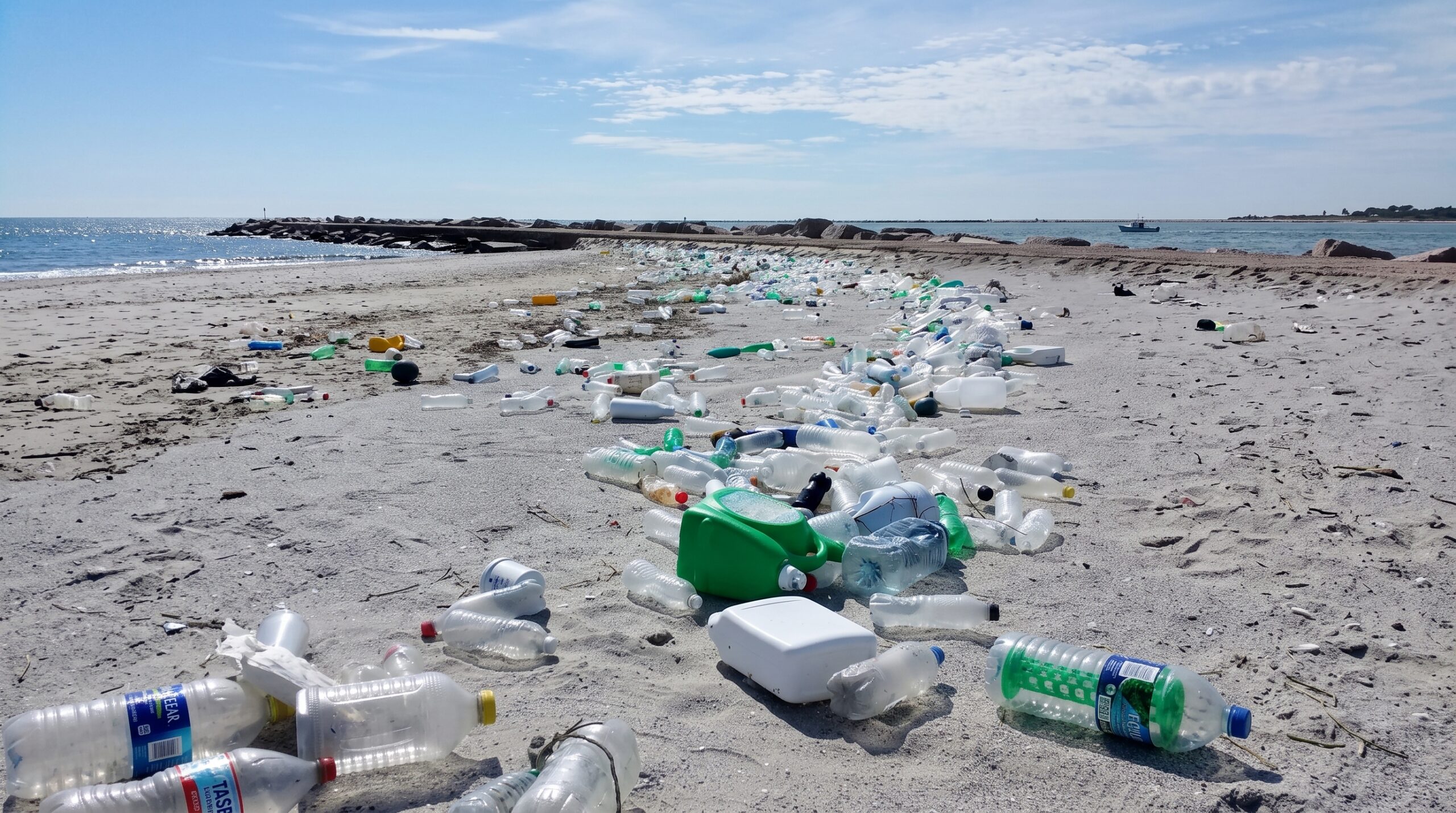
Waco and Corpus Christi both started new budget years on Oct. 1. Both cities spend real money every year picking up litter and illegally dumped trash — enough that Corpus Christi’s compliance team hauled away 1,181 tons of dumped trash and 429 tires in 2025 alone, according to city figures reported by KRIS.
Neither city, and neither of the counties around them, can say what any of it costs. The money is real. The number is not written down anywhere.
In Waco, litter and dumping cleanup is folded into the city’s roughly $40 million Solid Waste Fund, the same account that pays for garbage trucks, the landfill and recycling — with no separate line for litter or dumping. McLennan County’s budget has no line for it at all. The county’s own environmental-crimes webpage says dumping “costs property owners, taxpayers, and local governments millions of dollars each year.” Waco’s new budget year opened with property tax rates held flat but water, wastewater, solid waste, drainage and street fees rising by about $82 a year for the average homeowner, according to Waco Bridge’s coverage of the budget.
Corpus Christi’s gap works differently. Its Solid Waste Services fund — which covers litter, dumping cleanup and the city’s Litter Critter beach program along with routine trash and recycling collection — spent $48.17 million in the fiscal year that just ended, about $910,000 more than its $47.26 million budget, according to the city’s own fourth-quarter budget and performance report.
But the officers who write up illegal-dumping cases sit in a separate department, Code Compliance, whose $3.74 million budget covers every kind of code violation, not just dumping — and whose monthly reports log illegal dumping as zero every month, because Code Compliance handles the paperwork while Solid Waste Services crews haul the trash away, and the two don’t share a combined cost figure. It is possible to report a number like this: Houston’s solid waste budget carries illegal dumping as its own $1.2 million line, on top of an $11.5 million contracted “Rapid Cleanup” program for heavy trash and dumping, according to city budget and program documents cited in a Texans for Clean Water report on Houston. Waco, McLennan County, Corpus Christi and Nueces County do not break out an equivalent number.
The Texas Dispatch tried to reconstruct the missing number anyway. The starting point is the only study that has ever measured this in Texas cities: a 2017 report by the engineering firm Burns & McDonnell, which priced what nine Texas cities — Austin, Corpus Christi, El Paso, Fort Worth, Houston, Laredo, Lufkin, Midland and San Antonio — actually spent on litter and dumping programs in 2015.
Corpus Christi’s own reported cost that year worked out to $5.22 per resident; the nine-city average was $7.23. The study flagged Corpus Christi’s own abatement and enforcement figures as incomplete even then. Adjusted for inflation to 2026 dollars — using the federal consumer price index, a multiplier of about 1.41 — and applied the result to each city’s current population, arriving at a baseline of roughly $7.38 to $10.22 per resident depending on the city.
To that baseline, we added what we could independently document: the Texas Department of Transportation’s statewide roadside-litter budget, roughly $48 million to $50 million a year, allocated to each county by its share of the state’s population; Nueces County’s own stated $100,000-a-year dumping-cleanup budget; the county’s share of beach-sticker revenue that pays for Gulf-beach cleaning; and Keep Waco Beautiful’s own nonprofit spending, net of the roughly $100,000 grant the nonprofit gets from the city. Volunteer labor — the Saturdays residents spend pulling trash off the Brazos River or Texas beaches — is not counted in the dollar total at all, a gap the group calls a real cost with no dollar figure attached to it.
The result is a floor rather than a ceiling: roughly $1.8 million to $2.2 million a year for litter and dumping cleanup in the Waco area, and $3.0 million to $4.4 million a year in the Corpus Christi area, both before counting volunteer hours. The true number is higher, pointing to Corpus Christi’s own nine-figure budget overrun this year, city staff blaming rising plastic-resin costs for a 9 percent jump in the price of trash and recycling carts — detail The Texas Dispatch reported this month — and Nueces County officials’ own statement that the state reimburses only 2 to 4 percent of eligible beach-cleaning costs, leaving the rest as local spending that never shows up anywhere as “litter.”
Closing that gap does not require a new law, just more public records than currently exist: Corpus Christi Solid Waste Services’ itemized costs for dumping abatement and its Litter Critter program; the city’s Parks and Recreation Department’s annual cost to clean and maintain Corpus Christi’s Gulf beaches; Waco’s cost to run its dedicated alley crew and dumping-enforcement staff; Nueces County’s Coastal Parks operating budget and the reimbursements it has actually received from the Texas General Land Office; TxDOT’s litter-pickup spending broken out by district rather than reported only as a statewide total; and, from the regional councils of governments that distribute state cleanup grants in both areas — the Heart of Texas council serving Waco and McLennan County, the Coastal Bend council serving Corpus Christi and Nueces County — the dollar amounts each has actually awarded, which neither currently publishes.
Until one of those numbers becomes public, residents in both cities will keep paying for litter and dumping cleanup the same way they do now: through garbage bills, beach stickers and volunteer Saturdays, under a total nobody in either city government can currently put a price on.