
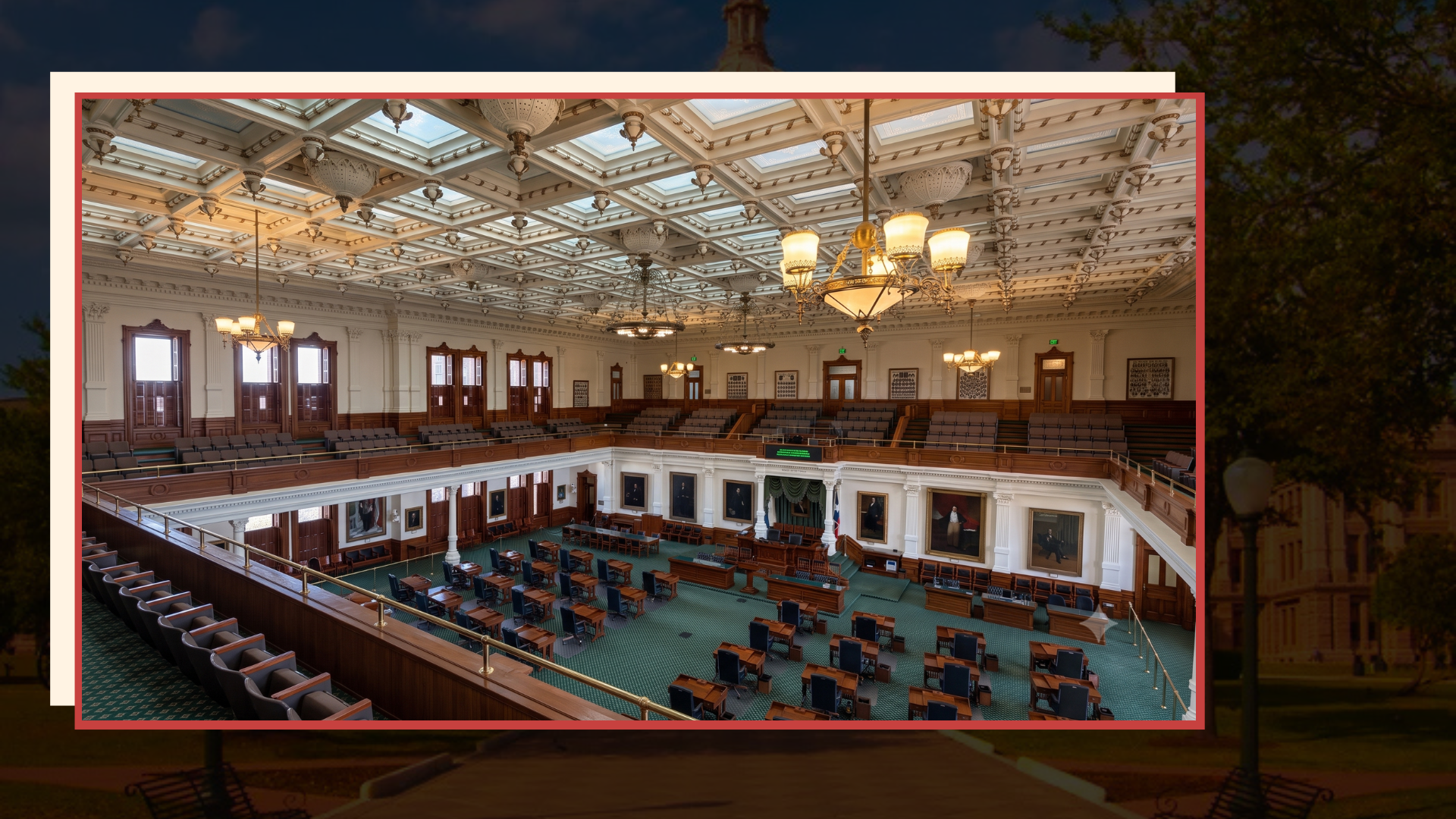
State Sen. Bob Hall filed Senate Bill 458 (90th Legislature) on Nov. 19, giving the Senate a bill that matches House Bill 1210, filed two days earlier by Rep. Helen Kerwin. Both would bar cities, counties, school districts and other local governments from spending public money on registered lobbyists to lobby the Legislature. Both would also void, on the day the law takes effect, any existing contract term that pays for that work.
The Texas Senate passed the same idea twice in 2025, and it died twice in the same House committee.
SB 458 would add a new section to the Government Code. Under the bill text, a “political subdivision,” a term covering local governments and taxing districts, could not spend public funds to hire or contract with anyone who must register as a lobbyist under state law to lobby legislators. It also could not pay dues or fees to a nonprofit association that mainly represents local governments if that association hires or contracts with a registered lobbyist. Groups that solely represent elected sheriffs or individual law enforcement officers are exempt.
The bill leaves several things alone. Local officials and employees could still give lawmakers information and testify before committees. Elected officials could still advocate for or against bills while acting in office. Local governments could reimburse officials’ and full-time employees’ direct travel costs. Full-time staff of associations could still track and analyze bills, send alerts and testify.
Enforcement would fall to residents. A taxpayer or resident could sue for an injunction to stop the spending and, if successful, recover attorney’s fees and costs from the local government.
The bill’s reach into existing deals is in its transition section. The ban would apply to any payment made after the effective date, “including” payments under contracts signed earlier, and any contract term providing for a prohibited payment “is void on the effective date of this Act.” The bill takes effect immediately with a two-thirds vote in each chamber, or Sept. 1, 2027, otherwise. Kerwin’s HB 1210 carries the same clause.
SB 458 also rewrites the law that lets commissioners courts pay dues to a statewide county association, making that permission subject to the new ban.
Senate Bill 19 by Mayes Middleton, then a state senator, passed the Senate March 19, 2025 and was referred to the House State Affairs Committee March 25, where it went no further. In the second special session that summer, Middleton’s Senate Bill 13 passed the Senate Aug. 19, 2025 and was sent to the same committee the next day, with the same result.
How much money is at stake is disputed and not reported in one public total. The Texas Public Policy Foundation, which favors a ban, estimated local governments and special districts spent $98.6 million on lobbyists in 2023, The Texas Tribune reported in July 2025. The Dispatch reported on an earlier foundation estimate in May. Such totals are estimates, and The Dispatch has not independently checked the foundation’s figure.
Supporters argue residents should not have to pay for lobbying they may oppose. “You have no choice, when you’re paying your property taxes, whether or not to pay for the lobbyists,” Middleton said in the 2025 debate, according to the Tribune. Opponents say the ban would weaken local governments’ voice in Austin. Allison Heyward, president of the Texas Municipal League and Schertz mayor pro tem, wrote that it “will prevent local officials from being able to effectively advocate for our residents,” the Tribune reported. Opponents also argued that smaller and far-flung communities cannot afford their own experts in Austin, the Tribune reported. The tension sits within a broader debate over local control.
Both bills await committee referral after the Legislature convenes in January. For the ban to become law, a House committee that has twice declined to act would have to move it.
Key facts
- SB 458 (Sen. Bob Hall) was filed Nov. 19, 2026; its House match, HB 1210 (Rep. Helen Kerwin), was filed Nov. 17, 2026.
- Both bar political subdivisions from paying registered lobbyists, or associations that use them, to lobby the Legislature; sheriffs’ and officers’ groups are exempt.
- Existing contract terms providing for prohibited payments would be void on the effective date (immediately with two-thirds votes, otherwise Sept. 1, 2027).
- The Senate passed versions in March 2025 (SB 19) and August 2025 (SB 13); both died in House State Affairs.
- The Texas Public Policy Foundation, which favors a ban, estimated $98.6 million in local-government lobby spending in 2023.