
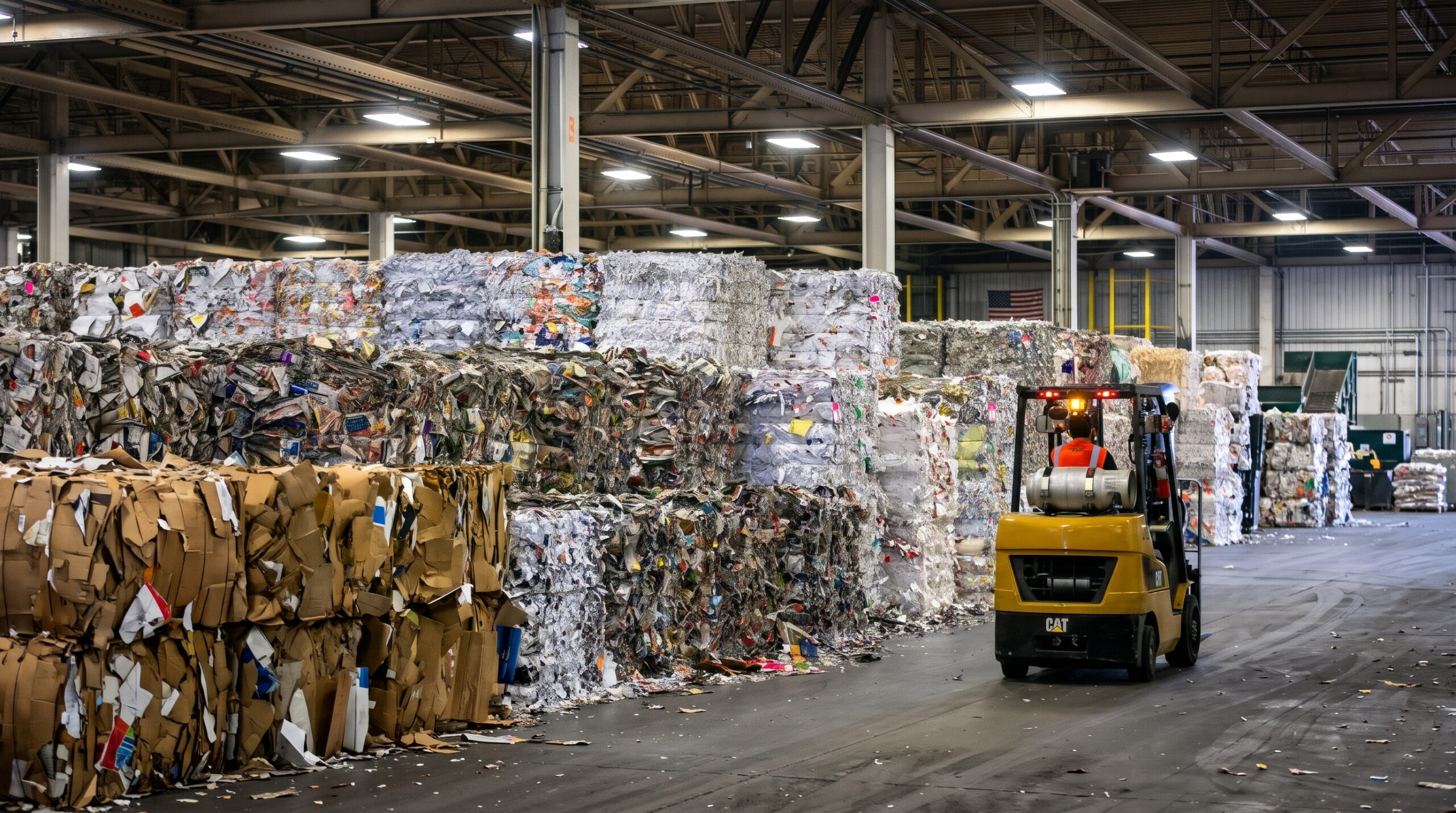
The Dallas City Council voted Nov. 10 to forgo about $3 million in recycling revenue over three years so the company that sorts the city’s curbside recycling can keep the plant running. The vote approved a third amendment to the city’s contract with FCC Environmental for the McCommas Bluff materials recovery facility, according to the council agenda and the transcript of the meeting video.
The change shows what weak markets for discarded paper, plastic and metal now cost Texas cities. Under the 2015 contract, Dallas earns money from its recycling plant, which city staff say is unusual. The amendment cuts the city’s share of revenue and host fees for three years, with two optional one-year renewals, and the agenda puts the lost revenue at about $3,000,000 from the city’s Sanitation Operation Fund.
The item was on the consent agenda, the list of routine items approved in one vote. Council Member Cara Mendelsohn pulled it for separate debate. Mayor Eric Johnson then called a voice vote; the clerk recorded two members voting no, Mendelsohn and Council Member Bill Roth, and the amendment passed.
Sanitation Director Cliff Gillespie told the council that FCC asked in writing for financial changes, citing unfavorable markets for recycled materials and higher operating costs. The city reviewed FCC’s financial records internally and with an independent consultant and agreed with the company’s case, he said. The plant opened in 2017, and the base contract runs through the end of 2034.
Gillespie said FCC’s letter did not say what the company would do if the city refused but that FCC “expressed concerns about the viability of the contract given the current economic conditions.” He said the city and its consultant found no other city recycling-plant contract in the country that produces net revenue for the city; the norm is that cities pay. “There is no impact to the ratepayer,” Gillespie said, because the lost revenue was built into this year’s budget and next year’s plan and is offset by growing commercial fees at the McCommas Bluff landfill.
A Nov. 2 staff memo to the council laid out the economics. Processing costs at the plant rose about a third from 2020 to 2025, and FCC lost money per ton in seven of the last nine years. The city now collects about $1.3 million a year, mostly in host fees. The amendment keeps a guarantee that host fees are paid on at least 28,000 tons a year and replaces a per-household education payment with $1 for every inbound ton, the memo said.
Mendelsohn argued the city was giving up money without getting enough back. She called the amendment “a very bad deal for the city” and said Dallas was “renegotiating against ourselves,” noting it was the third contract concession at the same meeting. She cited the memo’s figure that the city spends about $19 million a year to collect residential recycling. Gillespie said about 20% of residential waste is diverted to recycling, with contamination audited twice a year.
The amendment includes a safeguard. If markets for recycled materials improve materially, the city can suspend the new terms and return to the original ones, Gillespie said. Each renewal after the third year requires city approval; if Dallas declines, the original terms resume.
The vote comes as Texas weighs how to pay for handling what its residents throw away. A state landfill-fee account held $94.8 million after a hurricane cleanup, and a Dispatch analysis compared bottle and can litter in states with container-refund systems with litter in Texas. Prefiled bills for 2027 include Senate Bill 324 by Sen. Borris Miles, which would raise the cap on city fines for illegal dumping from $4,000 to $10,000.
Dallas’ official minutes of the Nov. 10 meeting had not been posted as of Nov. 12. The first renewal decision would come before the three-year term ends.
Key facts
- Dallas City Council approved the third amendment to the FCC Environmental McCommas Bluff MRF contract Nov. 10, 2026 (Item 16, File 26-3421A), by voice vote; Mendelsohn and Roth voted no.
- Estimated revenue forgone: about $3,000,000 over three years from the Sanitation Operation Fund (council agenda).
- Contract signed 2015, plant opened 2017, base term through 2034 (Sanitation Director Cliff Gillespie).
- Staff memo (Nov. 2): processing costs up about 33% from 2020 to 2025; city receives about $1.3 million a year.
- City may revert to original terms if markets improve; renewals need council approval.