
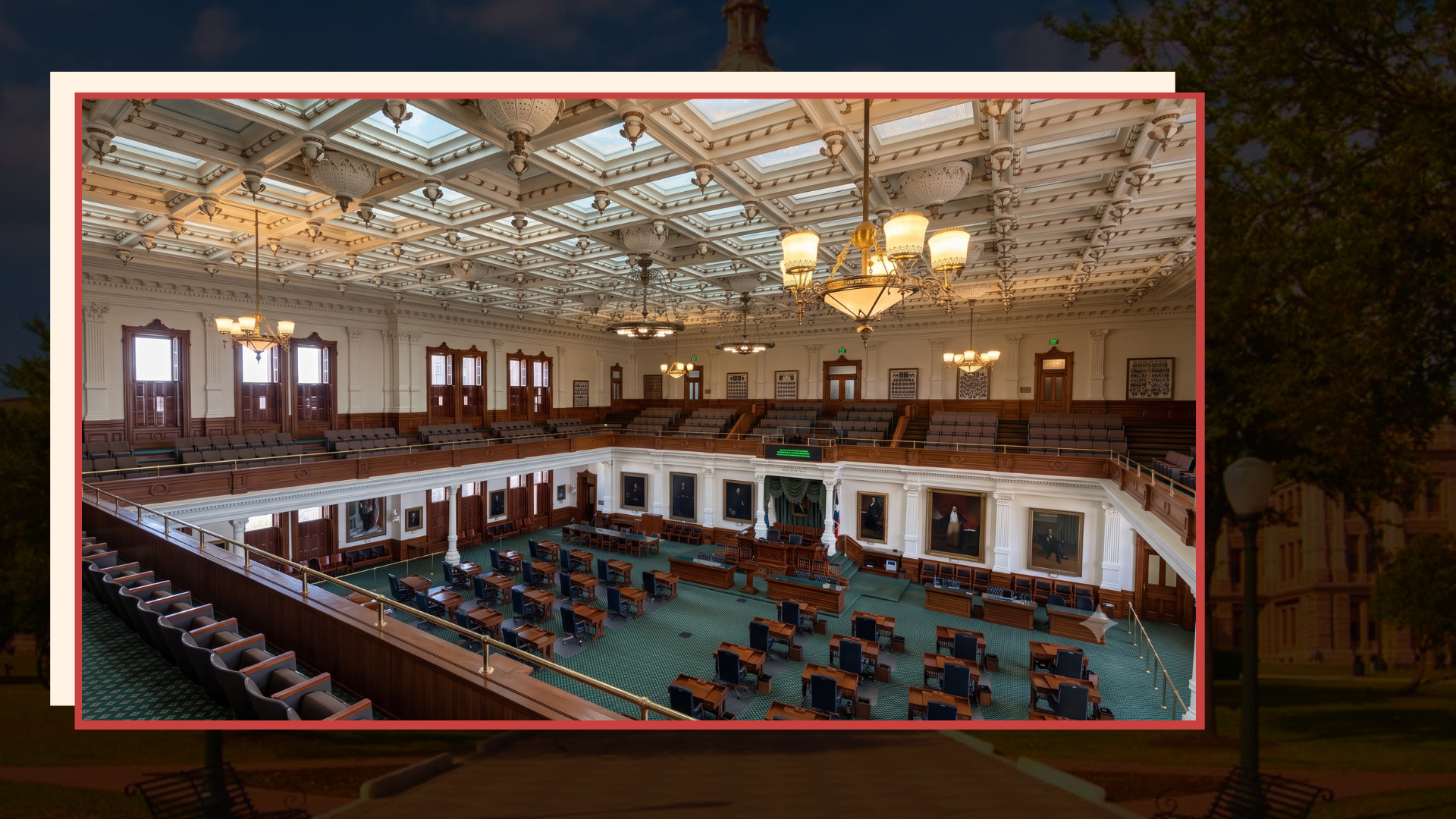
The Texas Senate’s Business and Commerce Committee meets Wednesday to review the state of the electric grid, and the item that will get the most attention on its agenda is the rulebook meant to keep a wave of new data centers from raising costs and risking reliability.
The July 29 hearing, chaired by Sen. Charles Schwertner, R-Georgetown, is charged with monitoring how regulators are carrying out Senate Bill 6, the 2025 law by Sen. Phil King R-Weatherford that created a framework for “large loads” of 75 megawatts or more at a single site. Nearly four months after the last legislative session, key pieces of that framework are still in draft.
More than 418 gigawatts of large-load interconnection requests are queued through 2032, most of it from data centers, according to ERCOT data reported by the Texas Tribune. That is nearly five times the grid’s all-time demand record of 85.5 gigawatts, set during the summer 2023 heat wave.
To separate serious projects from speculative ones, the Public Utility Commission in June approved ERCOT’s “Batch Zero” process, which studies loads of 75 megawatts and up together rather than first-come, first-served, with initial classifications expected in August.
Governor Abbott recently announced he wants to see data center development in Texas does not push buildout and infrastructure costs onto regular ratepayers and that Texas data centers should generate the energy required to power their facilities.
The central rule, though, has not been finalized. The commission’s proposed large-load interconnection standard, 16 Texas Administrative Code Section 25.194 under Project 58481, would require developers to pay a nonrefundable $50,000-per-megawatt interconnection fee, cover study costs and post significant collateral.
The commission published the draft this spring and closed public comment April 17; a final rule was expected by midyear but has not yet been adopted. A parallel rulemaking on how transmission costs are allocated faces a December 2026 statutory deadline.
Those questions sit at the heart of the affordability debate. Under Gov. Greg Abbott’s June directive, the commission and ERCOT sent lawmakers a July memo recommending three new powers, including authority for ERCOT to order a data center to curtail directly and an expansion of the Lone Star Infrastructure Protection Act, the state’s ban on grid connections controlled by hostile foreign governments, to reach large-load owners.
The Dispatch reported on that memo when it became public. The agencies said they need more authority, including from the legislature, to achieve those goals. The through-line is a preference for projects that add capacity and keep control of critical infrastructure in domestic hands rather than simply draw down the grid Texans already pay for.
A June poll by the Texas Politics Project found 56 percent of 1,200 registered voters opposed a data center being built in their community, a figure Schwertner’s panel will hear about even as the industry points to investment such as Google’s $40 billion commitment to three Texas data centers announced last November. Industry groups have warned that re-regulating loads already in the queue would chill that investment, while consumer advocates argue the rules cannot come fast enough to protect residential bills.
Wednesday’s hearing produces no binding action; it is interim charges and oversight, not a vote. But it will put legislators and agencies on the record about rulemaking and potential legislation. The more consequential dates come after: the commission’s final adoption of Section 25.194 and ERCOT’s first Batch Zero classifications, both expected in the weeks ahead.