
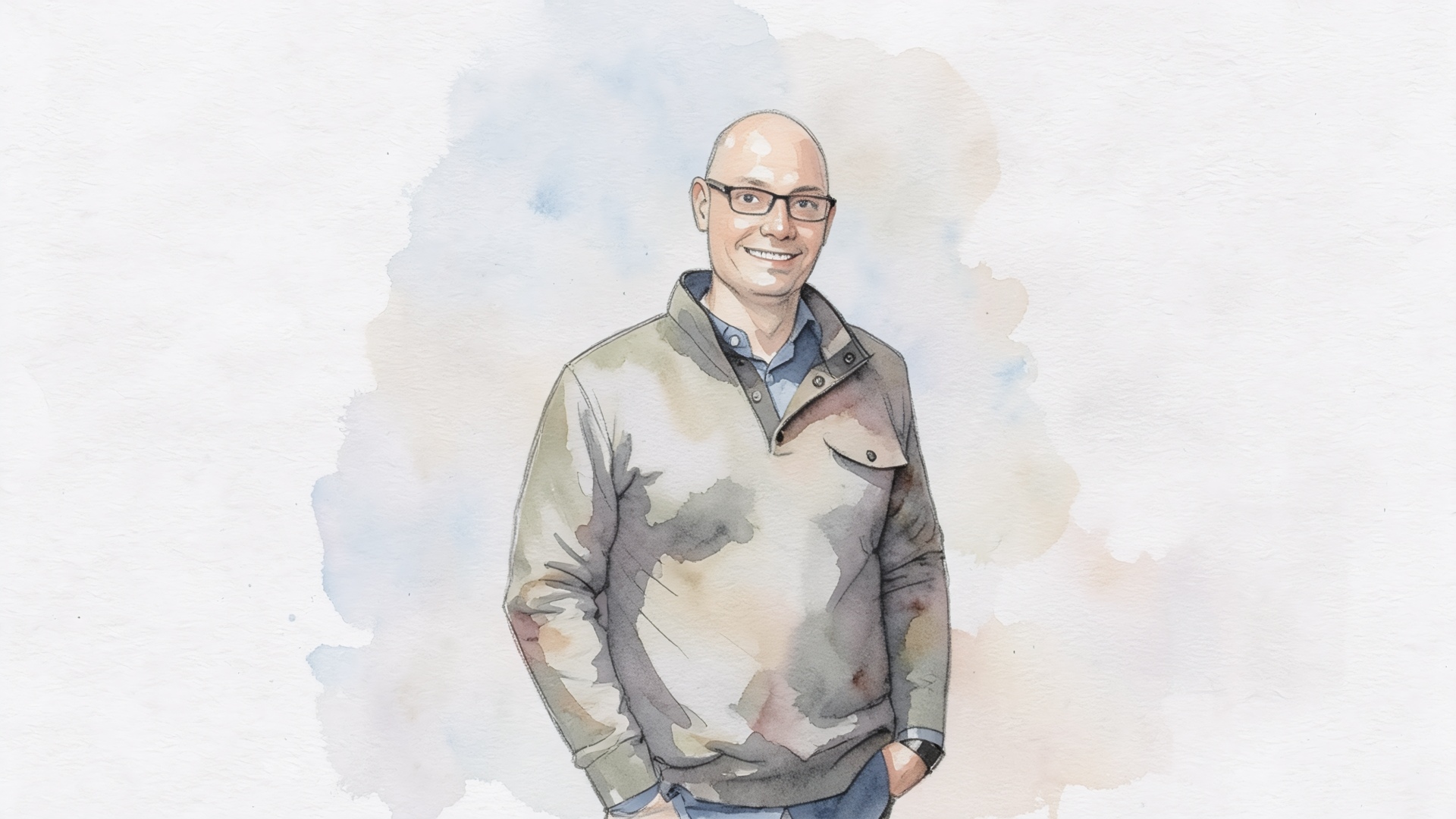
The tell, Patrick Quigley says, is what Texans do when they actually need care.
He had just heard the story: a man thinks he may have broken a finger, wants an X-ray to find out, and calls around to urgent care clinics asking what it costs. One can’t say. Another quotes roughly $500. A third has to check, because part of the work gets outsourced. He decides not to use his insurance at all.
Quigley stopped him there. You said you didn’t want to use insurance. Why?
Because it’s more expensive, came the answer.
“Does that make sense?” Quigley asked.
It is the question the CEO of Sidecar Health has built a company around, and the one he carried into a Texas Capitol hearing room on Sept. 1, when he testified before the House Select Committee on Health Care Affordability.
“We pay so much for health care insurance so that it’s there when we need it,” he says. “But when we need it, we choose not to use it because it’s in the way.”
A new entrant, and a live legislative question
Sidecar Health is new to Texas. The Texas Department of Insurance approved the company in January to sell and administer large employer health plans in the state, and it began operating here a few months ago.
It arrives in the middle of an active policy debate. Speaker Dustin Burrows created the Select Committee on Health Care Affordability in March as part of his interim charges, chaired by Rep. James Frank and seating eleven members, with a mandate that includes studying “emerging financing models that reduce the cost of health care.” Quigley’s appearance was part of that inquiry.
Gov. Greg Abbott has separately made health costs a headline issue, unveiling an “Essential Benefits” proposal in July that his office projects could cut premiums by nearly 20 percent — though by a different mechanism than Quigley’s, allowing employer group plans that omit certain state-imposed coverage mandates. Small business premiums in Texas are climbing 15 to 20 percent this year.
Quigley’s pitch to the committee was that the 20 percent is achievable a different way.
The engineer who didn’t plan on this
Quigley is careful to establish that he did not come up through health care.
“I am not a traditional healthcare guy,” he says. “I did not set out to run a health plan.” He is an engineer and an entrepreneur, a father of three, and — for the record — a Cleveland Browns fan whose wife makes the family salsa on game days. He co-founded Sidecar Health in 2018 with Veronica Osetinsky; the company is headquartered in El Segundo, California.
The origin story is a scan. Quigley needed an MRI. His insurer would not authorize one until he had first undergone a CT scan his own doctor told him he did not need.
“I remember the conversation with my doctor saying, you don’t need a CT scan, but I can’t get authorization to give you an MRI until you get a CT scan,” he says. Two weeks passed. The CT scan produced the expected result: he needed an MRI.
“That is waste in the system,” he says. “And not even just the waste of the extra care — it’s the delay.”
Two problems, one design
Quigley’s diagnosis reduces to two failures.
The first is transparency, and he means something more demanding than posted prices. “Nobody knows what things cost,” he says — then extends it. “No one has transparency around the quality of their doctors and the providers they’re choosing.” What’s needed is information specific enough to act on. “I can’t be told I need to get a procedure and it’s going to cost somewhere between $100 and $2,000. That’s not helpful.”
The second is incentives. Once a patient can see cost and quality for planned care, “there actually has to be a reason for you to care.”
Solve both, he argues, and the apparatus the industry uses to restrain spending becomes unnecessary — networks, prior authorization, formularies, step therapy. “The only way traditional health insurance companies can control cost is by limiting access.”
Sidecar’s alternative replaces negotiated network discounts with fixed dollar benefits. For a given service, a member is told in advance what the plan will pay, and can go anywhere.
Quigley uses his own prescription. He takes a statin for high cholesterol. The same fill might run $120 at a national chain pharmacy, $12 at his grocery store, or less through a mail-order discounter. His plan gives him a $35 benefit for each fill and lets him choose. Spend more than $35 and he covers the difference — presumably buying convenience, since the drug is identical. Spend less, and he keeps half the savings.
“So instead of a copay,” he says, “you can think about it like a negative copay.”
The benefit amounts are set to typical local market prices, which means they vary by geography — a point Quigley defends on the grounds that supply and demand genuinely differ between a metro with competing hospital systems and a rural county with one orthopedic surgeon. “It would be unfair to set your prices in Lubbock, Texas based on what the prices are in Austin or Houston.”
The quality half
The more unusual piece is the quality data, and it holds up to checking.
Sidecar’s app pairs its cost figures with outcome-based clinical ratings licensed from Global Appropriateness Measures, a physician-led analytics firm founded in 2016 by doctors from the Johns Hopkins University School of Medicine. GAM builds appropriateness measures across more than 40 specialties, benchmarking individual physicians against their peers using Medicare and commercial claims data — an approach its founders have published on in the medical literature.
“We are not in the business of adjudicating what quality is,” Quigley says. “You don’t want us doing that.”
He tells the story of a pregnant member who was delighted with her obstetrician — the doctor all her friends used, presumed to be expensive. In the app, the visit cost $5. The rating was three stars out of five, not because of bedside manner but because the physician performed more cesarean sections and more inductions than were clinically appropriate for that patient population.
The member pushed back. Her friends were picky. A couple of weeks later she called to ask whether she could keep using the app even after leaving the plan, because she needed to choose a new doctor.
That moment, Quigley says, is the entire product.
His view of networks follows from it: that they offer “a false sense of security.” Members assume network membership signals vetting. What it more often reflects, he argues, is rate negotiation and compliance with network adequacy requirements — “not necessarily about what you as an individual would assume would be part of the curation of a network.”
The numbers, and the caveats
Sidecar’s internal claims data, as Quigley presents it, shows members using more care of the kind that prevents crises and less of the kind that follows them: primary care visits up 11 percent, mental health utilization up 50 percent, and emergency room admissions down 45 percent. He attributes the last figure to people not delaying care — and notes that mental health emergencies are a growing driver of ER volume nationally, in part because many therapists don’t accept network-based insurance.
Those figures are the company’s own, and have not been independently audited. The 20 percent medical cost reduction he cites comes from the same source.
The broader model also carries risks worth naming. Plans built on fixed benefits or reference pricing rather than negotiated network rates have historically exposed members to balance billing — the provider bills the patient for the gap between its charge and what the plan paid — and providers may decline such plans for elective procedures. Federal law protects patients from balance billing in emergencies, not in planned care. Employees also have to learn an unfamiliar way of accessing care, which is a real adoption cost for employers.
Quigley’s answer is that his plan is designed so that this doesn’t happen: “Nobody should ever have to pay anything for care other than the cost share that they signed up for when they signed up for the plan.”
One more piece of context matters for Texas readers: Sidecar no longer sells to individuals. After beginning in the individual market, the company now offers ACA-compliant plans only to employers with 51 or more employees. Whatever it proves, it will prove through Texas employers, not the individual marketplace.
What he wants from the 90th Legislature
Quigley’s asks are narrower than his diagnosis.
The first is defensive. Because the American health care system is built on networks, statutes tend to assume them — and consumer-protection language written for network plans can, unintentionally, foreclose plans that don’t have networks at all.
“A lot of times, unintentionally, legislators can end up putting together regulation for the protection of consumers that unintentionally can catch a unique plan like ours,” he says. “Let’s keep the innovative environment that the Texas Legislature has done an amazing job with.”
The second is an opportunity. He would like plans like his to be able to compete for the health coverage Texas provides its own state employees.
“Texas is a big state with a big budget,” he says. “If you could take 20 percent out of that — wow, what could we do as a state?”
He is emphatic that he isn’t asking anyone to be forced into it, and reaches for a familiar analogy. “No one ever should be mandated to do something new,” he says, recalling his first Uber ride. “It was a little jarring the first time I did it. But after you do it once, you’re like, oh — okay, I can’t go back.”
Which leaves the Legislature the question the committee was created to work through: how to keep the door open to models that might bend the cost curve.