
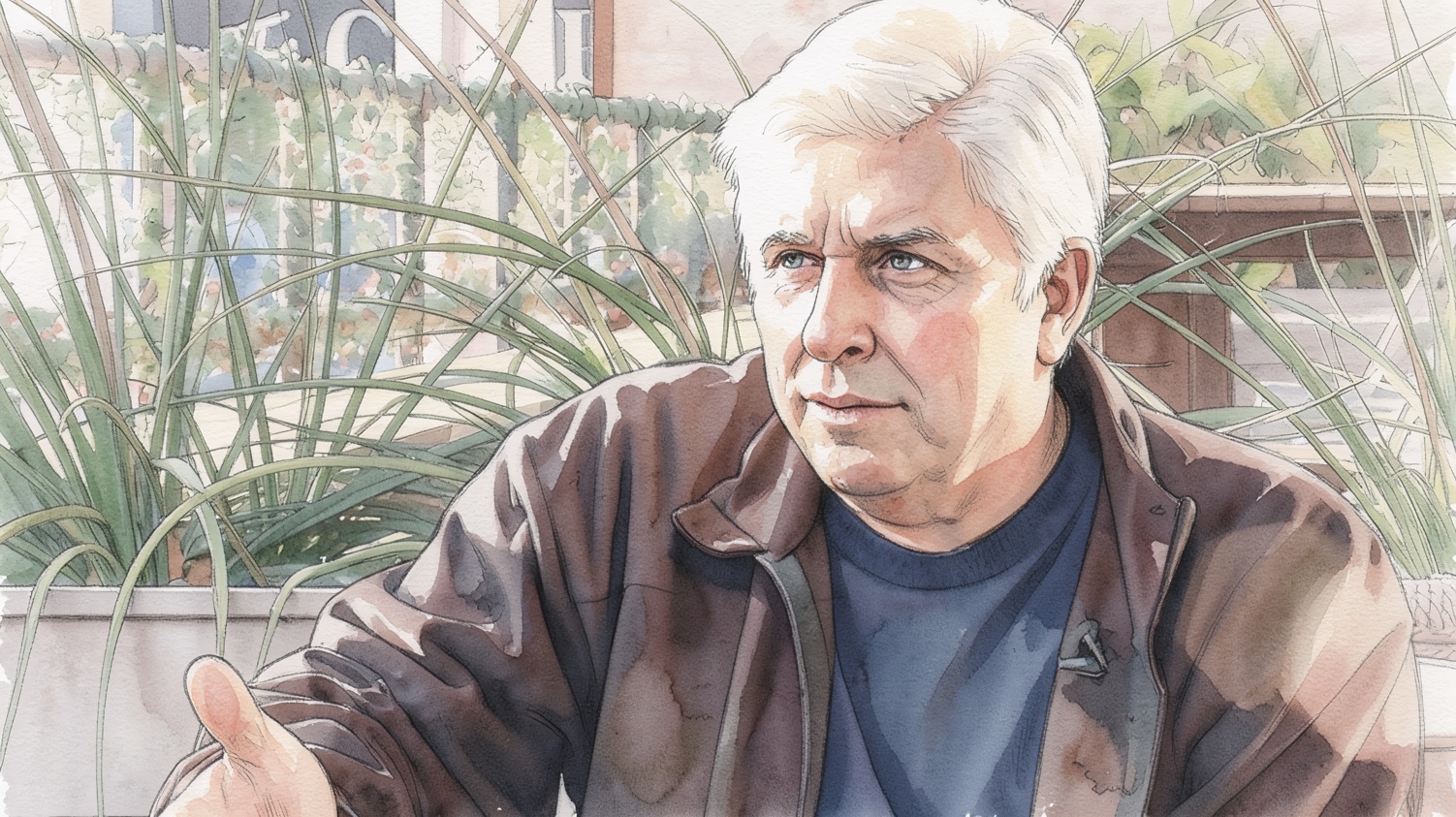
Bob Woody wanted to be a dishwasher.
He was twelve years old, about to start at Crockett High School, and his best friend had just landed a job at the Convict Hill Restaurant out on Old Bee Caves Road — the one Woody’s bus passed every afternoon on the way home. Dishwasher, his friend said. Woody thought it sounded magnificent.
So he walked in and asked the manager, a man named Hank Warner, for the same job. Warner talked with him a while, looked him over, and said no.
“You’re going to be a busboy,” Warner told him.
Woody had no idea what that was. He went home and reported the news to his mother with some anxiety, and she explained that being a busboy was, in fact, considerably better than washing dishes. It was 1972. More than half a century later, Woody has an interest in more than twenty establishments on and around Sixth Street, sits on four boards, owns property in three cities, and answers to a title bestowed on him from the dais at Austin City Hall by the late Mayor Gus Garcia: the Mayor of East Sixth Street.
He has never really left the building he walked into at twelve.
Weatherford
The Woodys were Parker County people, out where the country west of Fort Worth runs toward Abilene and eventually Midland. His grandfather, Scott Woody, was a county commissioner. His father would later serve some two decades as county treasurer. His mother spent more than twenty years as assistant county clerk. In a town like Weatherford, that is roughly the entire civic infrastructure of a family.
They lived in Springtown, north of Weatherford, in dairy country, until Woody was about ten. The family moved to Austin when he was twelve, when his father came down to open the Westgate Mall for Bealls, running three of the department store’s Austin locations.
His father was not sentimental about a working boy’s schedule. Even after Woody had a restaurant job, his father would have him at Bealls before school, folding jeans until the dye came off on his hands.
“I’d come home, my hands were blue,” Woody says. “I’d have to scrub them to get it off.”
He made waiter at fifteen. By eighteen, he was out-earning his father. He worked five nights a week straight through high school, which is why he can tell you that he never saw a single episode of M*A*S*H during its original run — only in reruns, years later, when he finally had an evening free.
There was a Camaro, and on it a vanity plate his grandmother had bought him: B WOODY. Almost nobody had personalized plates in the mid-1970s; it cost extra, and it stood out. Regulars driving home would spot the car parked outside the restaurant and know he was working that night, so they’d stop in. Woody didn’t own the place. He just wanted it busy.
“It was marketing,” he says. “Branding.” He was maybe seventeen.
The desert
The first real break in the story came in the early eighties, when Woody went west.
Midland was booming, and an Austin restaurateur named Arlen Connor had opened a place there that was struggling. Woody went out as general manager. For about two years it was very good.
Then the oil price collapsed. Saudi Arabia could make money at fifteen dollars a barrel; West Texas crude fell to nine. Woody watched the mechanics of a bust up close — how the operators didn’t stop producing so much as suspend it, pulling the pump jacks and filling the wells with concrete, waiting for a price that would justify drilling the plugs back out.
“It was just trying to get out of here,” he says of the town.
He came back east, to a restaurant in San Marcos, and that is where the next door opened — persistently. The owner of a Sixth Street restaurant called the Old Pecan Street Café, open since 1972, started driving down to see him. Three or four times a week. For six weeks.
Woody kept saying he was happy where he was. The man kept coming back, and eventually offered him a partnership rather than a job. Woody bought in, and around 1990 bought the owner out entirely.
What he built there was not, at first, a bar. It was a wedding business. Old Pecan Street sat two blocks from the Driskill, and Woody went after the Driskill’s overflow — competing with Green Pastures and the Abbey for Austin’s reception market until, by his estimate, he was handling something like 40 percent of it, every weekend of the year. His advertising strategy was a half-page in the Yellow Pages at roughly two thousand dollars a month, which he describes now with the same mixture of disbelief and affection people reserve for their first mortgage.
The trade
In 1991 he carved part of the restaurant into a pub and called it Shakespeare’s. It was his first bar. Then the Ritz, the 1929 theater on East Sixth, which he turned into a pool hall in the mid-nineties and staffed with a manager barely out of her teens. Then the Copper Tank at Fifth and Trinity.
That last one is a story he tells with relish. The building had a hole in the roof “bigger than this office,” rain coming straight through. He asked the owners — the Hart family, who had held the property since the 1800s — whether they’d sell. They wouldn’t. So he proposed a thirty-year lease and a million dollars of his own money to turn it into a brewery. His name has been on that lease since 1994.
Then came the part of the story where the hero gets his own weapon turned on him.
Woody wrote the partnership documents himself before handing them to an attorney to formalize. His chief worry was that he would work hard and his partners wouldn’t, so he wrote in a clause specifying how he could buy them out. Two or three years in, his partners found friends with money, and used his own clause to buy him out.
“How did this happen?” he remembers thinking. When he complained, one of them offered the only rebuttal available.
“You wrote the documents.”
“You’re right,” Woody said.
He was, technically, holding a pile of money. He tried to put it into the Iron Cactus; after sixty days the group told him they’d found cheaper money. “I was like, damn, I can’t give this money away,” he says. “What’s going on?”
Then a friend called about a failing brewery at Sixth and Rio Grande. Woody bought it that day. It’s Buford’s now. In 1998 he signed long leases on the Blind Pig and Soho — and then, over the years that followed, started buying the buildings themselves.
That was the hinge. The busboy became a landlord.
The street
Somewhere in here, Woody stopped being only an operator and became a civic figure, which is how a bar owner ends up on the evening news.
He served on the board that laid the Texas Walk of Stars into the sidewalks downtown, a Lone Star answer to Hollywood Boulevard. He worked on siting the convention center — arguing it belonged on the hotel side of the lake rather than across it — and on assembling the land for it. That process is the thing he seems proudest of, and the detail he returns to is what didn’t happen.
“We didn’t have to do eminent domain on anybody,” he says. The city paid market or better; a ninety-thousand-dollar house got a hundred thousand, and people sold. “Nobody got hurt. Nobody felt like they were elbowed.”
He can still describe what stood there before: a ready-ice plant, the Oak Farms dairy where people bought milk, and the Bluebonnet Market — old chicken coops, long since emptied of chickens, that vendors opened up Thursday through Sunday to sell goods like a permanent Pecan Street Festival.
He also fought the sound ordinance, which in the nineties treated East Sixth Street exactly as it treated Westlake, where he lives. “I said, this is wrong,” he says. “We go late night, we do live music, we’re loud, and we don’t need to stop at eight or nine.” The decibel limits were raised. The music kept playing until two.
He remembers standing in the 400 block, looking across at a club then called Steamboat, and seeing Stevie Ray Vaughan on the back stage — hearing him, he says, better than he could see him.
The lean years
Then the street stopped.
When the state shut the bars in 2020, Woody’s industry group — the Texas Bar and Nightclub Alliance, some 800 members — sued the governor in federal court over the order that closed any establishment earning more than 51 percent of its revenue from alcohol. The membership didn’t fund it. Woody financed it himself.
His account of the aftermath is characteristically Texan: he and Gov. Greg Abbott are friendly, he was seated near him at a small fundraiser not long after, and his wife Brenda — who had been coached repeatedly in the car not to bring up the lawsuit — brought up the lawsuit. The governor laughed it off. What followed, in Woody’s telling, was a workable path back: operators reclassified under that 51 percent line, verified afterward by audit. Bars did not really become restaurants. But on paper, they opened.
He sold a strip center out past Oak Hill in 2020 — not something he normally does, since he rarely sells anything — to finance the crossing. And he lost the place where it started. The Old Pecan Street Café, the restaurant he had spent nearly forty years in, closed that year.
The convention center closed too, in 2025, for a $1.6 billion demolition and rebuild that won’t reopen until 2029. Woody had turned the Copper Tank into an event center; suddenly nobody was holding events. So he pivoted it into a pool hall, and reports that it’s working.
Nearly thirty of the buildings around him are now owned by Stream Realty, which is spending somewhere between $500 million and $750 million restoring rather than demolishing them — uncovering patterned brick, pressed-metal cornices and cast-iron storefronts under decades of deferred maintenance. Preservationists have praised the work. Woody, who has watched a great many people arrive on Sixth Street with plans, is optimistic.
“Sixth Street has great days ahead,” he says. “We’re poised for a good direction.”
What he does with it
The thing Woody seems most animated about now is not a building.
Every few weeks he throws what he calls Service Industry Night — SIN — at the Copper Tank, on a slow Tuesday, because bartenders work weekends. It’s a guest list of about 450; the last one drew close to 300. Everything is complimentary. He gets it sponsored so it doesn’t bleed money, but it isn’t a profit center, and that is the point.
“They literally line up and shake my hand and say, thanks for doing this,” he says. “I don’t have to profit on everything I do.”
He spent four years chairing the board of the Rise School at Mueller, which serves children with and without disabilities, steering it through the pandemic; by the time he left, the school had money in the bank and a paid-off building.
And there is the building at 15th and San Jacinto — the old Megabus stop, which he bought and is turning into a taqueria. Not long after, he ran into Mary Craddock, wife of the late real estate man Larry Craddock, at City Hall.
Did you really buy that? she asked. My father built that building.
She waited for him to say he was knocking it down.
He wasn’t. He told her he liked old buildings.
Her father, she explained, had built it around 1940. Then the war came, and there was no gas, and no reason for a gas station, and it failed. He wasn’t a good businessman, she said. But he built it.
“It’s going to be there forever,” Woody told her.
The elixir
Ask him for advice and he gives it in the cadence of a man who has watched a lot of people try this.
“Get your friends, work with your friends, be equal. Have a leader — identify the leader,” he says. Pool the money. Be the backbone as long as you can, and buy people out as they drift away, and build something you could sell even if you never do.
He knows the ladder he climbed has had rungs removed. He started by leasing, accumulated cash, made a down payment, and eventually helped start a bank so he could get better terms. Almost nobody can run that sequence today.
But he keeps returning to a moment in a boardroom, in a necktie he hated, being interviewed for a loan. He’d talked for a while and finally asked whether there was anything else they needed from him.
No, the banker said. We were going to lend you the money anyway. We just wanted to see the fire in your belly.
The rest of it is family. His kids are his business partners; he has lunch with them most Sundays. His father survived pancreatic cancer — one of the small percentage who do — and Woody spent months driving back to Weatherford to renovate the old family house, finishing about six weeks before this interview, so that his father could live out his years in a home that feels new again. His mother didn’t get that. She walked out the front door one morning ten years ago to go get coffee, fell, and died.
“I prepared myself for my dad to pass away,” Woody says. “My mother winds up passing away.”
He is 66 or thereabouts, with properties in Dallas and Pflugerville and East Austin and Westlake, a taqueria opening before football season, and forty televisions to swap out at Buford’s, which for this fall is the designated Austin home of Ohio State fans.
And most days, he is on the street. When Stream Realty’s people first sat down with him, he asked whether they knew where to find him.
“I’m down there every day that I’m in Austin,” he told them.
We know, they said.