
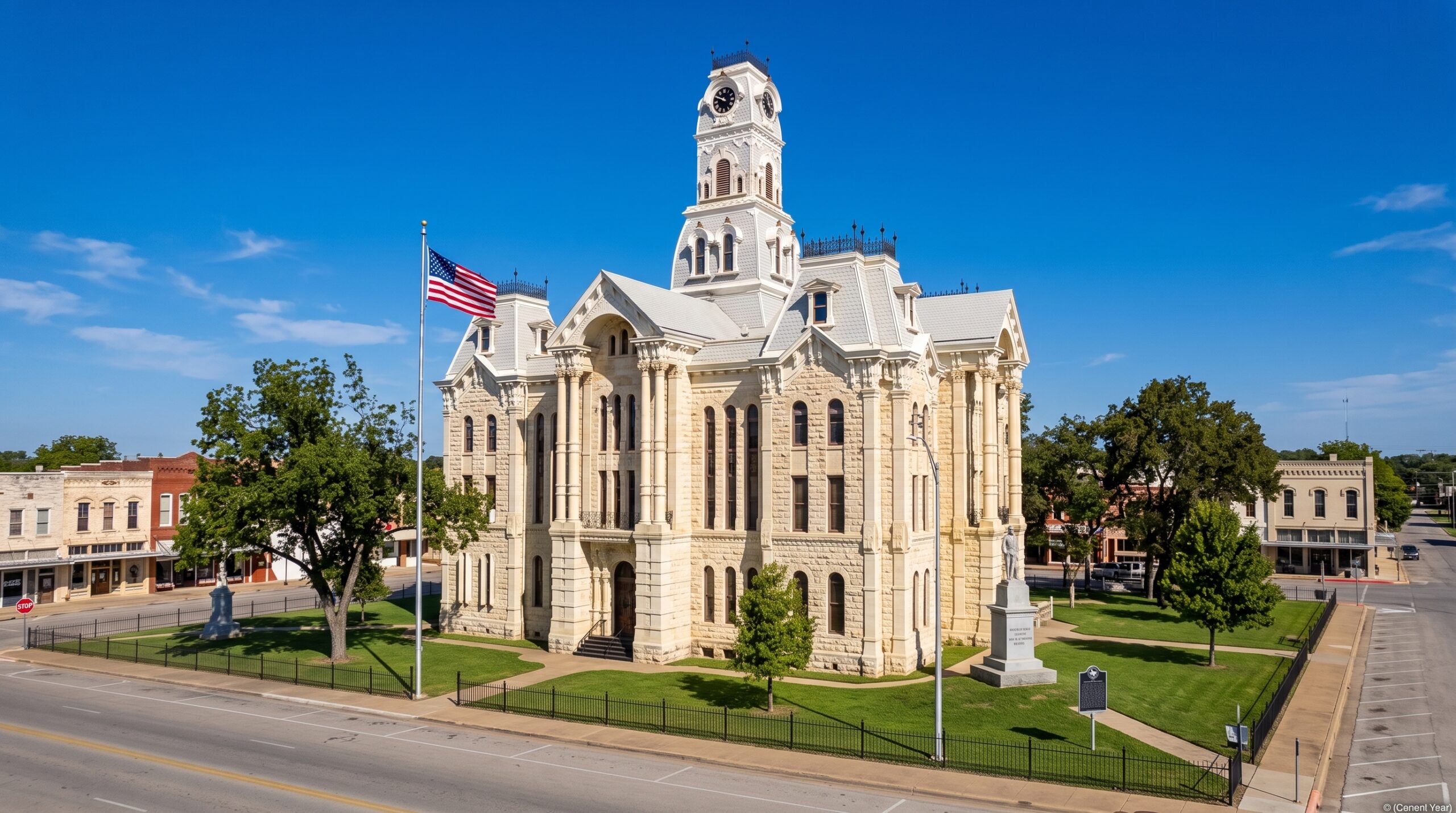
When Hill County commissioners voted this spring to pause new data center construction for a year, they were testing a power Texas law does not clearly give them. The developer RCM Hill LLC answered with a federal lawsuit filed May 27 in Austin, seeking $100 million and arguing the county “exceeded its lawful powers.”
The project covers more than 800 acres, the Texas Tribune reported. On June 4 the county rescinded the pause and adopted a disclosure checklist instead. The developer dismissed the case with prejudice on July 9, KWTX reported.
The case shows a gap running through growing counties at the edges of Texas metros. Inside a city, the city decides what gets built where. Outside one, that power mostly does not exist.
A city may regulate the location and use of buildings and land, including for business and industrial purposes, within its limits, under the Local Government Code. In the unincorporated land just outside its limits, where a city has only limited powers, state law lets it apply platting rules (dividing land into lots and getting the map approved) but says it “shall not regulate” the use of property or the number of homes per acre, unless state law authorizes it.
Counties have no general zoning power at all. The county zoning chapter contains only place-specific grants, among them Padre Island, certain large lakes and Hood County, according to the code. Hood County’s grant covers lot coverage, density, building size, roads, water and drainage; it does not list the type of land use.
The developer’s complaint put the point bluntly. A K&L Gates summary of it says the suit describes counties as “creatures of statute with no inherent police power,” able to act only where a statute expressly or by necessary implication allows it. The firm advises developers. County Judge Shane Brassell told KWTX the pause “bought the county time” to learn about projects commissioners had not known were coming, and that “some projects that were less desirable” left.
Residential growth meets the same limit. In Midland County, commissioners rejected a replat for Greenwood Country Estates in July 2025 amid a dispute over the area’s water service, then reversed course at a July 22, 2025, meeting. When commissioners later approved another section of the subdivision, County Judge Terry Johnson said, “Our hands are tied by state statute. We are required to approve compliant plat applications,” according to a report. The code backs him: a commissioners court “must approve” a plat and may refuse it only if it fails the chapter’s requirements or a required bond is missing. A plat is approved automatically if the county does not disapprove it within 30 days of a complete application.
A county may set road-width and drainage specifications for a subdivision. The Texas Association of Counties’ subdivision handbook says a county may not impose a higher standard than it applies to its own roads. The handbook does not authorize road impact fees (charges on new development to pay for the roads it strains). The impact fee chapter covers cities and special districts, and lets counties charge only for drainage, and only if the county has 3.3 million people or borders one that does.
Counties instead lean on bonds and permits. In Brazoria County, resident Roy Kimmel told commissioners Aug. 11 that builders’ heavy trucks had torn up County Road 28 near Long Hill Estates; county staff said contractors hold heavy-haul permits and bonds and that county practice is to require repairs. In Parker County, residents of the Bittersweet Springs subdivision pressed commissioners Oct. 13, 2025 over unfinished roads and drainage.
The Association of Counties, which advocates for counties, said in a March 2025 issue brief that counties lost control over larger-lot subdivisions served by private roads and that a 2023 law preempted local standards. The plat chapters point the other way: fixed 30-day deadlines and written-reason requirements, tightened in recent years, limit how long and on what grounds a county can hold up a subdivision.
On July 28, Hunt County commissioners voted unanimously to ask lawmakers for three tools aimed at projects drawing 75 megawatts or more: a voter-approved groundwater district, development agreements like those cities can sign, and road-use agreements backed by insurance or bonds. Whether to grant them is a question for the Legislature, which convenes Jan. 12, 2027.