
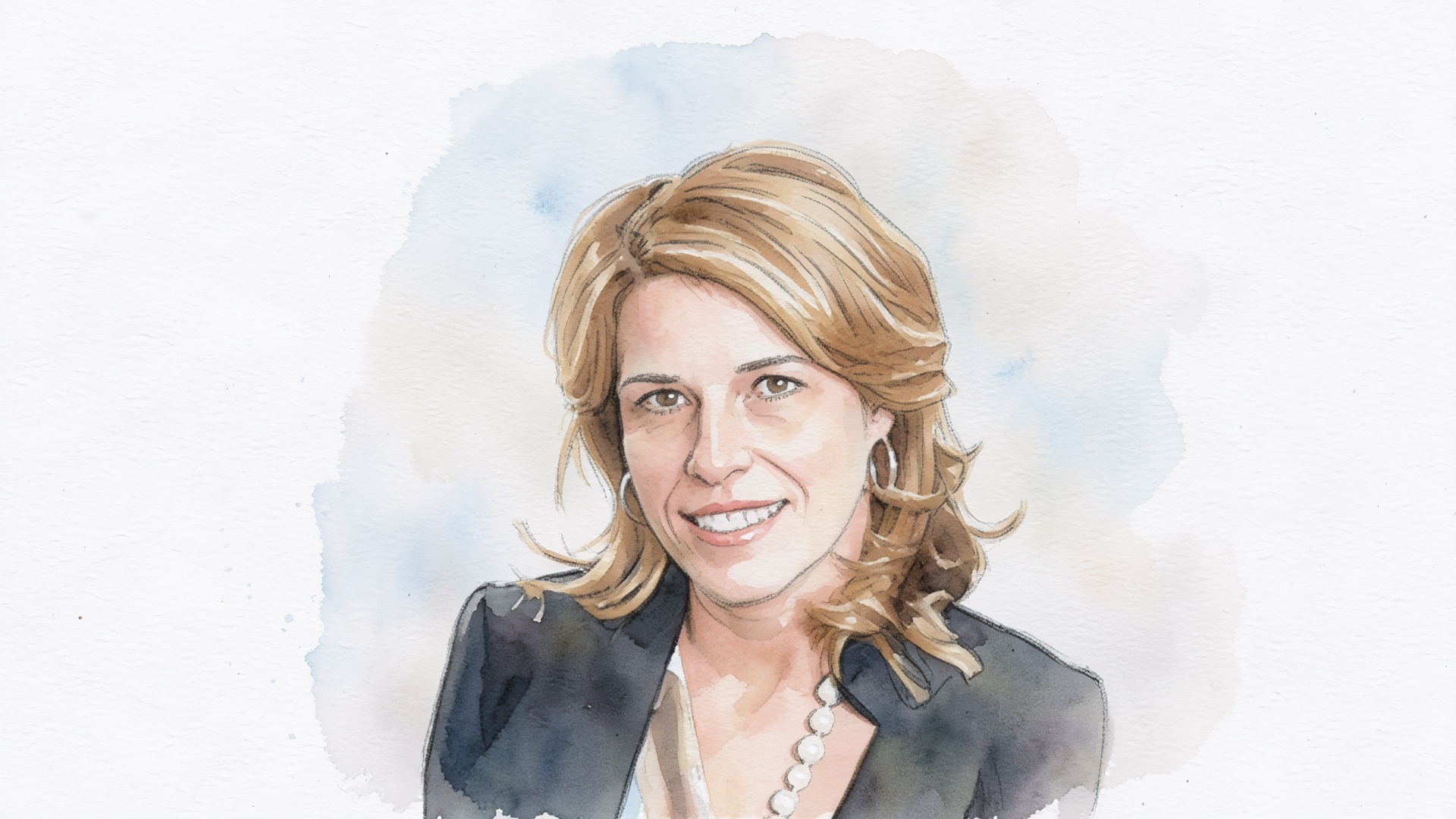
The denial came five days after her son came home.
Chris Bryan and her husband are both computer scientists — Virginia Tech, both of them, and she says “I know, my poor children” about what that meant for the household. Their son began showing symptoms at about five. This was the 1990s. Whatever was happening, it wasn’t anything either of them had seen in other children, so they started calling people.
He was diagnosed with bipolar disorder at seven. “Even though in the 90s,” Bryan says, “bipolar disorder didn’t really exist for kids.”
What followed was an education in a system they knew nothing about: outpatient therapy, medication management, an inpatient psychiatric stay. They had commercial insurance. They obtained prior authorization. Everything was, in her word, peachy — until a week after discharge, when they learned they would be paying for it themselves.
“I literally got so angry,” she says. “Y’all, so angry.”
She walked into her husband’s office and opened the Yellow Pages — “for those younger people, look it up.”
“There’s a kidney association and a heart association and a lung association,” she told him. “There’s got to be a mental health association.”
Then came the thought that turned a family’s bad week into somebody’s life’s work.
“I kept thinking to myself: how do single moms do it? What about a young family? What about a low socioeconomic family? Mental health is mental health, and every family is going to have it.”
Twenty years and nine legislative sessions later, Bryan is vice president of information technology and public policy at Clarity Child Guidance Center in San Antonio, and among the most persistent voices for children’s mental health at the Texas Capitol. Her tenth session begins in January.
What computer science is actually for
Bryan never left technology. She sits on the computer science advisory board at Virginia Tech, where she counsels students against assuming the degree has only one destination.
“Be open minded when you’re in computer science, because it doesn’t have to always be coding,” she tells them. “You don’t have to go and work for the hyperscalers. Because guess what you learn in computer science is problem solving, troubleshooting.”
Which is, by her account, the same job as advocacy. “What do you have to do when you advocate and go to the Capitol? You are problem solving. What is their goal, and what is the algorithm that I sit in my head to get to the goal?”
“That’s how my brain works,” she says. “I can’t help it.”
Her title is the literal fusion of the two halves — she joined Clarity in 2008 to oversee digitizing and securing patient health information, and the policy portfolio grew alongside it.
Thirteen women at the Maverick Hotel
The institution she works for has an origin story that anticipates her own.
In 1886, thirteen women met at the Maverick Hotel in San Antonio and founded a home for destitute children. In the course of running an orphanage, they noticed something: the children who struggled hardest to be placed were often the ones carrying mental health challenges. The home’s mission bent toward those kids and never bent back. In 2010, after a merger of two successor organizations, it took the name Clarity Child Guidance Center.
Today it operates an eight-acre campus in the South Texas Medical Center with a 66-bed hospital, four psychiatric emergency beds, and round-the-clock observation, serving children ages 3 to 17 across crisis care, inpatient treatment, partial hospitalization and outpatient therapy. Bryan says folklore holds it was the sixth nonprofit incorporated in Texas.
It is also a safety-net hospital, which carries a specific consequence. “We have to fundraise every day,” she says, “because we’re going to treat kids regardless of their ability to pay for the treatment.”
Three kinds of fragmentation
Ask Bryan what’s wrong and she gives a structured answer, which is the computer scientist talking. The central problem in behavioral health, she says, is fragmentation, and it comes in three pieces.
The missing middle. Imagine a heart condition, she says: your primary care physician sends you to a cardiologist, who may send you to a hospital, after which you go to cardiac rehab, then back to your primary care doctor. A continuum.
“In behavioral health, most likely you have outpatient services and nothing, nothing, nothing, nothing, nothing,” she says. “And then you have inpatient acute services.”
The middle tiers do exist — crisis stabilization, intensive outpatient therapy after school, and partial hospitalization, which she describes as particularly well suited to children: a full day of hospital-level treatment, then home to the family at night. “Outpatient isn’t really enough,” she says, but a child doesn’t need to stay twenty-four hours.
The problem isn’t that those services haven’t been invented. It’s that coverage for them is unreliable. “These services we’ve been trying to get covered for several years.”
Clarity runs an outpatient and partial hospitalization clinic on San Antonio’s South Side — an area she describes as having no other children’s mental health services and the greatest need in the city. Because the partial program can’t be reliably billed, the clinic is entirely grant funded.
The missing data. This is where her two careers converge, and the explanation is historical. When the federal government spent billions in 2009 to drag American medicine into electronic records, behavioral health providers were left out of the incentive program — roughly 2,500 psychiatric hospitals among them, along with long-term care and other safety-net providers.
The result, nearly two decades on, is that psychiatric hospitals in Texas largely don’t have the electronic health records the rest of the system takes for granted, and therefore aren’t exchanging information with anyone.
“When you think about an electronic health record or your patient portal,” Bryan says, “guess what section of health care in the state of Texas doesn’t have that?”
The practical cost is that a child’s primary care physician may never learn what happened during a psychiatric admission.
The missing money. Behavioral health has historically been reimbursed well below the rest of medicine, and Bryan offers the sharpest illustration available.
Clarity operates an eight-bed high-acuity unit for children who are severely ill — more staff, more time, more resources per child. The hospital is paid the same rate for those children as for a standard five-day acute inpatient stay.
“I assure you that nobody in this room would stand for somebody paying a hospital the same rate for an ICU unit as they would a floor bed,” she says. “But that’s what we have to do. And we have to fundraise to cover that.”
The inversion
One detail in Bryan’s account runs directly counter to the way hospital finance usually works, and it’s worth stating plainly.
In general hospital economics, commercially insured patients are the profitable ones who subsidize everyone else. In children’s behavioral health, Bryan says, the order flips.
“Medicaid, unfortunately, is the gold standard, and commercial pays under what Medicaid pays,” she says. “So we’re already in the shortfall. When a child walks into Clarity, we’re in a shortfall for Medicaid. We’re in an even bigger shortfall for commercial.”
A child arriving with employer-sponsored insurance, in other words, represents a larger loss than a child on Medicaid.
Coverage is not access
Bryan’s other recurring phrase is that having a benefit is not the same as having care — and here the Texas data is stark.
A parent with coverage starts making calls, and runs a gauntlet: Do you take my insurance? Do you offer partial hospitalization? What ages do you treat? Many providers see only adolescents; fewer will see small children.
The supply underneath those calls is thin. Of Texas’s 254 counties, 204 have no child or adolescent psychiatrist at all. The state has roughly 745 practicing child and adolescent psychiatrists — about 10 per 100,000 Texas children, against a widely cited benchmark of 47. Kendall County is the only county in the state with something close to an adequate supply. Waits can run four months. Roughly 350,000 Texas children experience severe mental health needs in a given year, and the state’s own health department has projected the behavioral health workforce shortfall widening from about 11,400 providers to more than 33,000 by 2036.
Then there is the subtraction happening inside that small workforce. Low reimbursement plus heavy administrative requirements pushes clinicians out of insurance networks entirely.
“More and more of our mental health providers are going to cash only,” Bryan says. “And so now we’re even creating a separate fragmentation in our system — the have and the have-nots for treatment.”
Where the evidence backs her hardest
Bryan’s claim that behavioral health carries heavier administrative burdens than the rest of medicine is the part of her argument with the most documentation behind it.
The federal Mental Health Parity and Addiction Equity Act has been law since 2008. Regulators have nonetheless found behavioral health claims denied at roughly twice the rate of medical claims, with initial denial rates running 15 to 25 percent, and have documented at least one insurer requiring prior authorization for 5 percent of medical and surgical benefits but 22 percent of mental health and substance use benefits. Federal enforcement of the most recent parity rule, finalized in 2024, is currently paused, though the underlying statute and earlier rules remain in force.
Bryan’s framing is less technical. Psychiatrists are physicians; therapists are licensed clinicians; the diagnoses are medical diagnoses.
“From your mouth to God’s ears,” she says, when the point is put to her that it’s all medicine. Then she reframes the question she’d rather lawmakers answer: “Why is it that we don’t value and finance behavioral health as part of a continuum of the larger health care system?”
The technologist on screens
Given her background, Bryan’s view of children and devices is more interesting than the usual sermon. She is, she says, pro-technology — “I am actually even an AI optimist.”
Her clinical concern is specific: children no longer get a break. “Everything back in the day — we’d go to school, we’d have a tiff with our girlfriend, or somebody was not nice to us at recess,” she says. You went home, had dinner, turned the music up in your room. “But there’s no off switch for these kids now.”
She saw it recently in an eight-year-old admitted to Clarity who acted out for more than a day after learning there would be no cell phone.
But she thinks the conversation stops too early. “When we’re raising our kids, we’re teaching them look both ways when you cross the street, don’t punch people during recess,” she says. “We are teaching them rules and social ethics.” Three-year-olds learn please and thank you. Three-year-olds also use screens.
“I think we have to figure out what are those rules and social ethics that are developmentally appropriate that we’ve got to start giving our kids all along the way,” she says, “because we have to raise them to live in the world they’re going to live in.”
Twenty years of a changing conversation
Bryan is candid that she’s near the end of her career and looking at the arc.
In the early 2000s, children’s mental health was almost a greenfield. “People weren’t really talking about it,” she says. “I’d see a bill and I would say, where are the kids in this? And everybody would go, oh my gosh, I didn’t even think about kids.” The education was the work — getting legislators to understand that children and adolescents aren’t small adults, that the same diagnosis presents differently at eight than at thirty-eight.
Three or four sessions ago, she says, the field had real momentum, and parity was moving into the mainstream conversation.
Her read on the last two sessions is harder. By her account, stigma has returned, and the school-based early intervention she considers the front line for children has been pared back — she says she has been told flatly that schools are not mental health clinics, and that children’s mental health is increasingly viewed through the lens of a system that might influence children in ways their parents wouldn’t choose.
That is her characterization of a live and contested political argument, and she does not dismiss the concern underneath it. Her answer is that the choice is a false one.
“We’re not doing something out of consent of the family,” she says. “We should be doing it along with the family.”
Her chief executive, she says, quotes Frederick Douglass constantly: it is easier to build strong children than to repair broken men. Bryan wants the school-based front line rebuilt, and she wants the middle of the continuum filled in.
“It can’t be this or that,” she says, “with nothing in between.”