
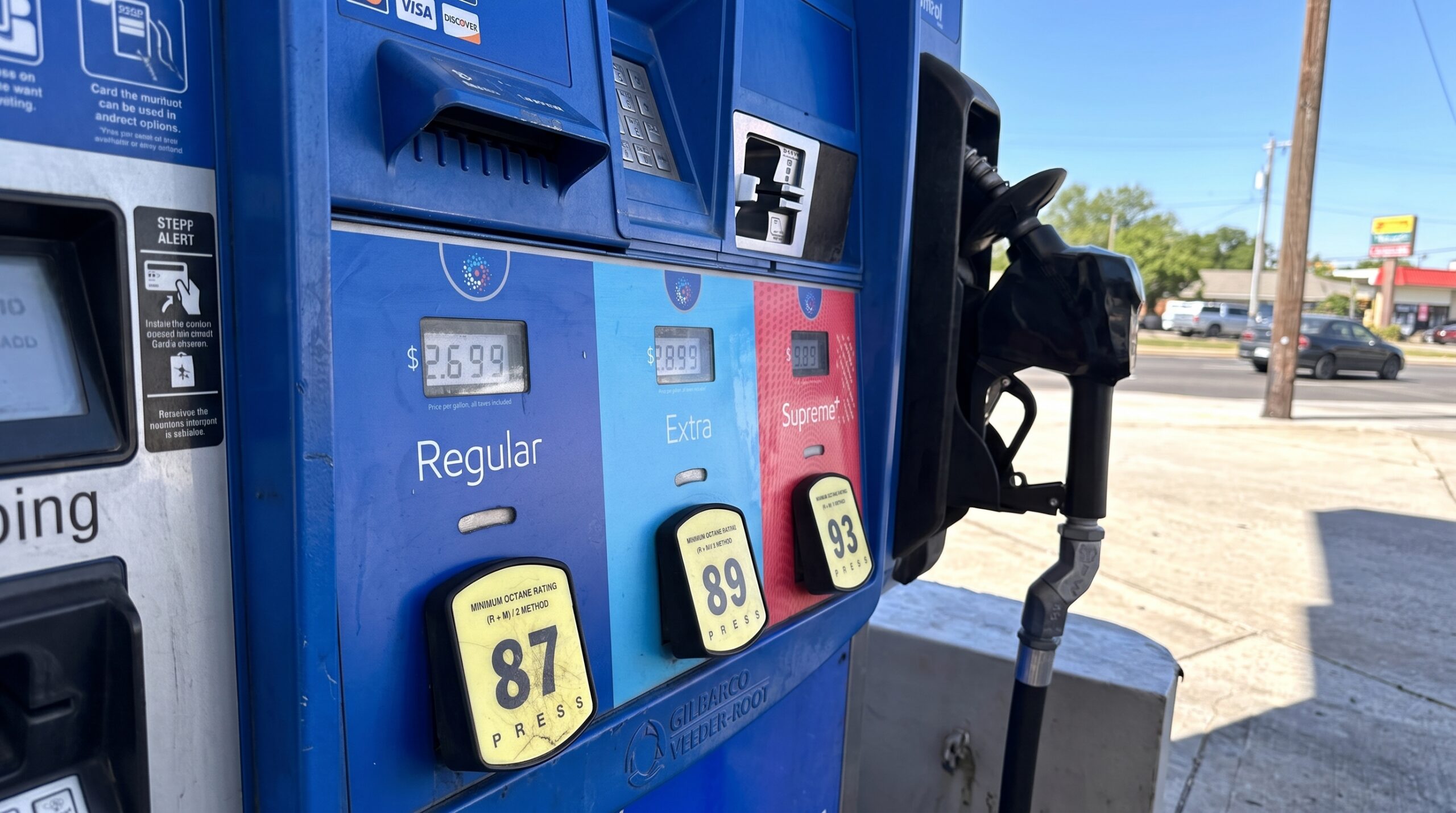
The average Texas household pays about $242 a year in state gas tax, a Texas Dispatch calculation from federal data shows. The jump in pump prices since last fall will cost that same household about $1,400 more.
The Dispatch divided the 13.9 billion gallons of gasoline Texas vehicles used on public roads in 2024, the most of any state and ahead of California’s 11.7 billion, by the state’s 11.4 million households. Both counts come from the Federal Highway Administration and the Census Bureau. The result is 1,212 gallons per household. At the state’s flat 20 cents a gallon, that is $242 a year, or about $20 a month. Per licensed driver, the state’s 19.5 million drivers average 710 gallons and $142. Adding the federal tax of 18.4 cents on gasoline brings the household total to about $465.
That is an average, and it probably runs high for personal driving. The federal fuel-use figure covers business and government vehicles that burn gasoline, and the typical household’s share depends on what it drives. About two-thirds of the state’s 23.6 million registered vehicles are classed as trucks, which use more fuel per mile. Using federal fleet-average fuel economy of 25.6 miles per gallon for cars and 18.5 for pickups and large SUVs, a sedan driven 12,000 miles a year, mostly in town, pays about $94 in state tax. A pickup driven 15,000 miles pays about $162. A pickup on a 25,000-mile rural commute pays about $270, and a sedan driven 40,000 miles for rideshare or delivery pays about $312. These are illustrations, not surveys of actual drivers.
The larger change is the price. AAA’s Texas average for regular was $3.903 a gallon on Oct. 6, up from $2.749 a year earlier, according to the AAA Texas price page. September averaged $3.94, the most expensive September on record and above the previous high of $3.63 in 2012, AAA reported. AAA Texas spokesman Daniel Armbruster said gasoline prices “remain unusually high for this time of year.” On 1,212 gallons, the extra $1.15 a gallon adds about $1,400 a year. The household’s annual gasoline bill rises from about $3,330 to about $4,730. The 20-cent tax is about 5 percent of the pump price and did not cause the increase.
Because the tax is charged per gallon, higher prices do not raise it. The Comptroller reported that motor fuel tax collections were $337 million in September, down 1 percent from September 2025, in a month when state sales tax revenue rose 11.5 percent. The Comptroller’s release gave no reason for the fuel tax change.
Households also pay the state’s diesel tax indirectly. Texas highway diesel use of 6.4 billion gallons works out to about 560 gallons per household. At 20 cents, that is about $112 a year built into the price of goods that trucks deliver, which would bring state fuel taxes to about $354 per household.
A fixed per-gallon tax takes a larger bite from smaller incomes. The $242 is about three-tenths of 1 percent of the Texas median household income of $79,721. For a household earning $30,000, it is about eight-tenths of 1 percent, before any diesel cost. The Institute on Taxation and Economic Policy, a nonprofit research group that studies tax fairness and generally favors progressive taxes, estimates that the lowest-earning fifth of Texans pay 8.1 percent of income in all sales and excise taxes, compared with 1.5 percent for the top 1 percent. That covers every such tax, not the gas tax alone.
Under the Texas Constitution, three-quarters of the net revenue goes to roads and one-quarter to the Available School Fund. For the average household, that is about $182 for roads and $60 for schools.
How to respond remains contested. Agriculture Commissioner Sid Miller has asked Gov. Greg Abbott to suspend the tax. Abbott’s press secretary has said the tax is levied on suppliers, not at the pump, and its revenue is constitutionally dedicated to roads and schools. Others point out that the rate has not changed since 1991 and has lost purchasing power; the Dispatch’s earlier reporting noted 2016 testimony from the Texas A&M Transportation Institute, relayed by the Comptroller, that 20 cents now buys less than 10 cents’ worth of construction. Only the Legislature can suspend or change the tax.
Lawmakers return for their next regular session in January 2027.