
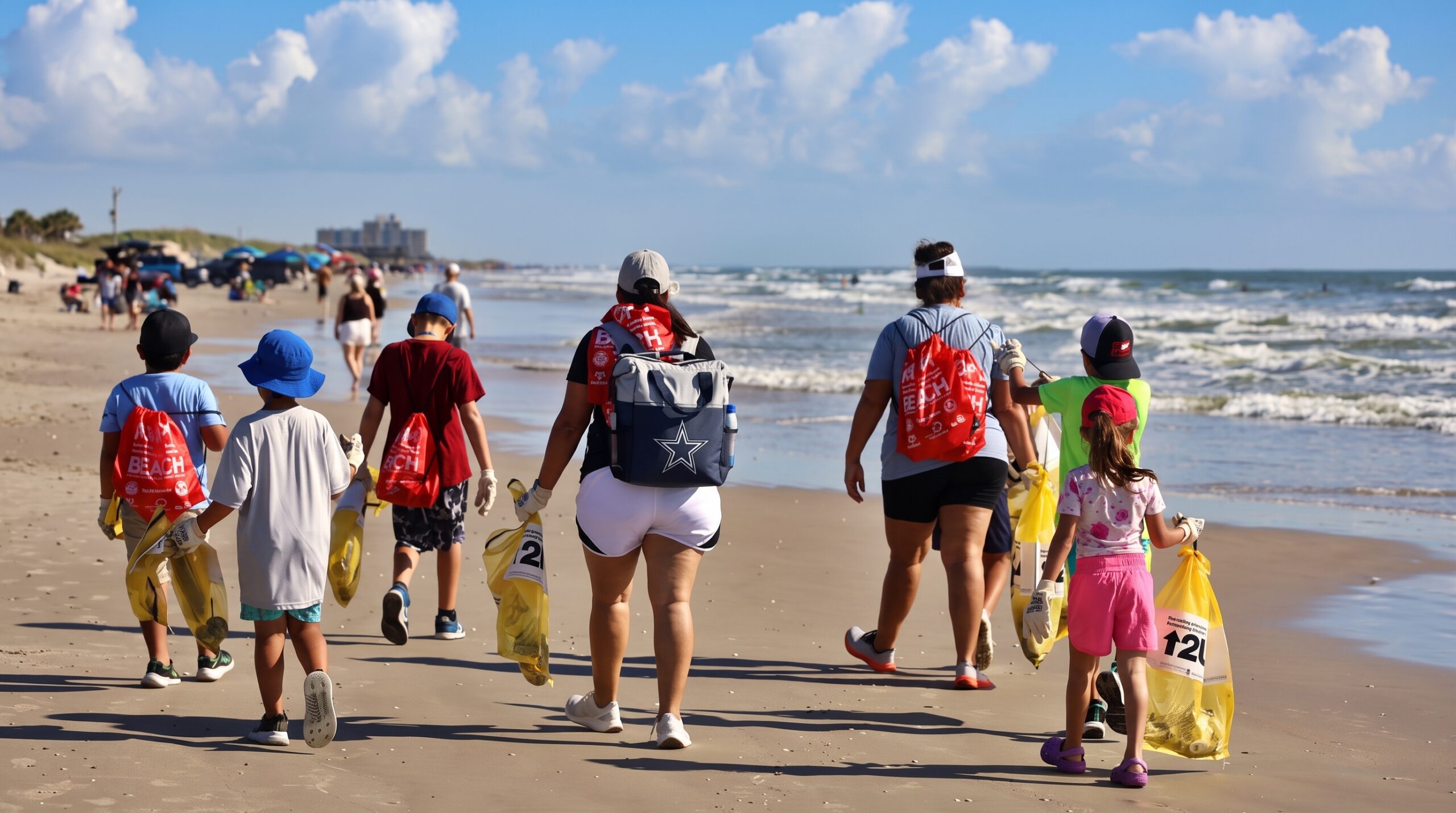
Volunteers cleared nearly 111,000 pounds of trash from Texas beaches in this year’s two coastwide Adopt-A-Beach cleanups, but the state’s announcements do not say how much of it was bottles and cans, the litter a Texas advocacy group says a the right incentives and the economics could keep off the sand.
The Texas General Land Office, which runs the program, reported that 6,106 volunteers removed nearly 62,000 pounds of trash on Sept. 19, according to its announcement, which the Dispatch also reported. In April, 4,659 volunteers removed 48,952 pounds. Smaller winter cleanups on the Coastal Bend and South Padre Island added 8,073 pounds from 529 volunteers, so the year’s total is closer to 119,000 pounds. The 111,000 figure counts only the two coastwide events.
This fall’s turnout was smaller than last year’s. In September 2025, 6,892 volunteers removed 67,586 pounds along 131.7 miles of beach. That makes this fall’s volunteer count about 11 percent lower and its trash total about 8 percent lower, with roughly 10 pounds collected per volunteer in both years.
The program began in the fall of 1986, when 2,800 volunteers picked up 124 tons. Since then, more than 600,000 volunteers have removed more than 10,000 tons, the land office said.
The 111,000-pound figure came from Texans for Clean Water, an affiliate of Americans for Clean Water that advocates for container-return incentives, in a Sept. 30 news release. The group used the total to argue for prevention. “Texans keep showing up and doing an incredible job cleaning our beaches,” said Joe Trotter, deputy executive director of Americans for Clean Water. “A bottle or can is different from a lot of the material volunteers find because it is recoverable and still has economic value,” Trotter said.
The group pointed to a 2018 study in the journal Marine Policy that compared coastal-debris surveys in U.S. and Australian jurisdictions with and without container-return incentives. It found the proportion of beverage containers in coastal debris was about 40 percent lower where the incentives exist, according to the group and a summary of the study. In both countries, the summary said, the share of beverage containers in places without incentives was about 1.6 times higher.
That finding has limits. It measures the share of items that are beverage containers, not total weight, and it compares places that already have programs. Texas has no system, so the study’s evidence comes from elsewhere. The land office’s cleanup announcements report weight and volunteer counts, not item counts, so they cannot show what portion of Texas beach trash is drink containers. Whether a policy would change what volunteers haul off Texas beaches depends on that number.
The gap in the data is not limited to the coast. Texas cities and counties also could not say what litter and illegal dumping cost them, according to earlier Dispatch reporting.
The land office’s next coastwide cleanup is April 17, 2027.