
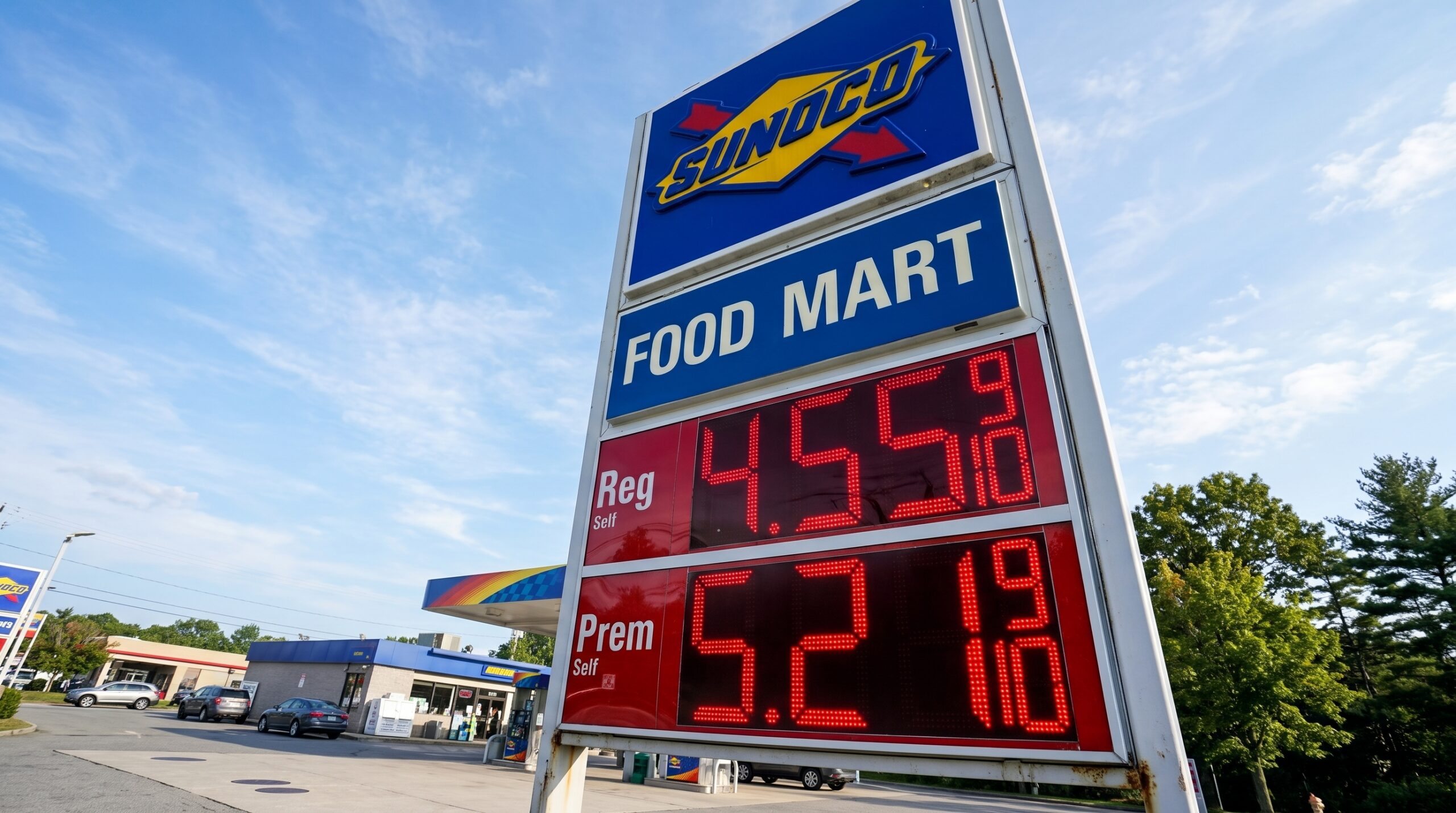
Georgia, Indiana, North Carolina and Ohio have each paused their gas taxes in recent months, and the research on what happened at the pump offers an early look at a question Texas lawmakers may face when they convene Jan. 12, 2027, according to High Plains Public Radio. The short answer from the studies: most of a tax cut reaches drivers, but not all of it, and it does not reach lower-income households any more than higher-income ones.
The Dispatch has examined the 20-cent tax in earlier reporting on which households pay the most and on how diesel costs reach grocery prices.
Texas charges a flat 20 cents a gallon on gasoline and undyed diesel, the Texas Tribune reported Sept. 28. Gov. Greg Abbott’s office has argued he does not have the ability to unilaterally waive taxes, and his disaster declaration does not waive the fuel tax, the Tribune reported. The state collected $337 million in motor fuel taxes in September, the Texas Comptroller reported, down 1% from a year earlier. That suggests a month-long pause would cost on the order of $340 million, by the Dispatch’s rough calculation.
Other states have moved faster. CBS Atlanta reported Oct. 26 that Gov. Brian Kemp extended Georgia’s suspension of its 33.3-cent gasoline tax and 37.3-cent diesel tax through Nov. 30 by executive order. Indiana’s governor, Mike Braun, suspended the gasoline excise and sales taxes, together about 61 cents a gallon, through Nov. 4, the Indiana Capital Chronicle reported. Diesel remains taxed there. Braun cited “$2 billion of extra reserves we created in one year” and hinted he may work with lawmakers on the tax structure next session, the paper reported.
Legislatures acted in two states. North Carolina suspended its 41-cent tax until Nov. 30 at a cost of about $360 million, covered from an inflation reserve fund, WUNC reported. Ohio’s House Bill 519 suspended 38.5 cents on gasoline and 47 cents on diesel for 90 days, at an estimated cost of $726 million paid from the state’s general revenue fund, the Statehouse News Bureau reported. Republican leaders first proposed using highway money, but the state budget office said it was already committed elsewhere.
How much of the savings reached drivers? Economists at the University of Pennsylvania’s Penn Wharton Budget Model studied three 2022 pauses and found 72% of the tax cut reached consumers in Maryland, 58% to 65% in Georgia and 71% to 87% in Connecticut. The price reductions, they wrote, “were often not sustained during the entire holiday.” Connecticut’s drop of about 23 cents shrank to about 14 cents with roughly six weeks left, and Maryland’s prices returned to near their no-holiday level after the pause ended.
This year’s evidence is similar. In a Federal Reserve Bank of Dallas working paper dated Aug. 6, economists Jacob Bradt and Reid Taylor used transaction records from about 13,200 gas stations. They found 64% of Georgia’s gasoline tax cut and 80% of its diesel cut reached retail prices. In Indiana, the sales-tax-only phase passed through 40%, and once the excise tax was added, 76%. When Georgia reinstated its tax June 3, prices absorbed only about half of the increase, though the paper cautions the data end about four weeks later. Working papers have not been peer reviewed.
The same paper examined who benefited. This year’s oil price shock raised the share of spending going to gasoline 2.9 times more in the lowest-income neighborhoods than in the highest, the authors found. Georgia’s holiday offset about 28% of the added cost per gallon, nearly evenly across income groups: 26.9% in the lowest fifth and 30.3% in the highest. “Lowering the price at the pump is not equivalent to easing the burden where it falls hardest,” they wrote.
Applying the same pass-through range, 64% to 76%, to Texas’ 20-cent tax would put a pause at roughly 13 to 15 cents off the pump price. That is the Dispatch’s arithmetic, not a forecast, since results depend on competition, market conditions and how long a pause lasts.
The open questions for Texas are who would decide and who would pay. Abbott’s office says the choice is not his alone, and the Legislature does not meet in regular session until January.