
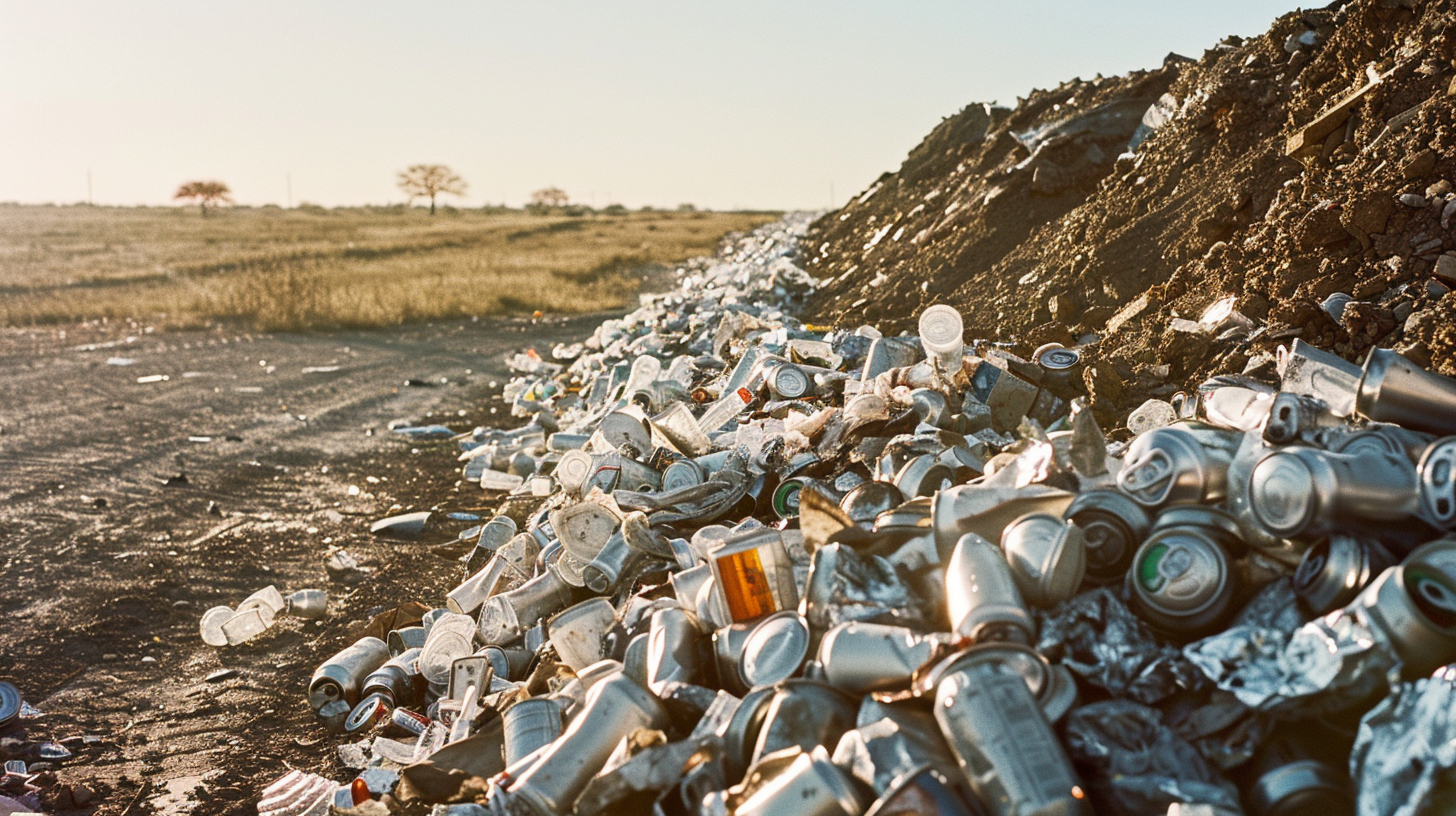
Bottles and cans make up about half of the litter volunteers pick up in states that use a container-recovery system as in states that do not, according to an analysis of 2023 cleanup data. In Texas, the idea of adopting such a system died in the Legislature in May 2025, and the argument over what it would cost has been on the record ever since. With the next regular session set to begin Jan. 12, 2027, here is what each side has put forward.
A container-recovery system, as used in other states and countries, puts a refundable value on each bottle and can so that containers are returned upstream rather than dropped, dumped or buried. It is one answer to a question the Dispatch has raised in earlier reporting on what litter cleanup costs Texas communities and on the value of the bottles and cans left in ditches.
The litter comparison comes from Reloop, a Brussels-based group that promotes such systems. Its analysis of Ocean Conservancy’s 2023 International Coastal Cleanup data covered 42 states: 10 with a system and 32 without. Plastic bottles and cans were 5.2% of littered items collected in the first group and 10.2% in the second. Plastic bottles alone were 3.0% versus 5.3%, and cans 2.2% versus 4.9%. Oregon and Michigan, where containers carry a 10-cent value, had the lowest shares at 2.8% and 2.3%.
Reloop, citing Oregon state archives, reported that containers made up as much as 40% of Oregon roadside litter before the state began its system in October 1971 and 6% by 1979, an 85% decrease. Reloop said a 2025 global report found reductions of 40% to 70% in most of the 20-plus places studied.
In Texas, the recycling picture is the backdrop. According to a Texas A&M University article, people in states with such systems recycle 46% of plastic water bottles, versus 10% elsewhere. The article, citing the Container Recycling Institute, said 23.7 billion beverage containers were sold in Texas in 2021 and about 5.2 billion were recycled. Fewer than one in five plastic water bottles is recycled in Texas, it said.
Opponents focus on cost. Resource Recycling reported May 20, 2025 that House Bill 2048, by Republican Rep. John Lujan, passed the House environment committee 6-0 on May 2, 2025, then died when the session ended May 15 without a floor vote. Anheuser-Busch, the Beer Alliance of Texas, WM, the Recycling Council of Texas, Spec’s and the Texas Chemistry Council opposed it.
Corianna Baier, the brewer’s director of policy analysis, told the committee the company saw “about a 9% drop in volume” in other states when such laws took effect, and said Texas is its highest-volume state. She also said sales typically return to prior trends after the initial decline, Resource Recycling reported. Logan Harrell, the chemistry council’s general counsel, also testified against it.
A study by the Container Recycling Institute, a group that supports these systems, and Reloop reached a different conclusion about sales. According to Recycling Today, the study of nearly a dozen markets, including Alberta, California and Oregon, found no definitive evidence that introducing or expanding such a system cuts beverage sales. The sales data covered 2000 to 2021 for markets drawn from GlobalData, and changes fell within normal ranges and matched regional trends, the report said. Institute President Susan Collins said opponents’ concerns were unfounded, Resource Recycling reported.
The two sales claims are not directly comparable. The 9% figure is Anheuser-Busch’s account of its own volumes, and the institute and Reloop study examined public national and state sales data. Vice Chair Claudia Ordaz said the committee could work with the bill’s authors on combining industry-focused and consumer-focused approaches, according to Resource Recycling.
Savings estimates elsewhere are examples, not Texas projections. A 2013 study by DSM for the Vermont Agency of Natural Resources valued litter reduction there at $815,000 to $1.2 million a year, and a 2014 study by Retorna put avoided beach cleaning in Catalonia at about €580,000 a year, Reloop’s compilation shows.
Whether a bill will be filed for 2027 is not yet known. If one is, lawmakers will have the litter data, the sales studies and the objections from brewers and chemical makers all on the record.