
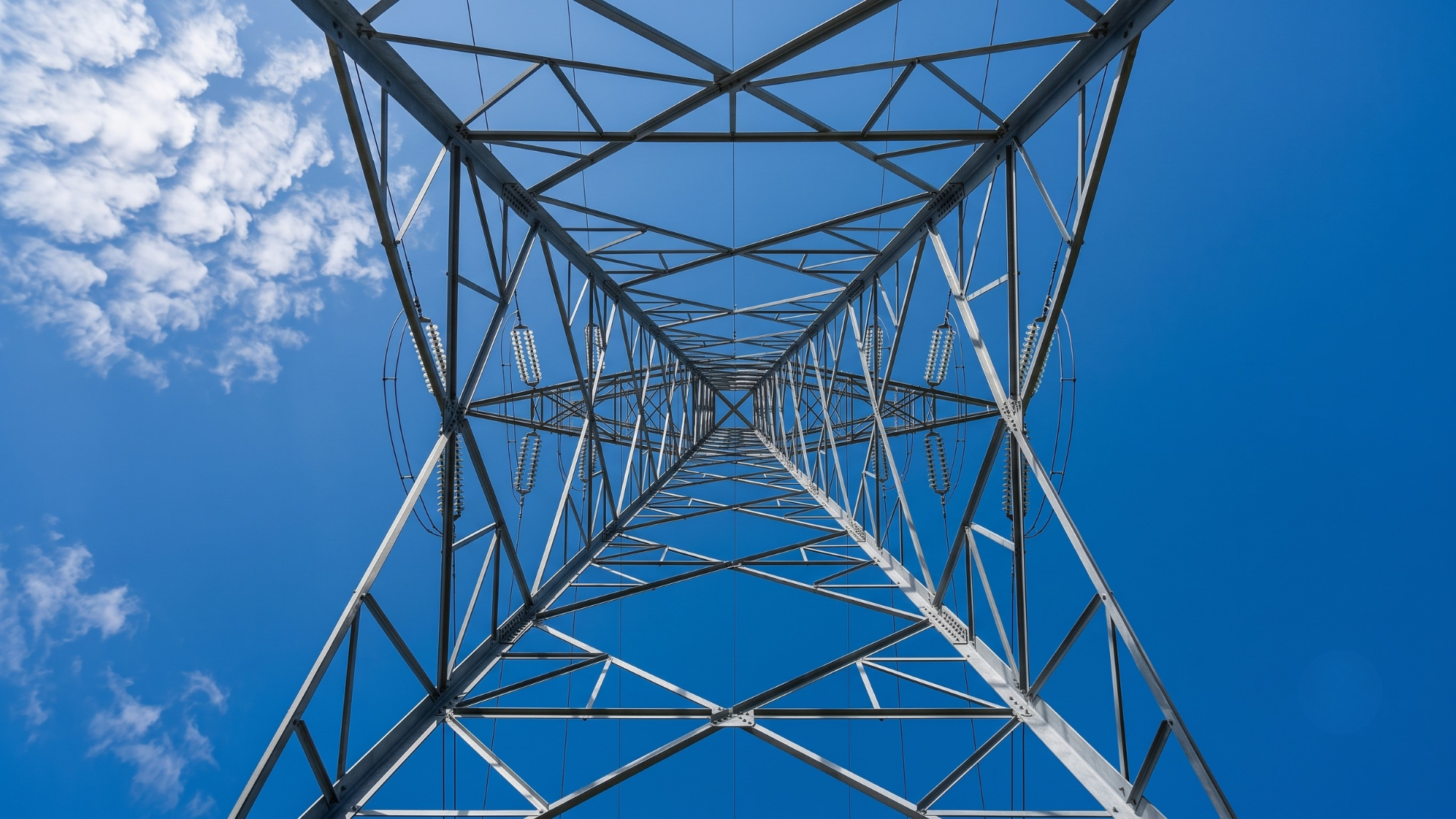
Oncor and the Lower Colorado River Authority’s transmission arm filed an 81-page rebuttal Sept. 2 asking Texas utility regulators to overrule two administrative judges who recommended denying a pair of 765,000-volt power lines across Central and West Texas, arguing the judges leaned on “lay witness testimony” over the state grid operator’s engineering and that denying the lines would leave Far West Texas facing forced outages of more than 2,000 megawatts.
The filing, in Docket 59475 at the Public Utility Commission of Texas, is the companies’ formal answer to the judges’ Aug. 20 recommendation — in plain terms, their last written chance to change the commissioners’ minds before a vote the law requires by Sept. 22. The Texas Dispatch reported that the two State Office of Administrative Hearings judges found the companies had not proved the lines were needed and had “deprived the process due under the rule to approximately 1,400 landowners” by not holding new public meetings after changing routes.
At stake is the middle of the state’s three planned 765,000-volt import paths into the Permian Basin: one line from Bell County west to the Big Hill substation in Schleicher County, and a second from Big Hill on to Sand Lake in the oil patch. The judges put the first at 214 to 244 miles and $1.6 billion to $1.9 billion plus $395 million in substation work, and the second at 197 to 222 miles and $976 million to $1.3 billion plus about $728 million in stations. The lines are the highest-capacity design built anywhere in the country and would cross more than 400 miles of mostly private land.
The companies’ central argument is that the judges ignored the state’s own grid planner. ERCOT, the agency that runs the grid for most of Texas, recommended all three import paths, and the companies write that the judges’ refusal to give that recommendation “great weight” under commission rules “directly contradicts” how the commission has treated ERCOT in every other 765-kilovolt case. “No party modeled a reliable alternative with the Import Path 2 Projects removed,” the filing says. “The PFD cannot replace sophisticated and highly technical reliability analysis with unverified and unsupported conjecture and bald declarations.”
ERCOT has placed what it calls generic transmission constraints on Far West Texas — limits on how much power can flow through an overloaded set of 345,000-volt lines — and the companies say those limits reflect “an imminent threat of firm load shed in Far West Texas exceeding 2,000 MW.” Firm load shed means cutting power to homes and businesses on purpose because the wires cannot carry more. ERCOT’s April 2026 plan for lifting those limits by 2030, the filing says, depends on all three import paths. “This basis alone compels approval,” the companies write. They add that of the 39 gigawatts of announced West Texas generation the judges cited, “only 1.35 GW of capacity were under construction as of May 2026.”
On landowner notice, the companies point to the commission’s own decision five days earlier. As the Dispatch reported, commissioners on Aug. 28 approved the first import path and overruled a different set of judges who had found the same notice violation, holding that the rule requires only one public meeting before an application is filed. The new filing says “every landowner specifically identified in the PFD either received direct-mail notice during the proceeding or had actual knowledge and participated,” and that even if more process were owed, “the appropriate response would be to provide that process, not to deny the Project Application.”
The commission’s own staff lawyers filed separately and split from the judges on all three fronts. Staff “contends that (1) the Applicants complied with the notice requirements, (2) the 765-kV transmission line projects for Import Path 2 are needed, and (3) Route 487 best meets the criteria,” wrote Scott Miles of the commission’s legal division. That last point is a break with the companies too: the judges said that if the commission finds need anyway it should pick Route 894, the companies’ preferred path, while staff argues Route 487 offers “qualitative benefits consistent with the community values expressed by parties and residents.”
Landowners filed the same day and want the opposite outcome. The docket index shows roughly 28 sets of exceptions from landowner groups, the Burnet County Commissioners Court and the Comanche Nation, most asking the commission to adopt the denial. Aaron Edward Howton, a landowner taking part in the case, filed Sept. 1 that he “agrees with and asks the Commission to adopt the PFD’s principal recommendation” and that at minimum the commission should reject a segment known as Link F20.
Louis Newsom of the Office of Public Utility Counsel, the state’s residential ratepayer advocate, told commissioners Aug. 28 that “the largest obstacle we have seen in this proceeding is the compressed timeline”; the judges’ recommendation records that at least 844 would-be participants were dismissed for missing a May 13 deadline. Attorney General Ken Paxton has separately urged a pause on the entire 765,000-volt program.
Replies to the exceptions are due Sept. 9 and the judges’ response by Sept. 15. The recommendation itself notes that the 180-day clock in state law “provides no exception or opportunity for extension” and runs out Sept. 22 — and no September commission meeting agenda had been posted as of Sept. 3.