
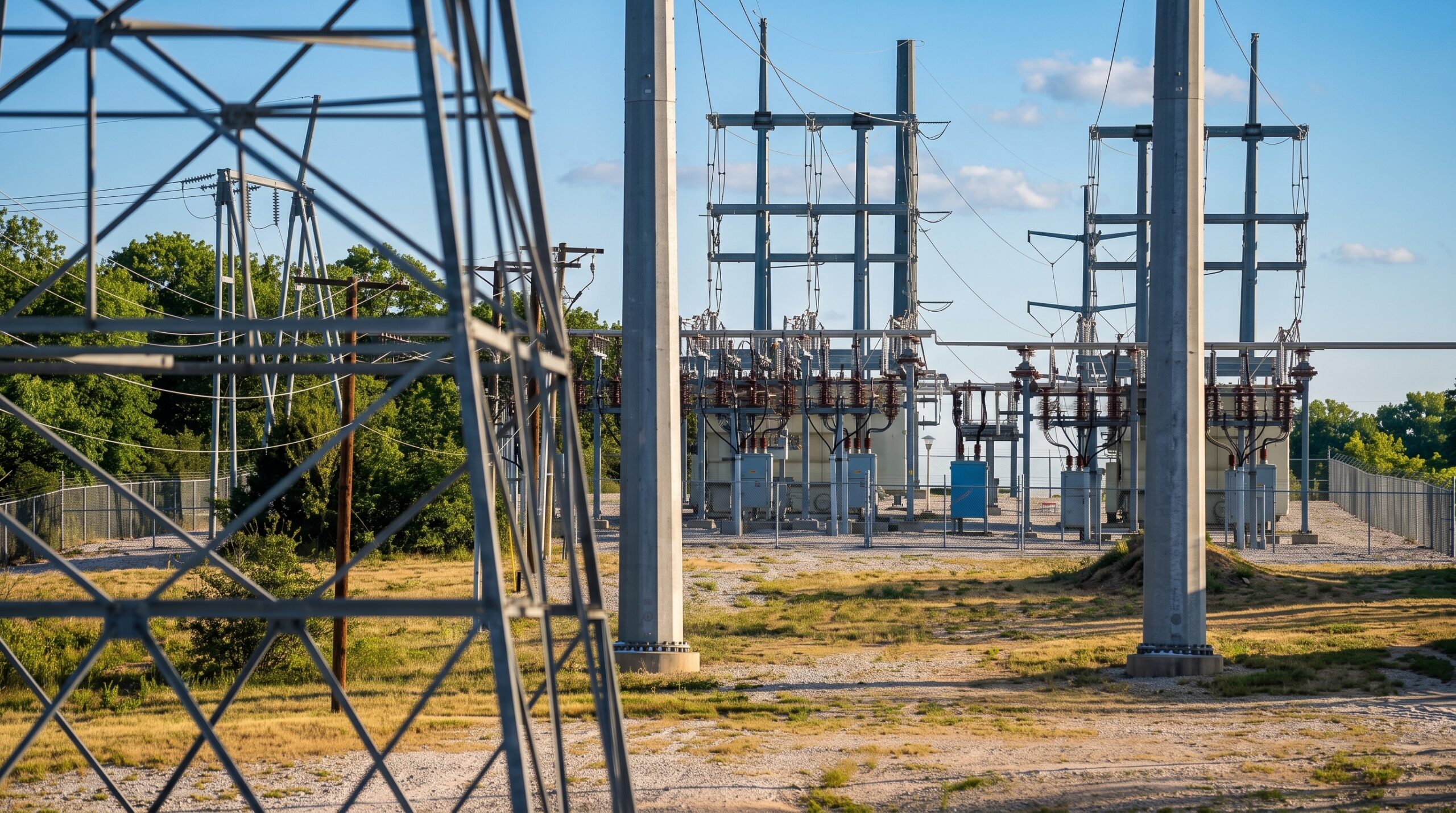
A customer of AEP Texas living in the brush country west of San Antonio could get a phone call three days before a windy afternoon warning that the lights may go out on purpose, then a second notice at 48 hours, a third at 24, and a final one somewhere between one and six hours before the power is cut. That sequence is written into the wildfire plan the utility filed with state regulators on Aug. 24, one of a wave of filings that will put nearly every electric utility in Texas on record about when it would deliberately de-energize a line to keep it from starting a fire.
Southwestern Electric Power Company and CenterPoint Energy, the utility that serves the Houston area, each filed on Aug. 31. Electric Transmission Texas filed Aug. 24. Oncor, the state’s largest distribution utility, filed in May and is closest to a decision. Denton Municipal Electric and CoServ Electric are due Sept. 14, Hamilton County Electric Cooperative and Brownsville Public Utilities Board on Sept. 28, and Texas-New Mexico Power on Oct. 5.
The filings trace to House Bill 145, by Rep. Ken King, R-Canadian, which took effect June 20, 2025. It requires any utility, municipal system or cooperative owning lines in a wildfire risk area to file a plan covering vegetation management, inspections, restoration, community outreach, an outside expert’s review, and “procedures for de-energizing power lines and disabling reclosers.” King sat on the Texas House committee that investigated the 2024 Panhandle fires, which the Dallas Morning News reported concluded that downed Xcel Energy poles caused the Smokehouse Creek fire, the largest in state history.
The Public Utility Commission of Texas, which regulates investor-owned electric utilities, wrote the implementing rule, 16 Texas Administrative Code Section 25.60, effective Dec. 4, 2025, and then set the filing calendar itself rather than imposing one deadline on everyone. The law gives the commission 180 days from each filing to approve, modify or reject a plan. For AEP Texas and Electric Transmission Texas, that clock runs to late February 2027.
The scale in the documents is what makes the shutoff provisions consequential. AEP Texas serves about 1.1 million customers across nearly 100,000 square miles of south and west Texas, with more than 45,000 miles of distribution lines and 8,000 miles of transmission. About 14,500 miles of that distribution system — roughly a third of it — sits in the two highest wildfire risk tiers, along with about 4,900 miles of transmission. Southwestern Electric Power, which serves about 193,000 customers in Northeast Texas and the eastern Panhandle, reports roughly 600 miles of distribution and 241 miles of transmission in its highest-risk tier. Electric Transmission Texas, a joint venture of American Electric Power and Berkshire Hathaway Energy, has about 1,500 of its 2,000-plus transmission miles in high-risk areas.
AEP Texas describes the shutoff tool in plain terms: it “may de-energize circuits when necessary to protect public safety,” a step it says is meant “to reduce the risk of wildfire ignition during extreme fire weather conditions.” Its playbook lists the conditions that start the internal process — sustained winds at or above 30 mph, gusts of 60 mph lasting two to three hours, humidity at or below 20 percent, and a fire-potential score in the top few percentiles — and says they are “considered collectively rather than any single trigger.” The company also commits to annual inspections of its highest-risk distribution lines and “independent spot audits of at least 10% of applicable inspections annually.”
What the filings do not answer is who pays. Asked directly in sworn testimony whether the company seeks cost recovery in the case, AEP Texas President and Chief Operating Officer Adrian J. Rodriguez answered: “No. Neither PURA § 38.080 nor the Commission’s WMP Rule addresses the recovery of costs associated with developing and implementing a wildfire mitigation plan.” Executives at Electric Transmission Texas and Southwestern Electric Power gave the same answer. Southwestern Electric Power’s project list — one feeder hardened over about 4.42 miles, roughly 128 miles of enhanced tree trimming across seven circuits, two supervisory control stations, and about 67 miles of small copper conductor replaced — is marked as “included in base program costs recovered through the base rate case process.”
The Office of Public Utility Counsel, which represents residential and small-business customers, warned during the rulemaking that the same spending could be recovered twice through separate rate mechanisms and asked for a comprehensive review. The commission declined, writing that cost review “is beyond the scope of this rulemaking project.” That fight has simply been deferred to the rate cases that follow.
teCustomers who want a say in the AEP Texas case have until roughly Sept. 24 to ask to take part, 30 days from the date the company completed notice. The Dispatch has previously covered state lawmakers’ review of wildfire preparedness. Once approved, a plan stays in force for up to five years, must be resubmitted within three, and requires an implementation report every May 1 — meaning the commission is about to lock in, utility by utility, the standard by which Texas decides whether to keep the lights on in a windstorm.