
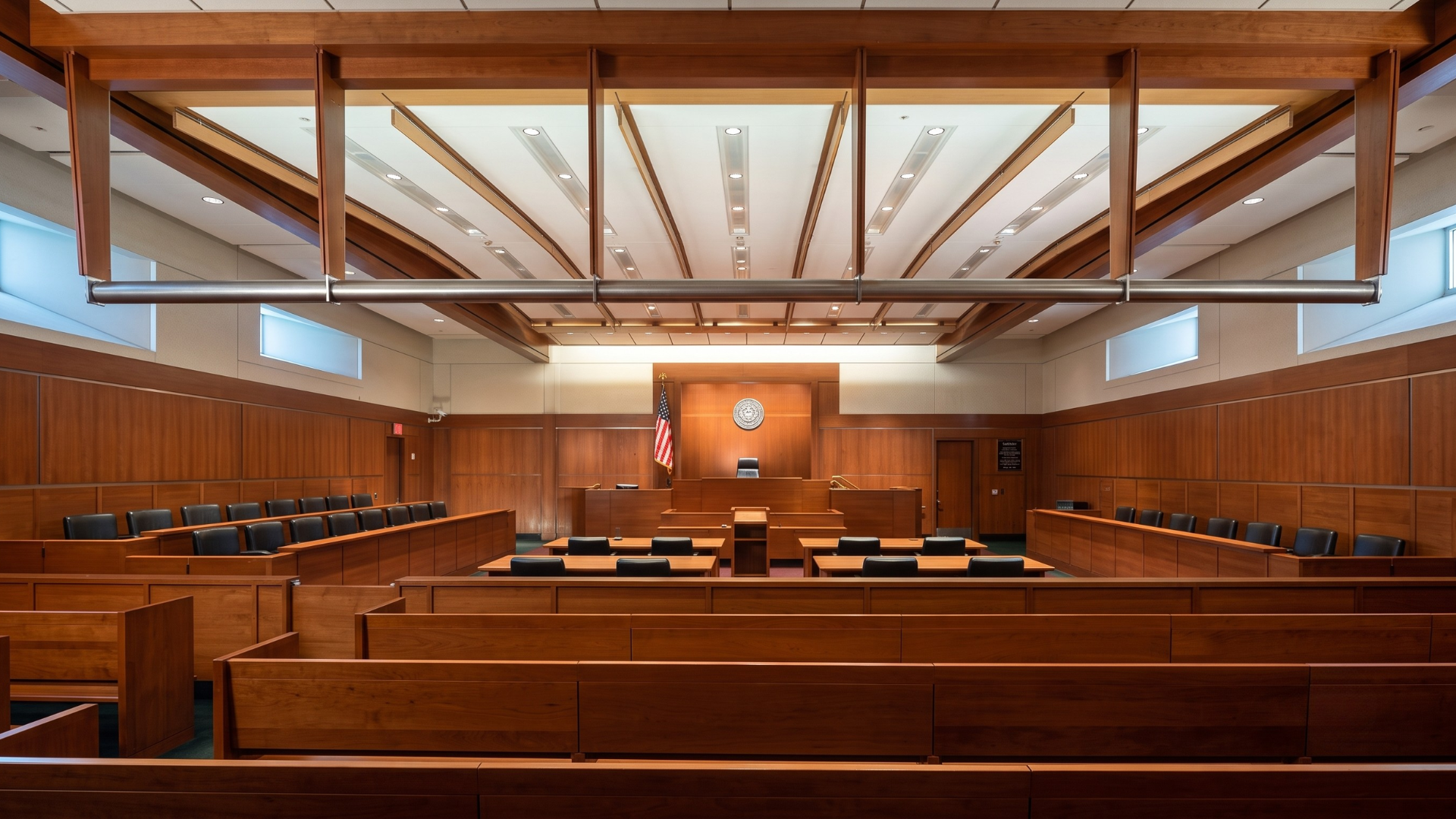
A federal judge in Portland has upheld Oregon’s law requiring the companies that make packaging to pay for recycling it, the first time any court has tested such a law against the U.S. Constitution — and on Aug. 28 he entered judgment against the trade group that brought the case.
The ruling matters well beyond Oregon because Texas is now a plaintiff in a parallel challenge to California’s version of the same idea, with a hearing set for January.
U.S. District Judge Michael H. Simon issued his findings of fact and conclusions of law on Aug. 27 after a five-day trial held in July. “The Court concludes that Oregon’s Plastic Pollution and Recycling Modernization Act does not violate either the dormant Commerce Clause or the Due Process Clause of the United States Constitution,” the 71-page opinion says. The next day he signed a judgment in favor of Oregon’s environmental quality director, Leah Feldon, and against the National Association of Wholesaler-Distributors, ending the case at the trial level.
Oregon’s law makes producers — the companies whose names are on the package — fund the cost of collecting and sorting it. They meet that obligation by joining and paying fees to a producer responsibility organization, a private nonprofit that runs the program under state supervision. The wholesalers’ group argued the arrangement forces out-of-state companies to subsidize an Oregon system, and hands government power to a private body without adequate protection for the businesses that must pay.
Simon rejected both. He opened by quoting the U.S. Supreme Court: “Companies that choose to sell products in various States must normally comply with the laws of those various States,” citing National Pork Producers Council v. Ross, the 2023 decision upholding California’s rules on how pork is raised.
The reasoning was largely about proof. On the trade group’s claim that the law burdens interstate commerce more than it benefits Oregon, Simon found no quantified showing of a substantial burden. On a challenge to the exemption for producers with less than $5 million in revenue, he found the group offered “only hypotheticals.” On the claim that Oregon unconstitutionally delegated public power to a private organization, he noted that producers may form a competing organization of their own or use a separate exemption for private recycling arrangements. And he held that Oregon’s process for contesting a fee — notice and a chance to cure, then a hearing before an administrative law judge, then review by the state Environmental Quality Commission, then the Oregon Court of Appeals — is “more than adequate under the Fourteenth Amendment.”
Oregon’s Department of Environmental Quality announced the outcome on Aug. 28. “Oregon has long been a national leader in waste prevention and recycling, and we’re pleased that the court has recognized the state’s authority to move forward with a modern recycling system that works for Oregonians,” said Jen Parrott, the agency’s administrator of land quality programs.
The wholesalers’ group, which represents distributors and opposes these laws, said the same day that it “strongly disagrees with the district court’s decision” and is “reviewing its options for next steps.” Its statement returned to a point it pressed at trial: “Oregon’s own regulator confirmed under oath that it had never seen the algorithm used to calculate those fees and could not reconstruct the calculations.”
Money collected under the program has run well ahead of money spent. The Circular Action Alliance, the organization administering Oregon’s system, reported collecting $145.5 million and spending $56.5 million in 2025, according to an account in Resource Recycling, a trade publication covering the industry. Simon treated the gap as the reserve-building normal for a program in its second year.
For Texas, the live case is in California. The state is one of 17 suing over California’s packaging law in the Eastern District of California, alongside the same wholesalers’ group. An amended complaint and a request to block the law from taking effect were filed Aug. 19 before U.S. District Judge Dena M. Coggins, who has set argument for Jan. 15, 2027. Two more suits are pending, one against Colorado’s program, where the state’s answer is due Oct. 5. The Dispatch reported on the questions the Oregon trial left open in July.
Whether the wholesalers appeal Simon’s ruling to the Ninth Circuit will shape all of it. That court also covers California.