
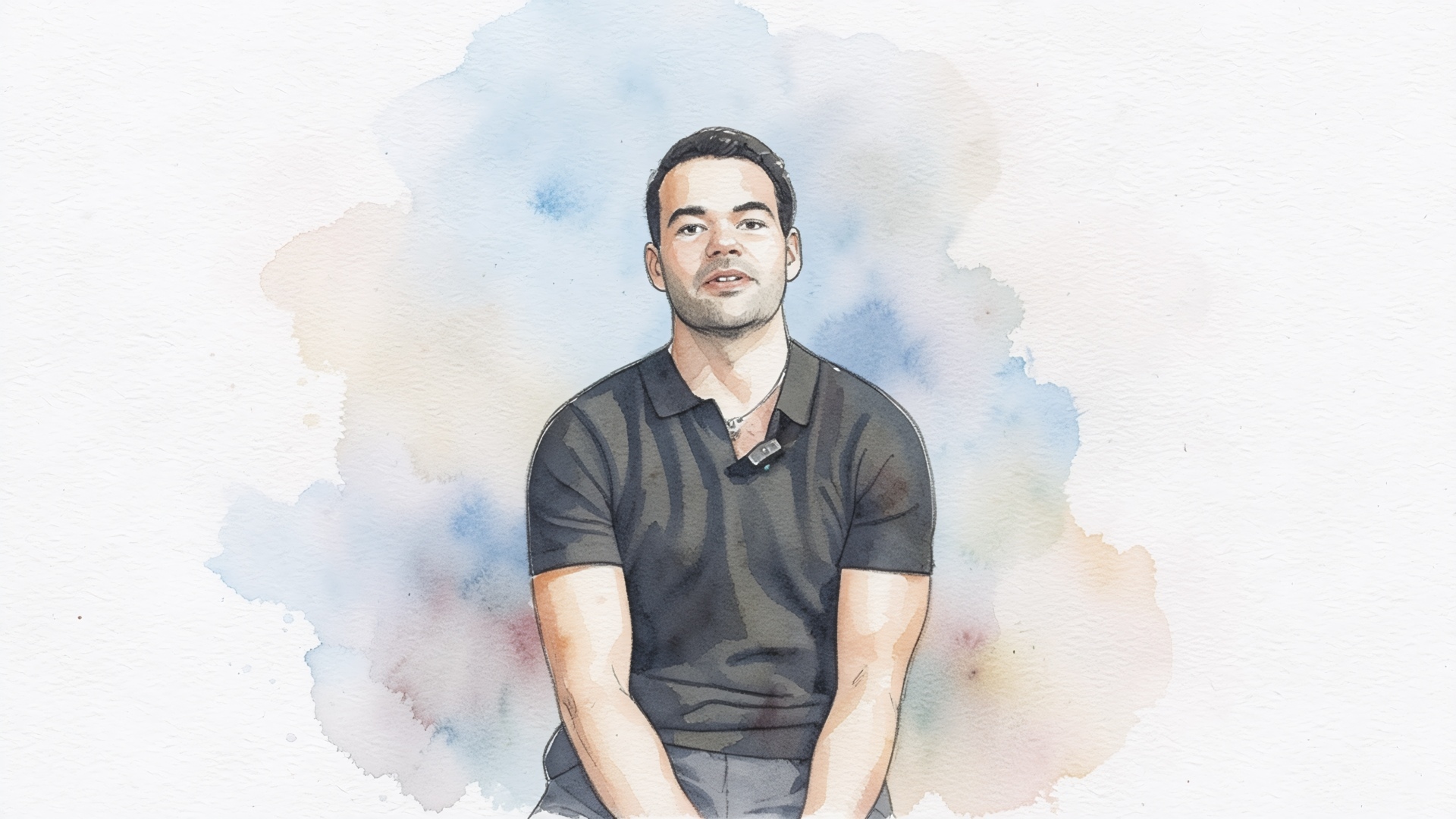
Most entrepreneurs come to the Legislature asking for fewer rules. Jack Collier is asking for more.
The Austin-area CEO runs Optimized Health and Performance, a cash-pay telehealth clinic built around quarterly bloodwork, hormone optimization and peptide therapy — a corner of medicine that has exploded in popularity and, he argues, is being undermined by the unregulated corner of the internet that sells the same compounds in unmarked vials. His ask of the 90th Legislature is blunt: make it easier for licensed physicians to prescribe pharmacy-grade peptides, and crack down on the websites selling them with a disclaimer.
“They’re getting around this law by saying that it’s not for humans, so it’s not a prescription medication,” Collier says of the “research use only” labels that dominate online peptide sales. “There’s nobody holding them to any kind of standard.”
The gray market he describes is not hypothetical, and its origins are regulatory. In September 2023, the FDA placed BPC-157 — the tissue-repair peptide popular among athletes and the one Collier’s host had tried for a sports injury — on its Category 2 list of bulk drug substances, citing questions about immunogenicity and characterization of the compound. That designation barred compounding pharmacies from preparing it, and demand migrated to vendors selling powders labeled for laboratory use, where purity is unverified. In February, U.S. Health and Human Services Secretary Robert F. Kennedy Jr. announced that BPC-157 and 13 other peptides would move back to Category 1, restoring prescription access through compounding pharmacies, though the formal FDA paperwork has not yet published. The whiplash is precisely the ambiguity Collier says Texas could resolve on its own.
His second ask follows from the first: state-funded research. Peptides like BPC-157 date to the 1990s, and expired patents leave private industry little incentive to finance the trials that would settle their safety and efficacy. “Let’s fund studies toward it,” he says. “Nonpartisan, non-biased studies that show what they do.” He is untroubled by the possibility that such research might not break his way. “I wouldn’t be nervous if they took a deeper look at these different compounds and decided if they were safe or not safe.”
Texas has done something similar before. Last session, lawmakers committed $50 million to a public-private partnership to shepherd ibogaine — a psychedelic compound studied for opioid use disorder and other conditions — through FDA clinical trials, the largest state-funded psychedelic research initiative in the country. Collier points to it as the template. “What I would like to see Texas become is the capital in America of regenerative and modern medicine,” he says, noting that Florida and Georgia have moved to expand access to stem cell therapies.
Collier’s interest in the subject started with a family experiment. At 20, working in Austin supplement shops and frustrated that his training wasn’t producing results, he went with his father and his 17-year-old brother to have all three of their testosterone levels checked. His 60-year-old father’s came back the highest.
“At the time, I thought that I felt fine,” he says. “But looking back, I realized I felt terrible.”
That finding is less anomalous than it sounds. A widely cited 2020 study in the Journal of Urology found testosterone levels among American men aged 15 to 39 declined measurably between 1999 and 2016, a trend that persisted even after controlling for body mass index. Collier’s complaint is not that his own numbers were catastrophic but that nothing in a standard physical would have flagged them: the conventional reference range runs roughly 300 to 1,000 nanograms per deciliter, wide enough that a young man near the bottom is told he is normal. “They would have been like, oh, you’re fine,” he says.
Whether the right response is to medicate toward the top of that range is a live debate in endocrinology, and Collier has a commercial interest in the answer — his clinic ships hormones and peptides from a compounding pharmacy to patients paying out of pocket. But his framing of the underlying problem tracks with the concerns that animated the Legislature’s “Make Texas Healthy Again” push last session. Senate Bill 25, which passed the Senate unanimously and was signed in June, requires annual nutrition instruction in public schools, daily physical activity through the elementary grades, warning labels on foods containing certain additives, and — notably — updated nutrition training for Texas physicians, medical residents, nurses and physician assistants. That last provision echoes Collier’s own prescription. “There needs to be more education done in medical school,” he says.
For all the discussion of compounds, Collier is emphatic that none of it substitutes for the basics. “Prevention is the best medicine,” he says. “You can pay tens of thousands of dollars every month… if you are not taking care of yourself at that basic level, it’s not going to work. Nothing works if you don’t.” He returns to muscle mass and cardiovascular fitness as the levers with the best evidence behind them, and to a metaphor about maintenance: “Imagine you had one car. That’s it. You would make sure the oil is always changed.”
He is similarly direct about why his clinic operates outside insurance — a decision he frames as freedom and critics would frame as a business model available mainly to people who can afford it. Insurance rules dictate what is “medically necessary,” he argues, and that determination doesn’t accommodate what he does. His practical advice to patients is to ask a question few think to ask: what does this cost in cash? The gap can be substantial, and since 2018 federal law has explicitly barred insurers and pharmacy benefit managers from preventing pharmacists from disclosing it.
The policy stakes are not small in a state that leads the nation in uninsured residents and carries adult obesity rates above the national median. Collier’s bet is that Austin — already a hub for the fitness-and-longevity culture that has grown into a national industry — is positioned to define what comes next, and that the appetite for it crosses party lines. “The health and wellness movement in Austin, it’s almost bipartisan,” he says. “Democrats agree with it. Republicans agree with it.”
Whether the Legislature agrees is a question for January. But Collier’s position is an unusual one to bring to the Capitol: a businessman asking lawmakers to draw brighter lines around the industry he works in, on the theory that clarity is worth more to him than the absence of rules.