
A dog in Crockett County tested positive for New World screwworm on Aug. 31, and by the next afternoon the state veterinarian had drawn a new quarantine line around part of the county. The timing is the news: the same week Texas released its first two quarantine zones of the outbreak, it opened another one.
The Texas Animal Health Commission, the state agency that regulates livestock disease, issued an executive director order signed Sept. 1 by Lewis R. Dinges, the commission’s executive director and a veterinarian. “On August 31, 2026, NWS was detected in a canine in Crockett County,” the order reads, using the abbreviation for the parasite. It designates part of the county as Infested Zone 20 and imposes a quarantine: “Warm-blooded animals located within Infested Zone 20 may not be moved outside of the zone without prior authorization from the Commission.”
The restriction reaches beyond live animals. “Hides, carcasses, and parts of any animal capable of serving as a host for NWS must be inspected and undergo any treatment deemed necessary by a Commission representative prior to removal from the Infested Zone 20,” the order says. It stays in force “until the quarantine is released by the Commission.”
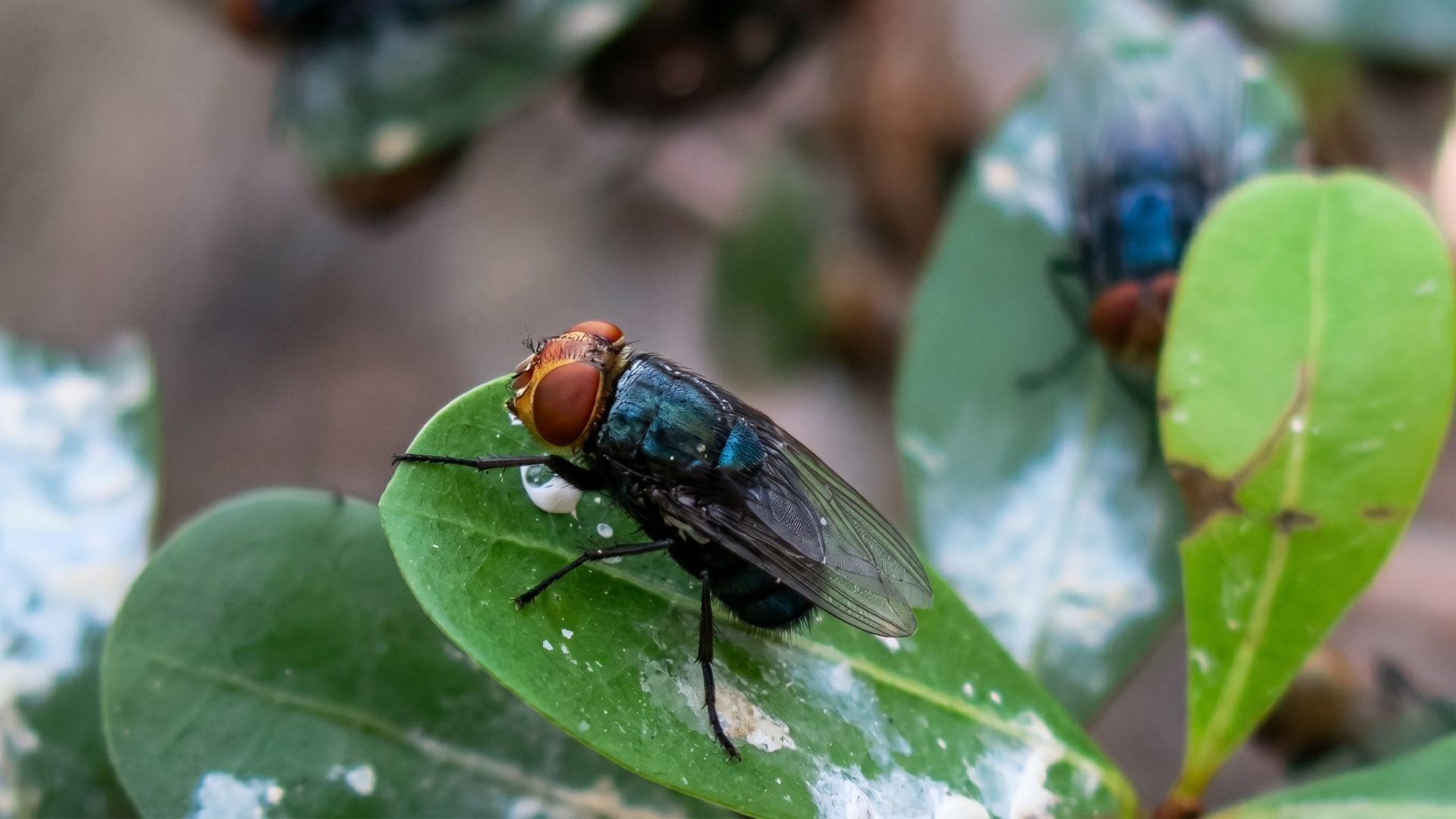
New World screwworm is a fly whose larvae feed on the living flesh of warm-blooded animals, including livestock, pets, wildlife and, rarely, people. The United States eradicated it decades ago; it has been working its way north through Mexico since 2023, and the first Texas case of this outbreak was confirmed June 3.
The Crockett County order lands one day after the opposite kind of announcement. On Aug. 31 the U.S. Department of Agriculture’s Animal and Plant Health Inspection Service and the state commission released the first two Texas zones of the outbreak — Zone 02.A, covering parts of La Salle and Webb counties, and Zone 03, covering parts of Gillespie, Kerr and Kimble counties. Releasing a zone lifts the screwworm-related movement rules inside it. Those were the first rollbacks since the outbreak reached Texas, and the state’s chief veterinarian struck a deliberately cautious note at the time, saying that while the milestone was worth marking, the state could not take its eye off the ball. The Dispatch covered that first release.
Nineteen Texas counties remain at least partly under movement restrictions: Bandera, Brewster, Coke, Crockett, Edwards, Jim Hogg, Kimble, Medina, Pecos, Presidio, Schleicher, Starr, Sutton, Terrell, Tom Green, Uvalde, Val Verde, Zapata and Zavala. Crockett County has been under one order or another for most of the summer. On Aug. 26 the commission modified an existing zone into Zone 19.A, spanning parts of Crockett, Sutton and Val Verde counties, after screwworm was confirmed in a goat in Val Verde on Aug. 25.
The broader numbers have barely moved. The federal detection dashboard lists 47 confirmed cases, of which two remain active and 45 are closed. All 47 are in domestic animals. There have been no detections in wildlife, no detections in the fly traps set across South and West Texas, and no human cases. Forty-six of the cases are in Texas and one is in Lea County, New Mexico. By species, the count is 22 cattle, 16 sheep, six goats and three dogs. The Crockett County dog is the fourth canine case and the county’s 12th case overall, and it had not yet appeared on the federal dashboard, whose underlying data was last updated Aug. 26.
Nothing has changed at the border crossings. Douglas, Arizona, reopened to Mexican cattle Aug. 24 and remains the only southern port to have done so. The inspection service’s status page still says it “will then consider reopening the Santa Teresa, NM and Columbus, NM ports to live cattle, bison, and horses,” language identical to a week earlier. Every Texas port remains closed to livestock imports.
South of the border, the agency’s list of cases within about 100 miles of the United States stands at 398 entries, unchanged from the prior week. The three most recent were in Coahuila, the Mexican state that faces the Big Bend and Del Rio sectors of the Texas border.
For ranchers, the practical effect of the new order is narrow but immediate: anyone inside the Crockett County zone who wants to move a cow, a horse, a goat or a dog across the zone line needs the commission’s permission first, and there is no end date. For the state, the sequence of the past two days is the more useful signal. Zones can come off. They can also go back on.