
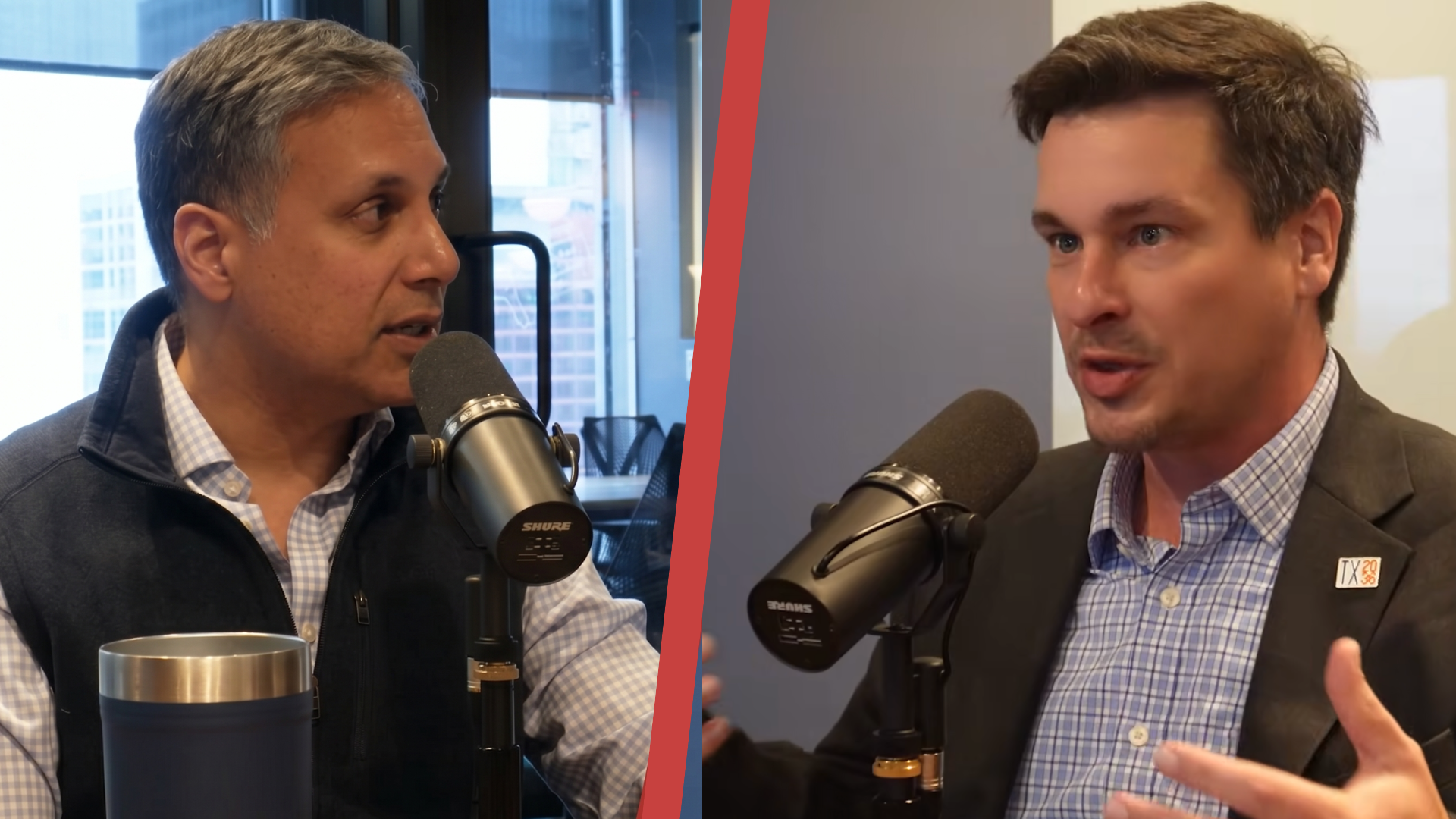
A recent discussion on the Texas Talks podcast warned that employer-sponsored family healthcare coverage is reaching $27,000 annually, with out-of-pocket costs for Texas families averaging $10,000. Avik Roy (FREOPP) and Charles Miller (Texas 2036) said that healthcare affordability has now surpassed property taxes as the primary concern for Texas voters, signaling an urgent need for structural reform in the state’s legislative agenda.
The Big Picture
For the average Texas family, healthcare is now the largest household expense after housing, often exceeding their total property tax burden. The state faces a “non-competitive” market driven by federal tax distortions and massive provider consolidation. While Texas leaders have focused on tax cuts, the rapid growth in medical costs—which has surged 53% since 2016—is erasing those savings, threatening the state’s long-term economic competitiveness and the financial stability of Texans.
What Newsmakers Are Saying
- Avik Roy (Co-Founder, FREOPP) said that Texas often compares itself to California, yet “for the average Texas family, [out-of-pocket healthcare costs are] about $10,000 a year… for the average Californian family today, it’s about $8,500.” He characterized the U.S. system as an “open bar” where neither the doctor nor the patient is incentivized to care about the price.
- Charles Miller (Director, Texas 2036) described the impact on the “Texas miracle” as a bottom-line issue for businesses. “That’s eating into wage growth… eating into their ability to hire new employees… and ultimately eating into their ability to be a more productive and vibrant company.”
- On Reform Failures: Roy said that Texas’s attempt to fix “surprise billing” actually drove prices higher by requiring insurers to pay inflated rates, perversely incentivizing providers to hike their “list prices” to win in arbitration.
By The Numbers
- $27,000: The annual cost for an employer-sponsored family insurance plan in Texas.
- $10,000: The average annual out-of-pocket exposure (premiums, deductibles, co-pays) for a Texas household.
- 53%: The increase in family coverage costs in Texas since 2016.
- $9,000: The amount the U.S. government spends per capita on healthcare subsidies—the highest in the world.
- 1.1 Million: The number of Texans (state employees and teachers) whose healthcare coverage is directly controlled by the state, providing a massive lever for reform.
The Dispatch Note
Texas policymakers have an opportunity to lead by example. By using the state’s policy power as an employer for over a million teachers and public servants, the legislature could force price transparency and competitive contracting that could lower costs for the entire commercial market. As the state moves toward its bicentennial in 2036, “stopping the bleeding” by capping medical cost growth at the rate of inflation will be the true test of whether Texas remains a pro-family, pro-taxpayer state.
Listen to the full episode here: Future of Healthcare