
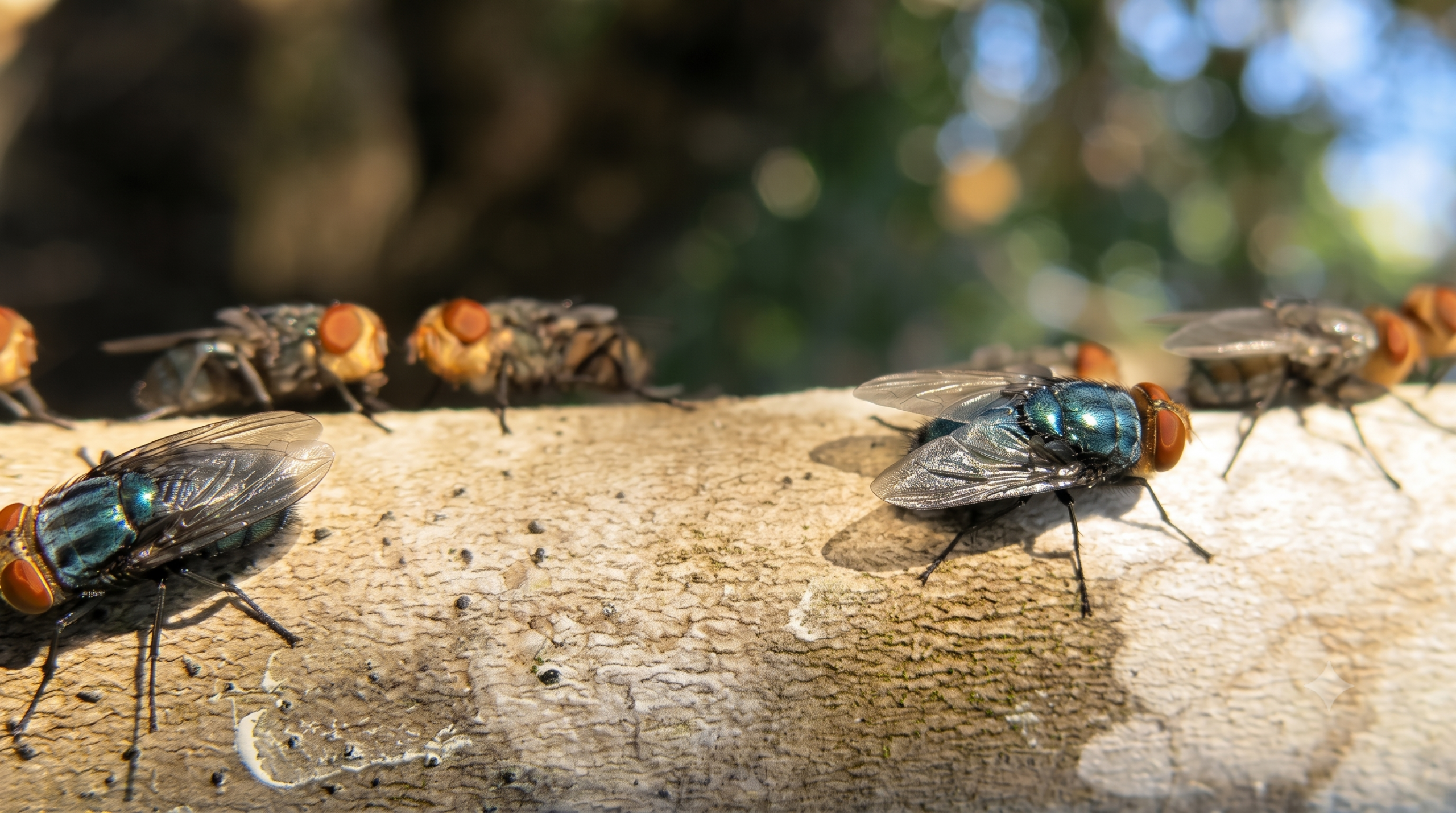
For the first time since the New World screwworm outbreak reached Texas in June, federal monitors have caught a wild fly in a trap, in Brewster County in the Big Bend. Until now, every confirmed case has been an animal already infested. A fly in a trap means the parasite is flying free, not just showing up in livestock.
The U.S. Department of Agriculture’s confirmed-detections dashboard lists one “fly trap” detection, dated Sept. 25, in Brewster County. The dashboard says a detection “means at least one wild fly was found in the trap.” The USDA confirmed the catch through its screwworm rapid-response account on X, according to Southeast AgNet, and Bloomberg News. The fly was found in one of more than 100 surveillance traps along the border. Sources differ on the day: Bloomberg’s account calls it Friday, Sept. 27, but the dashboard entry says Sept. 25.
New World screwworm is a fly whose larvae burrow into the living flesh of animals and can kill them if untreated. Ranchers in West Texas have been dealing with it for months. Brewster County had two cattle cases, on July 29 and July 30, according to the dashboard, and the Texas Animal Health Commission, the state agency that controls animal disease, lists the county among its restricted “infested zones,” where animals may not leave without the commission’s permission.
The trap catch matters because traps show where flies are living, not where sick animals have been found. USDA describes its surveillance as “targeted fly traps, animal checks, drones, trail cams, boots-on-the-ground monitoring, and a network of partners,” according to Southeast AgNet. The traps are placed outside areas where the government is releasing sterile flies, so that a wild fly is not confused with a lab-raised one.
The count elsewhere on the dashboard has also moved. It now shows 52 confirmed animal cases since the first, on June 3. Fifty-one are in domestic animals and none are in wildlife. Three cases are active. The newest was confirmed Sept. 26, in a goat in Crockett County. Bloomberg’s account still cited 50 cases and two active infestations, so the dashboard’s higher total reflects updates after that report.
Agriculture Secretary Brooke Rollins said the country is “not out of the woods yet,” according to Bloomberg. She noted that a major sterile-fly production facility will not open until April or May 2027, according to the same report. Sterile flies mate with wild ones and produce no offspring, and Bloomberg listed their release among the government’s response measures, alongside expanded trapping, animal monitoring and drone surveillance.
Paolo Tizzani, an epidemiologist at the World Organisation for Animal Health, told Bloomberg that the small number of cases “is encouraging, but case numbers alone cannot tell us why spread has been limited.” A first wild fly is one more data point on that question. It does not by itself show an established population.
None of the sources reviewed described a new quarantine, movement restriction or trade action tied to the trap catch. That leaves open how the state and federal agencies will treat Brewster County and the neighboring Presidio County, where a horse case was confirmed Sept. 9 and remains active. It also bears on the phased reopening of southern cattle-import ports. The USDA reopened Santa Teresa, New Mexico, on Sept. 24 and said its timeline “may be adjusted based on progress, or paused if risk increases in border states.” Earlier Dispatch coverage tracked the first horse case in Presidio and Jeff Davis counties and the Crockett County quarantine zone.
The next signals are whether more wild flies turn up in the traps around Brewster County and whether the Animal Health Commission redraws its zones there.