
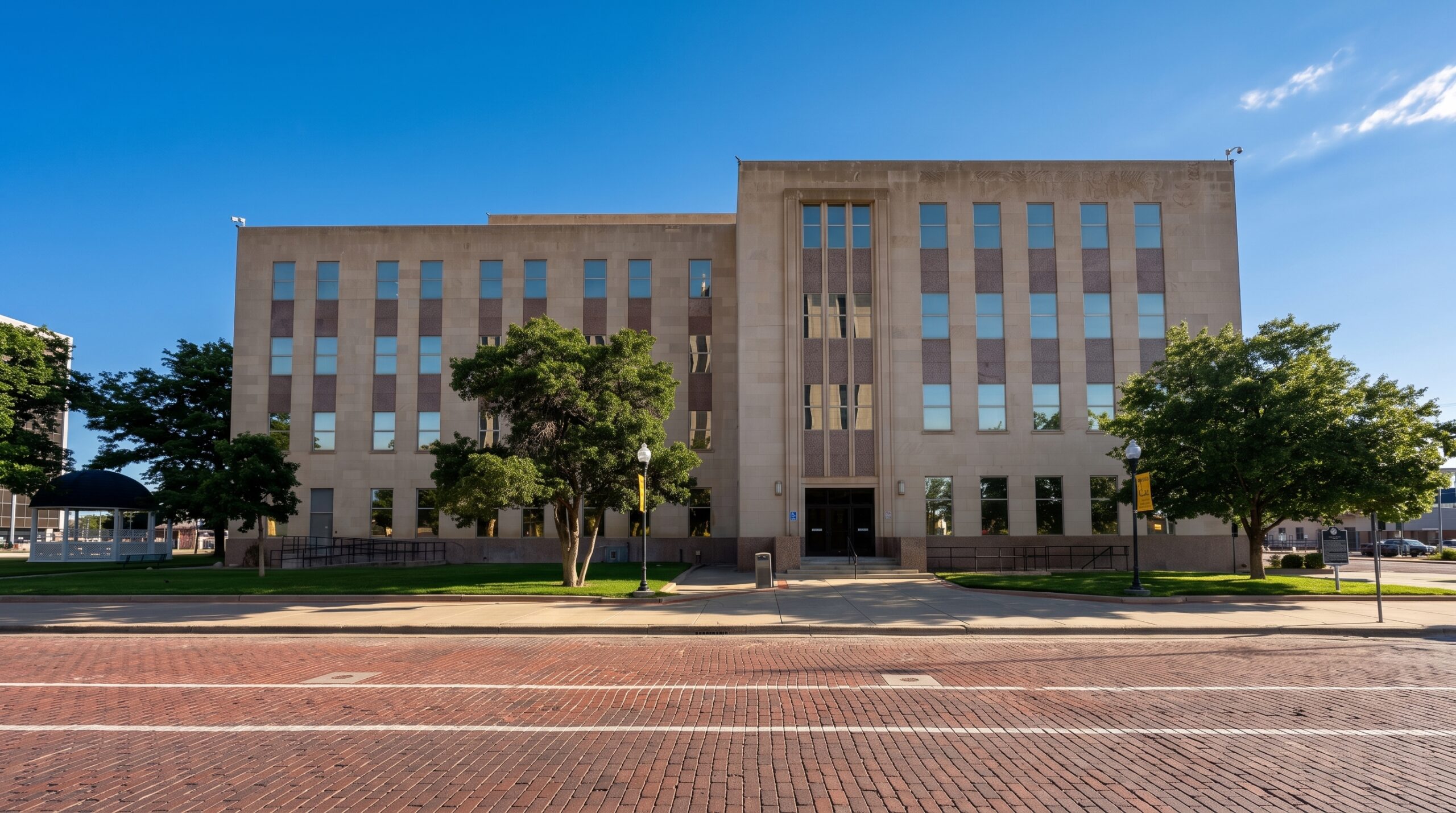
Bexar County Judge Peter Sakai told commissioners on Sept. 1 what holding the property tax rate flat will cost, and he said it out loud for the first time. “In this current budget year, we believe that some positions will be lost,” Sakai said, according to Texas Public Radio. “We’ll have to tell some employees, ‘we’ll do our very best to find positions for you,’ but some positions will be cut, especially those that were funded by federal funds called ARPA,” the federal pandemic aid program whose money has run out.
That was one of three county property tax decisions in six days, and the three counties went three different directions. Bexar held its rate steady and is cutting jobs. Harris County’s budget office recommended the highest rate it can adopt without asking voters. Lubbock County’s commissioners proposed cutting the rate to the level that raises no new money at all, over the objections of their own judge, auditor and sheriff.
Bexar commissioners voted unanimously Sept. 1 to propose a rate of $0.299999 per $100 of value, identical to the current rate, to fund a $2.6 billion budget. The county’s own presentation puts the rate that would raise the same amount from the same properties as last year — the no-new-revenue rate — at $0.309043, and the ceiling above which an election is required at $0.386728. In other words, Bexar proposed a rate below the level that would simply hold revenue flat, because its net taxable base fell 1.3 percent, or $3.3 billion, to $242.2 billion. On a median home valued at $315,000, the county’s share of the bill comes to about $945. Commissioner Grant Moody told Texas Public Radio, “I think we owe it to homeowners to hold the line here.” Commissioner Tommy Calvert noted 400 property foreclosures were posted at the courthouse that same day. A public hearing and possible adoption are set for Sept. 15.
Harris County went the other way. Its Office of Management and Budget recommended a county rate of $0.41750 per $100, up from $0.38096, a 9.6 percent increase, with the debt portion alone rising 21.7 percent. Adding the flood control district, the Port of Houston and Harris Health, the combined rate would go from $0.62413 to $0.67147, a 7.6 percent increase.
The recommended county rate is not an arbitrary number. The tax assessor-collector’s certified worksheet, signed Aug. 31 by Annette Ramirez, puts the county’s no-new-revenue rate at $0.38667 and the voter-approval rate — the ceiling above which the county would have to ask permission at the ballot box — at exactly $0.41750. The budget office recommended the ceiling, to the ten-thousandth of a cent. The Houston Chronicle reported the increase would mean “roughly 12% higher tax bill for the median homeowner” and described the combined rate as the highest since at least 2008. It also reported the county is closing a deficit of more than $180 million. Total taxable value in the county is $671.6 billion. Commissioners take it up at a special meeting Sept. 8 at 9 a.m.
Lubbock County produced the sharpest internal fight. Commissioners proposed the no-new-revenue rate of 32.2 cents, down from 32.7 cents, which KCBD reported works out to roughly $27 less for the average homeowner and about $1 million less revenue for the county. County Judge Curtis Parrish objected. “It just robs our future,” he said. County Auditor Kathy Williams told commissioners the rate “will not fund” a cost-of-living raise, and added, “You had all day to do it. You did nothing.” Three commissioners walked out of a budget workshop. Sheriff Kelly Rowe warned that public safety would suffer. The auditor files the proposed budget Sept. 4 and a public hearing follows Sept. 14.
Travis County is on the same calendar and has taken the Harris approach. Its preliminary budget is balanced at 38.6210 cents, which is precisely its voter-approval rate, against a no-new-revenue rate of 37.8179 cents, with a hearing and adoption Sept. 15.
The state’s chief tax official has been arguing the opposite case all week. Comptroller Don Huffines, in an Aug. 27 speech to an ad valorem taxation seminar, pointed to $1.4 billion in August sales tax allocations to local governments, up 13 percent from a year earlier. “When sales tax collections are climbing that fast, local governments have room to bring property tax rates down,” Huffines said. “Local governments must be more conservative in how they spend, period. Every dollar a city or county council doesn’t spend is a dollar they don’t have to tax away from a homeowner.”
Four days later, the state’s largest county recommended the highest rate it can set without an election. The Dispatch has tracked the Harris and Tarrant rate proposals since mid-August. The next real test is Sept. 8, when Harris commissioners decide whether to take the ceiling their budget office handed them.