
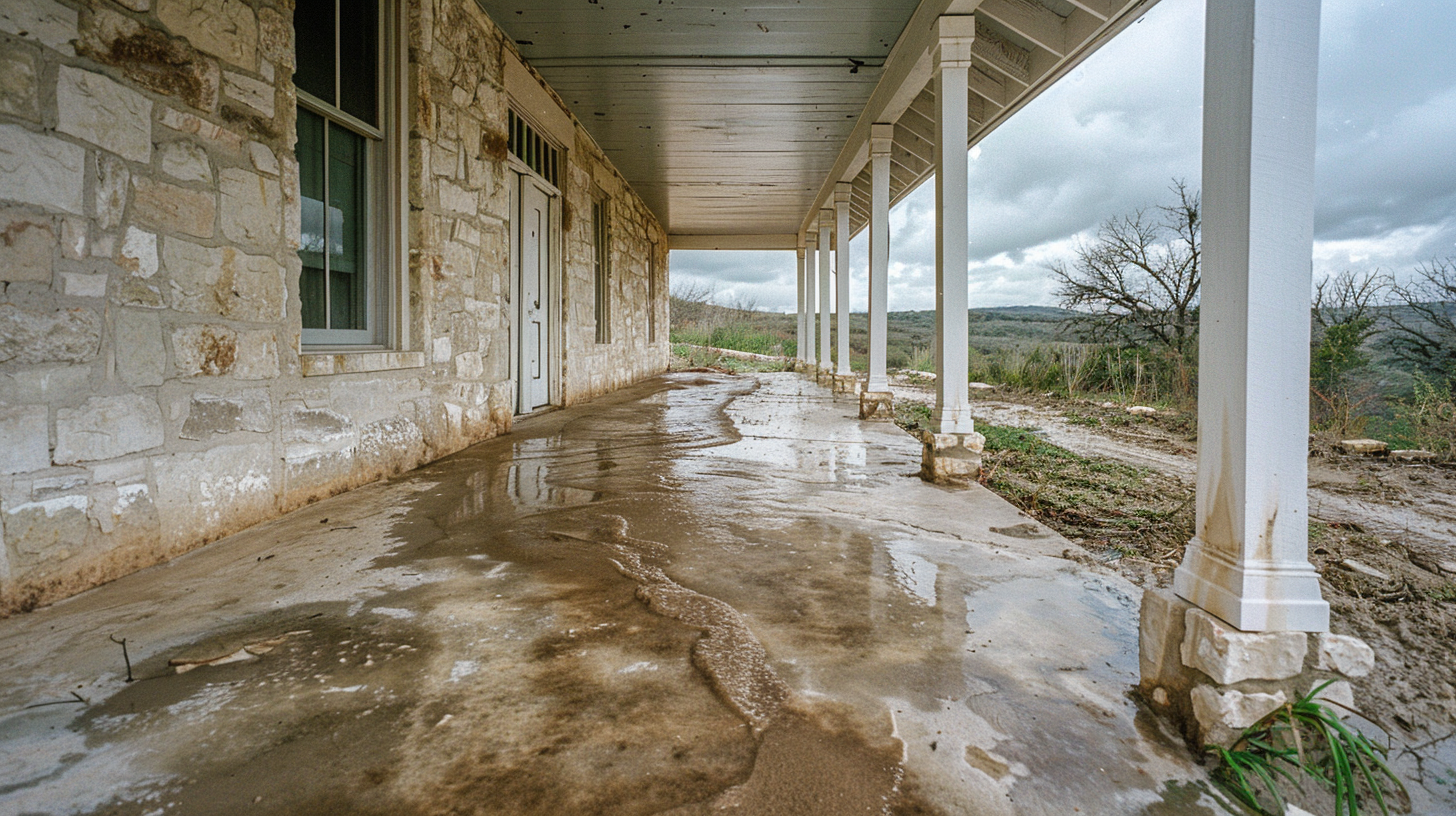
Governor Greg Abbott’s July 17 major disaster declaration for 28 flood-hit counties did more than unlock federal aid. It started a clock on a property tax break that Texans whose homes and businesses were damaged have 105 days to claim — a deadline that falls on Oct. 30 — and it arrives four days before appraisal districts must certify their tax rolls on July 25.
Under Tax Code Section 11.35, property that is at least 15 percent damaged by a disaster inside a governor-declared disaster area qualifies for a temporary exemption on part of its appraised value, according to the Texas Comptroller’s property tax disaster guidance.
The comptroller’s office says qualifying property includes buildings and other improvements to real property, business personal property used to produce income, and certain manufactured homes. Owners apply on Comptroller Form 50-312, and the chief appraiser assigns a damage rating from Level I to Level IV.
The ratings determine how much value comes off. The comptroller’s office puts Level I, damage of at least 15 percent but under 30 percent, at a 15 percent exemption; Level II at 30 percent; Level III at 60 percent; and Level IV, a total loss where repair is not feasible, at 100 percent. That figure is then prorated for the part of the year left after the declaration.
With Abbott’s declaration dated July 17, 167 days remain in 2026 — meaning a damaged property this year receives roughly 46 percent of the exemption its damage rating would otherwise produce. The chief appraiser must notify the owner within five days of deciding, and the exemption expires on Jan. 1 of the first tax year in which the property is reappraised.
Abbott signed the declaration Friday from Uvalde and said it would be sent to President Donald Trump, who approved the federal request Saturday. The state declaration covers Atascosa, Bandera, Bexar, Blanco, Brewster, Comal, Crockett, Dimmit, Edwards, Frio, Gillespie, Kendall, Kerr, Kimble, Kinney, La Salle, Mason, Maverick, Medina, Menard, Real, Schleicher, Sutton, Terrell, Uvalde, Val Verde, Wilson and Zavala counties. Abbott said the list would be expanded as damage assessments are completed.
The National Weather Service recorded more than two feet of rain in parts of Uvalde and Kerr counties between Monday and Friday, according to reporting by The Texas Newsroom and Texas Public Radio. The Guadalupe River crested at 37.94 feet at Center Point. The Texas Department of Public Safety said floodwaters destroyed part of the FM 481 bridge southwest of Uvalde, severing a route between Uvalde and Eagle Pass. Two people died. Texas Division of Emergency Management Chief Nim Kidd said on July 17 that about 125 displaced people remained in shelters.
Three other provisions of the Tax Code follow from the same declaration. Section 31.032 lets damaged homes and small businesses in a disaster area pay their taxes in four installments without penalty or interest, due Feb. 1, April 1, June 1 and Aug. 1. Section 11.135 lets an owner keep the homestead exemption while rebuilding, and stretches the normal two-year window to five years in a declared disaster area. Section 23.23 provides that a replacement structure is not treated as a new improvement under the 10 percent homestead appraisal cap, unless it is larger or built to a higher standard than what it replaced.
One provision cuts the other way for taxpayers though. The comptroller’s guidance explains that a taxing unit other than a school district or a special taxing unit, sitting in a declared disaster area and granting at least one Section 11.35 exemption, may calculate its voter-approval tax rate — the rate above which voters must approve an increase — allowing larger increases. State law otherwise caps most cities and counties at 3.5 percent revenue growth over the prior year, excluding new construction, before an election is required. The disaster provision loosens that ceiling.
That collision is not hypothetical. Bexar County is on the disaster list, and San Antonio has already said it will propose its first rate increase in 33 years, with city staff pitching a rate as high as state law allows without a vote. As The Texas Dispatch reported ahead of certification, falling values were already pushing rates upward before the water rose.
Chief appraisers in the 28 counties are required under Tax Code Section 6.053 to help emergency management authorities estimate damage. Their first hard deadline is Saturday, when the rolls certify.