
Student affairs. Admissions. Fundraising. Public relations. Academic instruction for medical students, and the clerical staff who support it.
Those are among the things three Travis County property taxpayers say their tax money has been buying at the University of Texas at Austin’s Dell Medical School, and on Sept. 4 they asked the Third Court of Appeals to explain how any of it is indispensable to treating poor people.
The motion for rehearing in Birch v. Travis County Healthcare District does not argue new facts. It argues that the court reached for the wrong legal standard, then declined to engage the record that would have tested it. “By eliding this evidence,” the motion states, “the Austin Court never has to explain how such expenditures are unquestionably indispensable to providing health care to the county’s poor.”
That word is the case.
A 1940 water district, and the standard it set
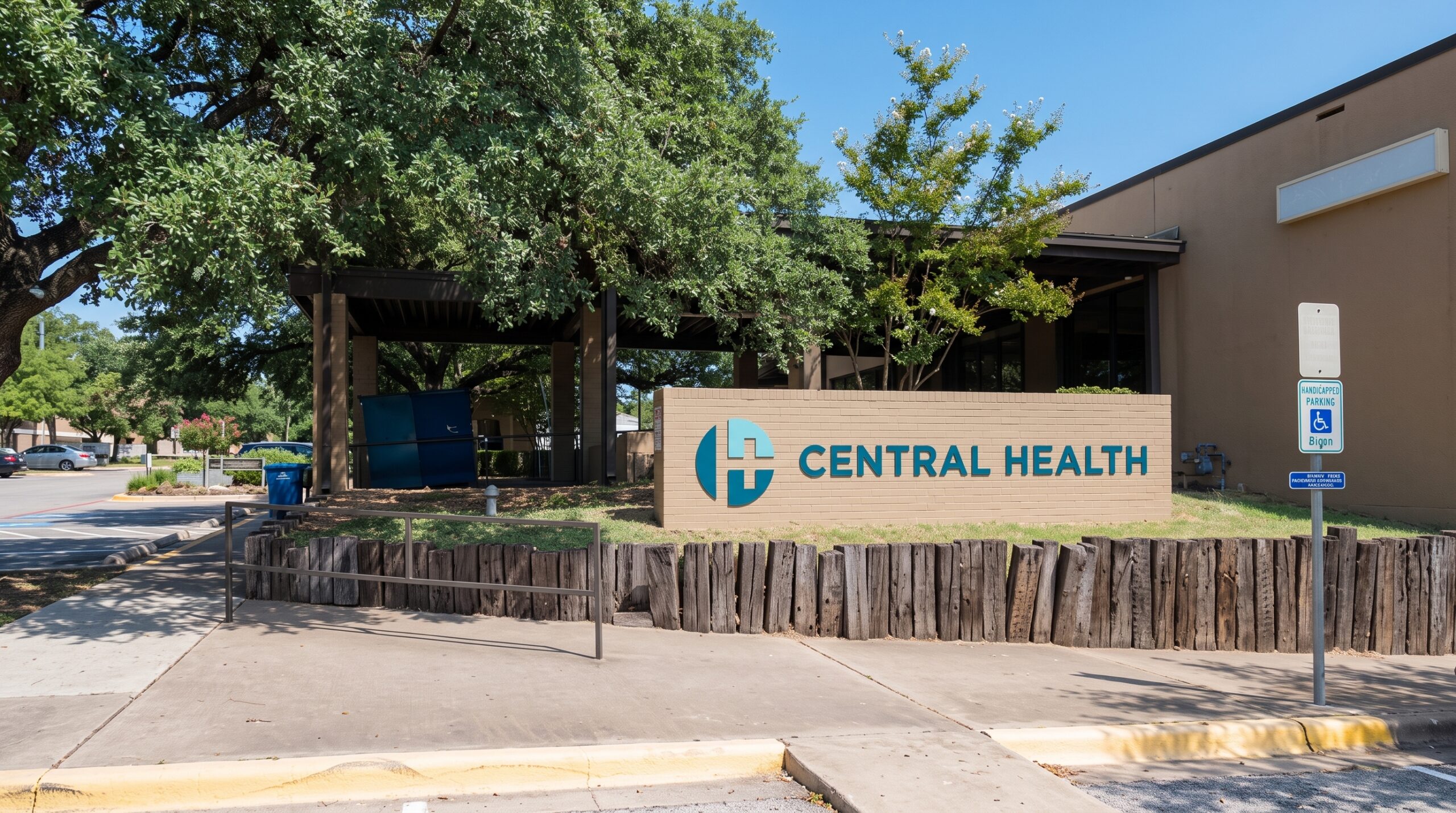
Central Health is a special purpose district. It exists under Article IX, Section 4 of the Texas Constitution and Chapter 281 of the Health and Safety Code, with express power to furnish medical aid and hospital care to indigent and needy residents, and to levy property taxes for a hospital purpose.
Everything a district does beyond that express grant is an implied power, and Texas has a rule for how far implied powers stretch. In Tri-City Fresh Water Supply District v. Mann, 142 S.W.2d 945 (Tex. 1940), the Supreme Court held that a district has only the implied powers “indispensable to the declared objects of the corporation,” and that powers “merely convenient or useful may not be included and cannot be maintained.” Reasonable doubt is resolved against the district. On taxing power the court was stricter still, limiting districts to purposes “granted in clear and unmistakable terms.”
The Third Court asked a different question. Its Aug. 21 memorandum opinion in No. 03-24-00408-CV evaluated whether Central Health’s spending was “reasonably necessary to carry out the conduct expressly authorized” — a standard that asks what helps rather than what is essential.
The motion’s central charge is an omission: the opinion never cites Tri-City at all, though the Supreme Court has reaffirmed it three times in recent years, in State v. Hollins, Builder Recovery Services v. Town of Westlake and Pecos County Appraisal District v. Iraan-Sheffield ISD. On the tax question, the plaintiffs add Bexar County Hospital District v. Crosby, 327 S.W.2d 445 (Tex. 1959), where the Supreme Court held hospital district taxes “were levied for hospital purposes and are limited to that use.”
The motion also presses a point about what the Legislature has and has not done. Texas law mentions hospital districts and medical schools exactly twice. Section 281.0157 lets the El Paso County Hospital District build an integrated system providing “comprehensive health care services.” Section 61.002(8) lets a district name medical school faculty “who provide health care services” as mandated providers. Neither reaches education or research.
And in 2011, three years before Central Health signed its agreement with UT, the Legislature considered SB 821, which would have expressly authorized a district in a county of more than 800,000 to contribute to “medical, dental, or clinical education, training, or research.” It did not pass. The Legislature knew how to grant the power, the motion argues, and declined.
What the district has been paying for
The suit was filed in October 2017 by Rebecca Birch, Richard Franklin III and Esther Govea. It challenges the $35 million Central Health sends Dell Medical School each year under a 2014 Affiliation Agreement — money Travis County voters authorized when they approved Proposition 1 in November 2012 by roughly 10 points. Plaintiffs’ filings put the running total at $525 million.
At a 2024 hearing, plaintiffs’ counsel told District Judge Amy Clark Meachum that roughly 10 percent of the annual payment reaches clinical care and directly related administration. “Nobody defines medical care as education or research — only treatment of a person,” attorney Fred Lewis said then. He also noted the district has no right to audit how UT spends the money.
The claim is ultra vires — that the district’s chief executive is acting outside his lawful authority, which strips the governmental immunity that would otherwise bar the suit. The plaintiffs seek only forward-looking relief, not repayment.
Meachum denied the plaintiffs’ summary judgment motion and denied Central Health’s plea to the jurisdiction. The district appealed the second half and won. The Third Court reversed her, found the hospital district framework broad enough to cover both direct care and the services that make care possible, held that Central Health has discretion in how it delivers that care, and concluded the payments fall “squarely within” the district’s authority. It separately found the plaintiffs lacked taxpayer standing to challenge other spending because they produced no evidence it occurred.
Central Health’s answer has always been that the narrow reading would not survive contact with reality. “The case alleged a very narrow interpretation of what hospital districts were allowed to do — essentially just pay for care for indigent patients,” President and CEO Dr. Pat Lee told KUT. “That was always inconsistent with what would need to be done if you actually wanted to provide care for those patients.” The district has told the Commissioners Court that Dell Med-affiliated providers served nearly a quarter of its patients and delivered more than 300,000 encounters between fiscal 2023 and 2025, concentrated in high-need ZIP codes including 78744 in Southeast Austin and 78617 in Del Valle.
The rehearing motion does not contest the standing holding, an independent jurisdictional ground the district will press. Rehearing is rarely granted; the filing’s realistic function is to sharpen the issues for a petition to the Texas Supreme Court, which Lewis has said he expects to file.
The same question, from the other side
Four days after the opinion issued, a second demand landed on the same board, arguing from the opposite direction that Central Health’s money is not reaching the people who need it most.
Austin Mayor Kirk Watson wrote to board Chairman Geronimo Rodriguez on Aug. 25 that 60 people had three or more peace officer emergency detentions this year, and one young woman had 19, seven of them inside 60 hours. “How many more times does she need to be POED’d before getting the help she needs?” Citing the Meadows Mental Health Policy Institute, he put at least 950 county residents at the intersection of behavioral health, public safety and homelessness, at roughly $137 million a year across the city and county. “Austin taxpayers, who pay taxes to Central Health, are also paying for the failures of our healthcare system.”
His ask was specific: inpatient and high-acuity staffing for up to 30 beds, funding for a mental health crisis center, clinicians assigned to No Wrong Door response teams, mobile crisis units stationed across the community, sustained clinical support in city-funded shelters and permanent supportive housing, more funding for long-acting injectables. And a condition: “As Mayor of Austin, I will not support an increase in a tax rate that does not include significant investment in the NWD program.”
The board set its maximum proposed rate the next day at 8 percent above the no-new-revenue rate, preserving room to land lower. On the median Travis County homestead, valued at $372,638, that ceiling adds about $44 a year to the Central Health portion of the bill. Two days later the district released a proposed fiscal 2027 budget containing capital and first-year operating money for inpatient behavioral health services that do not currently exist, plus a $7.3 million reserve toward a crisis center under discussion with the city, the county and Integral Care — together a potential $27.3 million investment in No Wrong Door components, with a staff draft contemplating 22 inpatient psychiatric beds and a crisis center of roughly 60 adult and pediatric beds. The release names Watson’s letter directly.
What the standard would reach
Every item on the mayor’s list sits outside a narrow reading of Chapter 281. Clinicians embedded with homelessness response teams, mobile units stationed in the community, clinical support for residents of city-funded shelters and permanent supportive housing, capital for a crisis center the district would not itself operate — none of it is a physician treating an indigent patient, and all of it rests on the proposition Central Health defended for nine years and won on Aug. 21.
Lewis has warned that under the appeals court’s reasoning, “every hospital district will be funding every special interest project that doesn’t have anything to do with poor people across the state.” The mayor of Austin is asking Travis County’s district to use exactly that latitude, for a purpose almost nobody in the county disputes is urgent.
Which is the practical stake in a 1940 water district case. If the plaintiffs prevail on rehearing or at the Supreme Court, the standard that would end the Dell Med transfers does not stop there. It reaches the crisis beds too.
The board votes on the budget and tax rate Sept. 9. The Commissioners Court takes it up Sept. 15.