
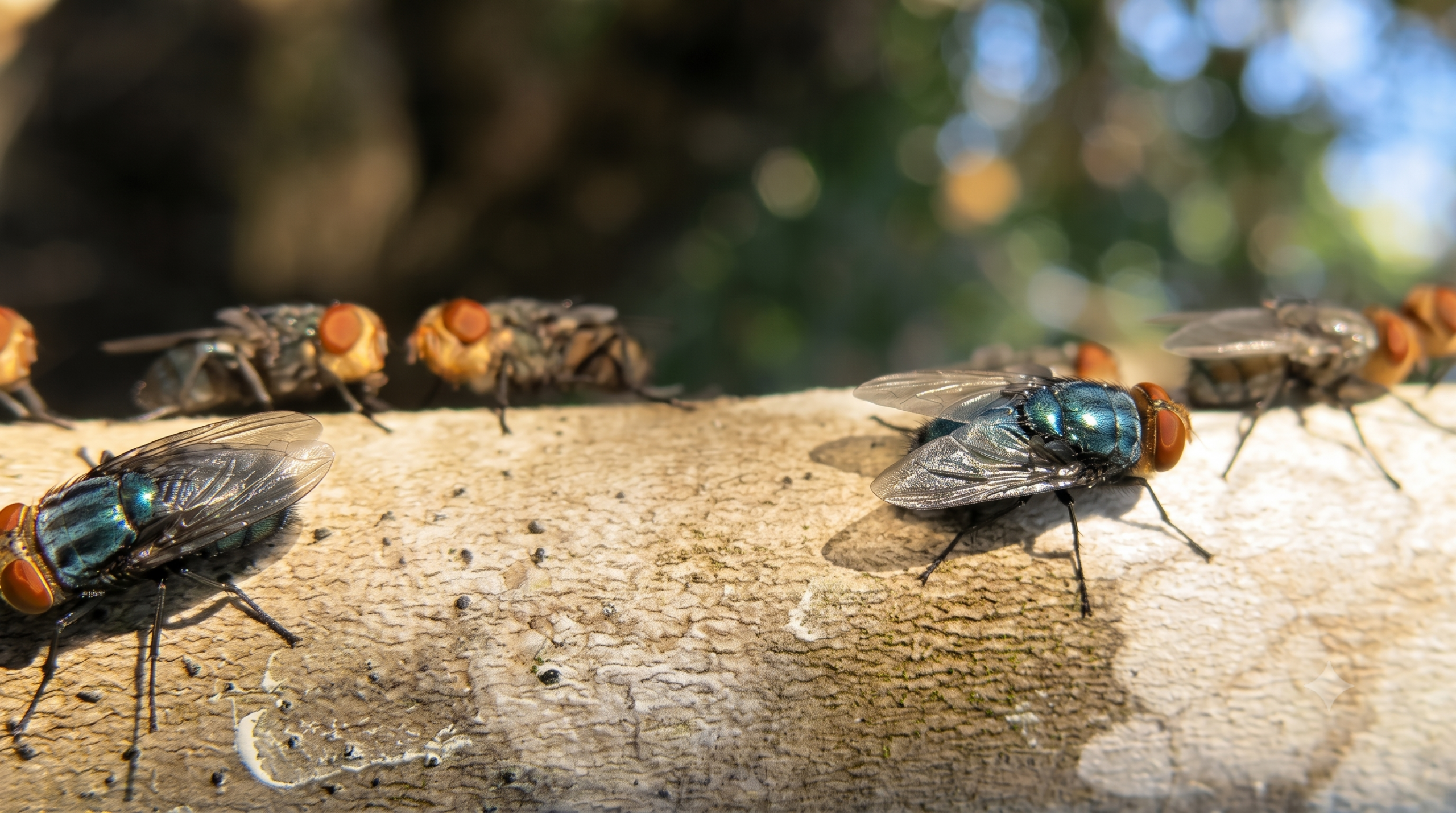
A new infestation in a Sutton County goat, confirmed July 21, pushed the United States tally of New World screwworm to 42 cases — up from the 41 reported last week, when the parasite reached Starr County on the Rio Grande for the first time — but the more telling number this week is how few of those cases are still live.
Of the 42 confirmed detections, only 10 remain active — meaning larvae are still being treated in a live animal — while 32 have been marked inactive, or resolved, according to the U.S. Department of Agriculture’s confirmed-detections dashboard. It is the widest gap between resolved and active cases since the flesh-eating parasite entered Texas in June, and the first stretch of the outbreak in which closed cases outnumber open ones by roughly three to one.
That ratio matters because it is the clearest field measure of whether the response is keeping pace. The New World screwworm is a fly whose maggots feed on the living tissue of warm-blooded animals; an untreated case can kill livestock or wildlife within days. Every case the dashboard flips from active to inactive is an animal treated and an infestation closed before the next generation of flies can spread. A month ago active cases outran resolved ones; the reversal suggests detection and treatment are now outrunning new infestations, even as the cumulative count keeps climbing.
All 42 confirmed cases are in domestic animals — cattle, sheep, goats and, in a handful of instances, dogs — spread across 41 detections in Texas and one in New Mexico, the dashboard shows. The parasite has not been confirmed in any Texas wildlife, a threshold state biologists watch closely because an infestation in free-ranging white-tailed deer would be far harder to find and treat than one in a fenced pasture. The Texas Parks and Wildlife Department has reported no wildlife detections despite months of surveillance.
The newest case, a goat in Sutton County on the Edwards Plateau, is the second confirmed there this month; a dog in the same county was confirmed July 13. The clustering tracks with the outbreak’s footprint across West and South Texas, where Crockett, Pecos, Brewster and Starr counties have each logged multiple detections since June. The first U.S. case of the current outbreak was a bovine in Zavala County, confirmed June 3.
The declining share of active cases arrives as the federal and binational response scales up. USDA’s core strategy is the sterile insect technique — releasing millions of lab-raised male flies that have been sterilized by radiation, so that wild females who mate with them produce no offspring and the population collapses over successive generations.
A sterile-fly production plant at Metapa, Mexico, has been ramping toward tens of millions of flies a week, and USDA broke ground in April on a domestic production plant at Moore Air Base near Mission, Texas, targeting 300 million sterile flies a week when complete. The Texas Animal Health Commission continues to maintain quarantine zones around confirmed detections, restricting the movement of animals that could carry the pest.
Officials have cautioned against reading a single week’s numbers as a turning point. The cumulative count is still rising, active infestations remain in multiple counties, and southern ports of entry have stayed closed to livestock trade since USDA ordered the shutdown in July 2025 to keep the parasite from moving north through commerce — a closure now past the one-year mark with no reopening announced. Peak fly season across South Texas runs through the summer, when warm weather speeds the insect’s life cycle.