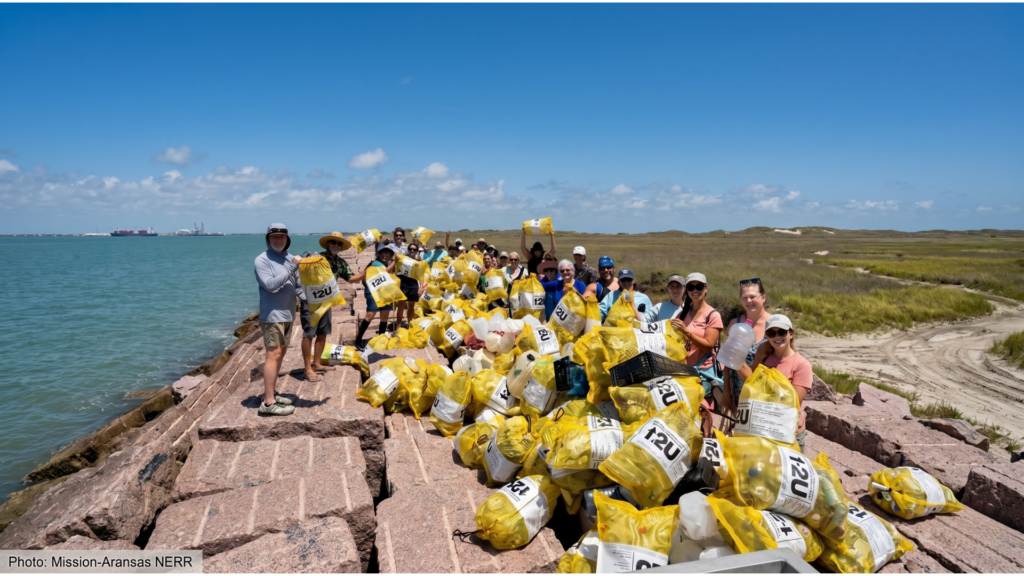
A collaborative beach cleanup on San Jose Island on May 16, 2026, successfully removed 1,430 pounds of litter, highlighting the persistent challenges of plastic pollution along the Texas Gulf Coast.
Organized by the Surfrider Foundation Texas Coastal Bend Chapter and the Mission-Aransas National Estuarine Research Reserve (NERR), the two-hour initiative drew dozens of local conservation participants.
The cleanup effort included 53 volunteers who filled 287 yellow Up2U trash bags, accumulating a haul large enough to completely fill a 20-yard dumpster back in Port Aransas.
According to organizers, an overwhelming 95% of the recovered refuse consisted of plastic material, featuring an estimated 4,600 individual plastic bottles alongside roughly 100 one-gallon containers.
The team reported that virtually no aluminum cans or glass bottles were found during the operation. This is likely due to those items sinking to the bottom of waterways, according to the cleanup organizers.
The scope of waste accumulation along the coast remains a primary target for local cleanups. Surfrider Chapter Co-Chair Neil McQueen reported that volunteer crews were only able to clear approximately 200 feet of the target jetty, leaving an estimated 1,000 feet of rock structure still packed with deeply lodged plastic debris.
McQueen urged volunteers to advocate for a statewide deposit-refund program with their state representatives and senators, suggesting a 10-cent incentive per container to encourage recycling.
San Jose Island is in House District 32, represented by Todd Hunter, and Senate District 27, represented by Adam Hinojosa.
The advocacy group Texans for Clean Water, who supported the cleanup, applauded the effort, noting that removing thousands of bottles from a remote island accessible only by boat illustrates both the scale of Texas’ litter problem and the dedication of residents.
“Texas has an opportunity to pursue practical, market-driven litter reduction strategies that strengthen domestic recycling supply chains by creating consumer incentives to return bottles before they become litter. Recovering valuable aluminum, plastic, and glass keeps recyclable material in the American economy instead of losing it to landfills or the environment,” said Joe Trotter, Director of Texans for Clean Water.
“The volunteers were blown away by the number of plastic bottles,” Neil McQueen stated, emphasizing that visualizing each discarded bottle as carrying a monetary value could help shift public perception and drive policy change.