
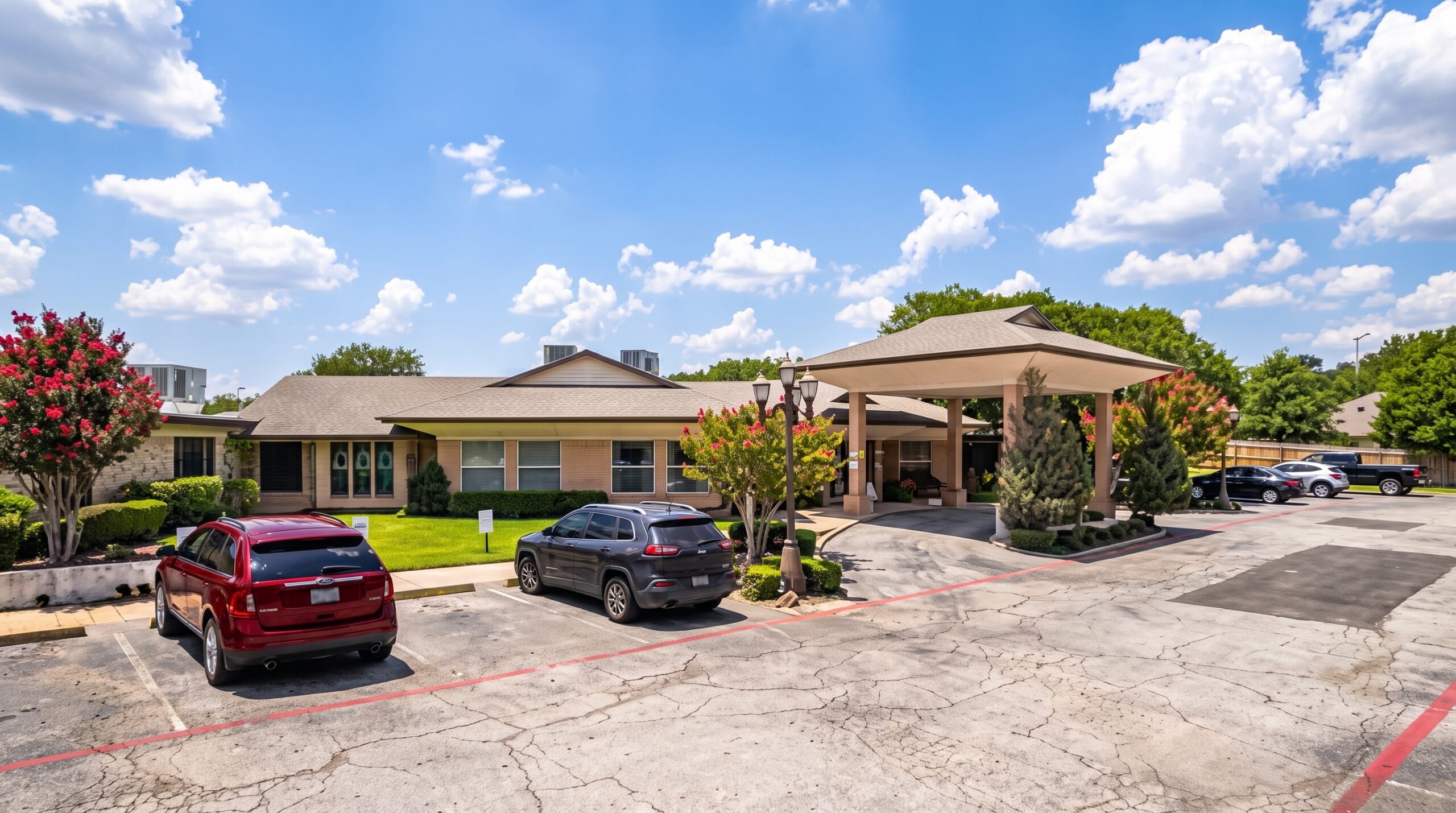
A Texas assisted living facility currently satisfies state law by offering its residents one planned activity a week. Under a rewrite the Texas Health and Human Services Commission published Sept. 4, it would have to offer one every day.
That single change sits inside the largest overhaul of Texas assisted living rules in more than three decades. The agency is proposing to amend 83 sections of its licensing standards, repeal 91 and write 30 new ones — 204 sections in all, covering nearly everything a licensed facility does. The agency’s stated reason is blunt: the amendments are meant “to better reflect the current population served in assisted living facilities, which has changed greatly since the original rules were developed in 1991.”
Several of the changes are things a family would notice. Staff would have to write down every dose of medication a resident actually received, not just the ones that were missed — the record must capture the drug, the date and time, the dose, whether it was “taken, missed, or refused,” and who gave it. Resident records would have to be kept at least five years after services end. And a facility changing its resident policies would have to tell residents and their representatives “at least 30 days before the effective date of the changes except in an emergency situation.”
The proposal also writes the first detailed Texas rules on bed rails, the metal side rails that keep a resident from rolling out of bed and that can trap a person who tries to climb over them. A facility “must not use bed rails for restraint” and “must not use full bed rails unless ordered by a physician for the resident’s safety.” Before installing one, staff would have to discuss alternatives such as low beds and floor mats with the resident or family, document that conversation, explain the risks and obtain written consent. Bed rails could not be used at all for residents who wander, who are at risk of leaving, or whose cognitive impairment would make the rails more dangerous.
On staffing, the rules would bar a facility from sharing on-duty attendants with a nursing home, another assisted living facility or a home care agency, and would prohibit a facility from leaning on families to fill gaps: it “must not use an outside resource or solicit or involve resident family members, friends, or visitors to provide care for a resident to mitigate staffing shortages.” Facilities offering the higher level of care would need night-shift staff “immediately available and awake, regardless of the number of licensed beds.” Direct care staff would take six hours of continuing education a year, one of it on fall prevention and one on managing aggressive behavior.
This is the state’s second attempt. The commission proposed a version of these rules in December 2023, and in the preamble to the current draft it explains what happened next: “Over 200 public comments were received. The main theme identified in the public comments was that some of the proposed regulations were too burdensome for providers. To effectively address the public comments, HHSC made the decision to withdraw that rule proposal.” The withdrawal was published in March 2024.
What the agency does not say anywhere in the 204-section filing is what it took out. The preamble names no provision that was dropped or softened between the 2023 draft and this one, and offers no comparison of the two. It says only that it “now proposes these amendments, repeals, and new rules in response to public and stakeholder comments.”
The commission’s own finance office says the package costs nobody anything. Victoria Grady, deputy chief for finance, determined that “there are no anticipated economic costs for persons required to comply with the proposed rules because there are no requirements to alter current business practices and there are no new fees or costs imposed,” and that there will be no adverse effect on small or rural providers. The filing nowhere states how many licensed assisted living facilities or residents in Texas the rules would govern.
Written comments go to the commission’s rules coordination office, by mail or to HHSRulesCoordinationOffice@hhs.texas.gov with “Comments on Proposed Rule 25R031” in the subject line, and are due 31 days after publication — Oct. 5. The filing lists the earliest possible date of adoption as Oct. 4, one day before the comment window closes. HHSC’s executive commissioner makes the final call, under authority the Legislature granted in Chapter 247 of the Health and Safety Code to “ensure the quality of care and protection of assisted living facility residents’ health and safety.”