
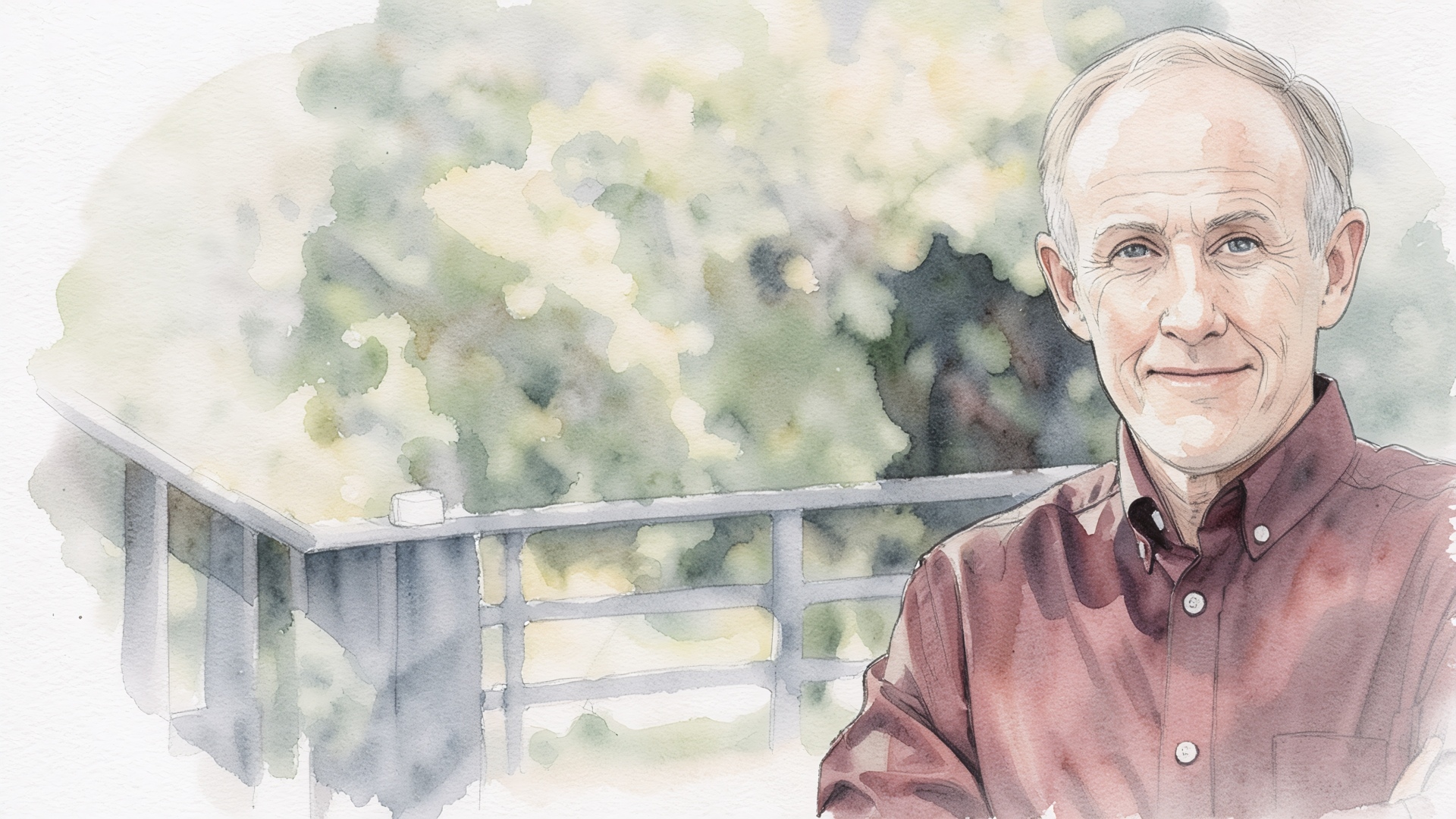
Texas built its growth story on a simple promise: a family could move here and afford a home. Rep. Gary Gates says that promise is under more strain than at any point in memory — and as chairman of the House Land and Resource Management Committee, he is positioned squarely in the middle of the Legislature’s response.
Gates has represented House District 28 in Fort Bend County since winning a special election in 2020. A Richmond businessman who built a career in real estate and still operates apartment communities in the Houston area, he brings a landlord’s ledger to housing debates that are often conducted in abstractions.
Last session, that showed: he authored House Bill 21, which closed the “traveling” housing finance corporation loophole that had allowed developers to strike deals with far-away government entities to wipe apartment complexes off local tax rolls — a fight he waged across three sessions against determined industry opposition.
His committee spent two days of interim hearings this month reviewing how the Legislature’s 2025 housing package is working, informed by what Gates describes as six months of preparation and more than a dozen calls with communities and stakeholders across the state.
He makes no secret of his approach heading into the next session: bills drafted within 45 days, ready on day one. “If they want to try to influence the effect of the bills, they need to do it now,” he says. “If you wait, it’s going to be like a steamroller. We’re going to run over you, because we’ll be so well prepared.”
The urgency comes from arithmetic. Home prices roughly doubled in the years after 2020, Gates says, when near-zero interest rates let buyers’ incomes stretch further — and now rates have snapped back while prices haven’t. By his math, a Texas family of four earning the median income can borrow only about $300,000 at today’s mortgage rates, far short of prices in the state’s major metros. “We are at the greatest unaffordability,” he says.
Research supports part of his diagnosis from another angle: national homebuilding studies attribute roughly a quarter of the price of a new home to government regulation, a figure Gates cites in arguing that the state can move prices by moving rules.
The 2025 package attacked those rules on several fronts. Senate Bill 15 capped minimum lot sizes for new subdivisions in large cities. House Bill 24 raised the petition threshold that let small groups of neighbors block rezonings. And Senate Bill 840 allowed housing to be built in commercial, office and retail zones “by right” — no rezoning case, no council vote.
It is SB 840 that drew what Gates calls the most aggressive pushback. Shortly after the law took effect, a handful of cities in the Dallas area — communities where he notes home prices run $600,000 and up — passed ordinances he believes were designed to make conversions impossible.
He rattles off his three favorites: a requirement to build an Olympic-sized pool, a mandate to spend $4 per square foot of building space on public art, and a rule that 60 percent of units be three-bedroom — in a state where the average family now has 1.1 children. “No builder can build if 90 percent of his market wants a one-bedroom, but he’s got to build 60 percent of them as three-bedrooms,” Gates says. “What you’re going to accomplish is zero building.”
He wrote letters to the offending cities as chairman, and they appeared before his committee. What the ordinances reveal, he argues, is not a policy disagreement but an unstated goal. Those communities “let the moat down in the morning to allow lower-income workers to come in and mow the lawns and run the restaurants,” he says.
“But then when the lights go out, you’ve got to go back across the moat and find housing somewhere else.” He is quick to add that the resistance did not spread: in interim testimony, many cities and developers described embracing the law, and he says he remains open to modifications for cities that come to the table rather than drawing a line.
To the standard objection — local control — Gates has a standard answer: no city operates in a vacuum. The state funds roughly half of local school costs, builds the highways, and directs the most money to the fastest-growing areas. A community that prices out anyone earning under $200,000, he argues, is shifting its share of the housing burden onto everyone else in Texas.
The same logic drives his skepticism of impact fees, which some fast-growing cities now levy on new construction at $20,000 or more per home. Gates argues the fees are politically convenient — the future homeowner who pays them cannot vote yet — and economically perverse: adding $25,000 to a $250,000 new home resets the comparable price for every existing house on the street, handing current owners what he calls “an undeserved windfall” while making the whole market less affordable. Growth, he contends, pays for itself through the new tax revenue it generates.
His committee also took testimony on municipal utility districts, the developer-created entities that finance water, sewer, roads and even parks and fire stations for well over a million Texans. Gates calls MUDs indispensable — “if it wasn’t for the MUDs, we wouldn’t be able to keep up with the growth and demand that Texas has” — but wants sunlight on their governance. He points to board elections drawing 120 voters out of 3,000, and board meetings held not in the district but at the law firms that created them. His fix is modest: require meetings to be held where the residents live.
Gates is candid that market conditions are working against apartment operators — he says foreclosures are mounting as post-2020 construction meets softening rents, and that stepped-up federal immigration enforcement has emptied roughly a tenth of Houston-area apartment units as tenants move out and school districts in his area lose enrollment.
Next session, his priority is speed: allowing builders to use qualified third-party reviewers for plan checks and inspections instead of waiting weeks on city departments. Cities like El Paso and Fort Worth already permit it, he notes, and boast some of the state’s lower home prices. He is equally candid about what the Legislature cannot fix — federal deficits that he believes will keep upward pressure on interest rates no matter what Austin does.
But within the state’s reach, he sees a rare alignment. “Texas has always been a place that has been affordable,” Gates says, with the governor and speaker both making housing a top priority. “It’s a movement that is going to allow us to do some great things for the state of Texas next session.”