
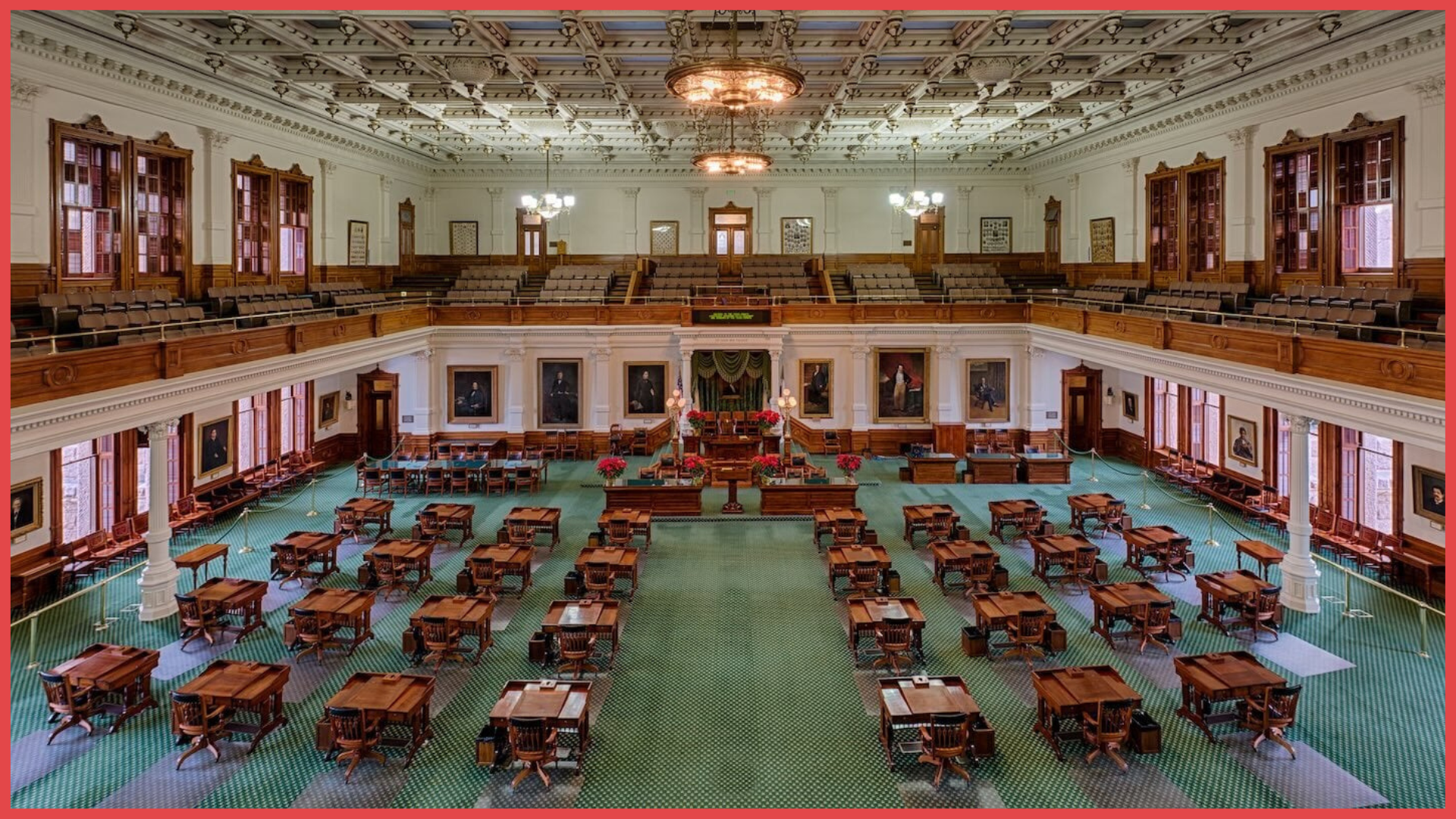
Sen. Joan Huffman’s committee will take invited and public testimony July 28 on how public universities report their finances and on what fraud, waste and abuse cost the state budget.
- When: 9:00 AM CT, Tuesday, July 28, 2026
- Where: Room E1.036 (Finance Room), Capitol Extension, Austin
- Chair: Sen. Joan Huffman, R–Houston (SD-17)
- Vice Chair: Sen. Juan “Chuy” Hinojosa, D–McAllen (SD-20)
- Format: Invited and public testimony; public testimony limited to 2 minutes; oral witnesses must submit a paper registration card to the clerk; 40 copies of any written testimony, with the witness’s name on each copy; interim charges only — no vote on legislation. The notice is posted as a revision.
- Live video: senate.texas.gov/av-live.php
- Submit comments online: N/A — the Senate does not operate an online comment portal for this hearing
- Full agenda: Official hearing notice (capitol.texas.gov)
The Texas Senate Committee on Finance will gavel in at 9 a.m. Tuesday to take invited and public testimony on two interim charges that share a common theme: whether the state can see where its money goes. One asks how public universities account for appropriations, tuition and designated funds. The other asks how much the state loses to fraud, waste and abuse, and what agencies are doing to stop it.
Chaired by Sen. Joan Huffman, R-Houston, the 14-member panel carries a 10-4 Republican majority and writes both the state budget and the tax code. Tuesday’s hearing is the committee’s second in as many days; it meets Monday on transportation funding, the data center sales tax exemption, rural fire grants and crime victims’ compensation. The back-to-back schedule reflects the volume of interim work the committee must finish before the 90th Legislature convenes in January 2027.
The Higher Education Transparency charge directs members to examine current financial reporting and disclosure practices at public institutions, evaluate whether existing transparency standards adequately cover the use of state appropriations, tuition revenue and designated funds, and study the feasibility of requiring more frequent, comprehensive audits. The charge did not arrive in a vacuum. The State Auditor’s Office released a financial audit of Texas Southern University in December 2025 that found systemic breakdowns in the university’s procurement and asset-management controls. Reporting on the audit described more than 700 invoices worth in excess of $280 million tied to vendors whose contracts had expired, along with hundreds more invoices dated before the purchases were approved. Gov. Greg Abbott subsequently directed the Department of Public Safety to investigate the university’s finances.
The audit question is structural as much as institutional. The State Auditor’s Office consolidates financial information from more than 200 state agencies and higher education institutions in its annual statewide single audit, but individual campuses are generally examined on a rotating basis rather than annually. Institutions are separately required to file an internal audit report each November with the governor, the Legislative Budget Board, the Sunset Advisory Commission and the State Auditor. Members are asked to recommend ways to strengthen reporting requirements and expand public access to institutional financial data.
The Preventing Fraud, Waste, and Abuse charge is broader, asking members to quantify the fiscal impact of financial impropriety across the budget and to identify high-risk areas — the notice names entitlement programs, contracted services and technology contracts. The state’s largest single recovery operation sits at the Health and Human Services Office of Inspector General, which reported recovering more than $95.7 million on behalf of taxpayers in the December 2025 through February 2026 quarter alone, according to its fiscal 2026 second-quarter report. That office coordinates with the attorney general’s Civil Medicaid Fraud Division and Medicaid Fraud Control Unit through a joint annual interagency report the Legislature receives each year.
The charge also asks members to assess prevention tools rather than just recovery totals — data analytics, reporting mechanisms, financial recoveries and prosecutions. That framing invites testimony on whether agencies are catching improper payments before they leave the treasury, a harder metric than dollars clawed back after the fact.
Because the committee is meeting in the interim, it will take no vote on legislation. Findings will inform recommendations to the 90th Legislature. Texans who want to testify must appear in person and register with the clerk; there is no online comment portal for Senate hearings.
Committee members
- Sen. Joan Huffman, R–Houston (SD-17) — Chair
- Sen. Juan “Chuy” Hinojosa, D–McAllen (SD-20) — Vice Chair
- Sen. Carol Alvarado, D–Houston (SD-6)
- Sen. Paul Bettencourt, R–Houston (SD-7)
- Sen. Donna Campbell, R–New Braunfels (SD-25)
- Sen. Pete Flores, R–Pleasanton (SD-24)
- Sen. Bob Hall, R–Edgewood (SD-2)
- Sen. Phil King, R–Weatherford (SD-10)
- Sen. Lois Kolkhorst, R–Brenham (SD-18)
- Sen. Angela Paxton, R–McKinney (SD-8)
- Sen. Charles Perry, R–Lubbock (SD-28)
- Sen. Charles Schwertner, R–Georgetown (SD-5)
- Sen. Royce West, D–Dallas (SD-23)
- Sen. Judith Zaffirini, D–Laredo (SD-21)