
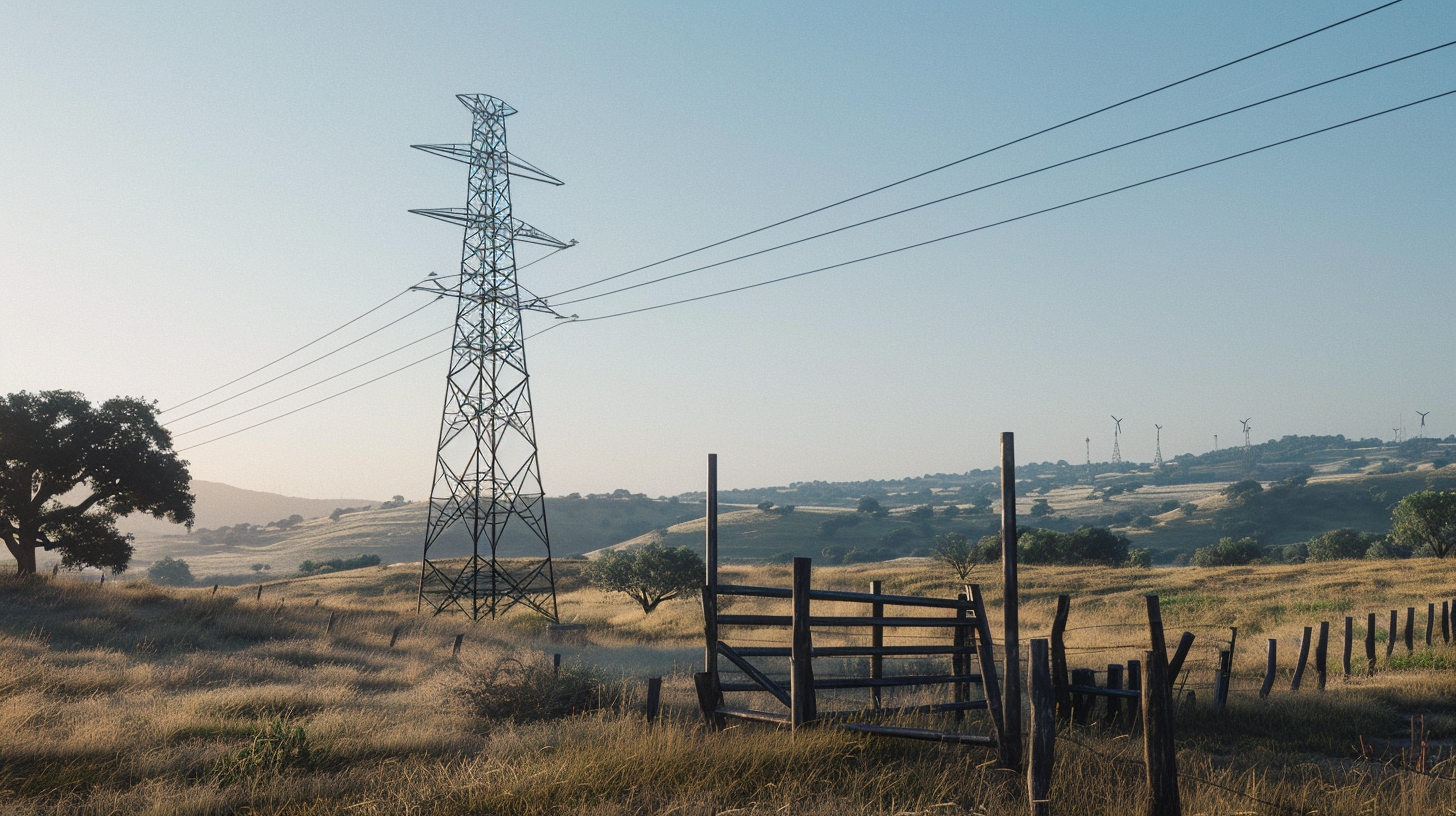
A coalition of 43 Texas legislators has signed an amicus brief urging state utility regulators to delay project-specific decisions on proposed 765-kilovolt (kV) transmission lines until a comprehensive, statewide evaluation of the grid expansion is completed.
State Representative Brad Buckley, a Salado Republican, announced the joint filing on June 15, 2026, targeting the multi-billion-dollar infrastructure buildout currently under review by the Public Utility Commission of Texas (PUCT).
The legislative intervention supports a procedural motion originally submitted by the property-rights organization American Stewards of Liberty. The motion requests that the PUCT postpone its case-by-case necessity reviews for individual line segments and instead conduct a holistic determination of the overall grid plan.
Lawmakers state that a temporary pause is required to provide adequate time for route optimization, environmental assessments, and the resolution of rural landowner complaints.
The group of signatories—composed of 9 state senators and 34 state representatives—argues that the planned grid overhaul carries severe financial and personal consequences for Texans. Buckley stated that the scale and projected expense of the transmission lines demand a deliberate administrative review before irreversible construction choices are finalized. He noted that the financial burden of the infrastructure will cost Texas utility ratepayers billions of dollars and affect thousands of private property owners.
The amicus brief emphasizes that the physical footprint of large-scale transmission corridors falls disproportionately on rural communities. Buckley remarked that families who have invested generations of work into their land are being asked to absorb the impacts of these massive infrastructure pathways.
The legislative push for a pause aligns with a broader policy conflict over the Strategic Transmission Expansion Plan (STEP). The Texas Public Policy Foundation (TPPF) recently published an economic analysis criticizing the 765-kV rollout, calculating that the total lifetime cost passed to ratepayers could approach $100 billion when factoring in long-term financing, maintenance, and regional upgrades.
TPPF contends that the massive lines are primarily designed to connect remote wind and solar farms to the urban grid rather than solving localized energy shortages, and argues that building local gas-fired power plants is a more cost-effective solution.
On the other side, a coalition of Texas energy trade groups—including the Texas Oil & Gas Association and the Permian Basin Petroleum Association—strongly defended the transmission lines in a joint memorandum. These associations argue that Far West Texas faces immediate electricity shortages driven by industrial expansion and the rapid electrification of the Permian Basin.
Citing ERCOT data, the industry groups warned that a failure to expand high-voltage transmission lines could force regulators to implement rolling blackouts or pre-emptive load shedding during peak demand events.
The amicus filing increases political pressure on the PUCT just days before its scheduled June 18 open voting session. The commission is already facing formal petitions from rural landowners seeking routing modifications and procedural pauses on active segments, such as the Bell County East to Big Hill transmission line.
The utility providers, Oncor and the Lower Colorado River Authority (LCRA), are operating under a rigid 180-day statutory timeline to secure line approvals. The intervention of more than 40 state legislators could slow down the process. PUCT Commissioners must now decide whether to maintain the regulatory pace or grant the procedural relief requested by lawmakers and rural property owners.