
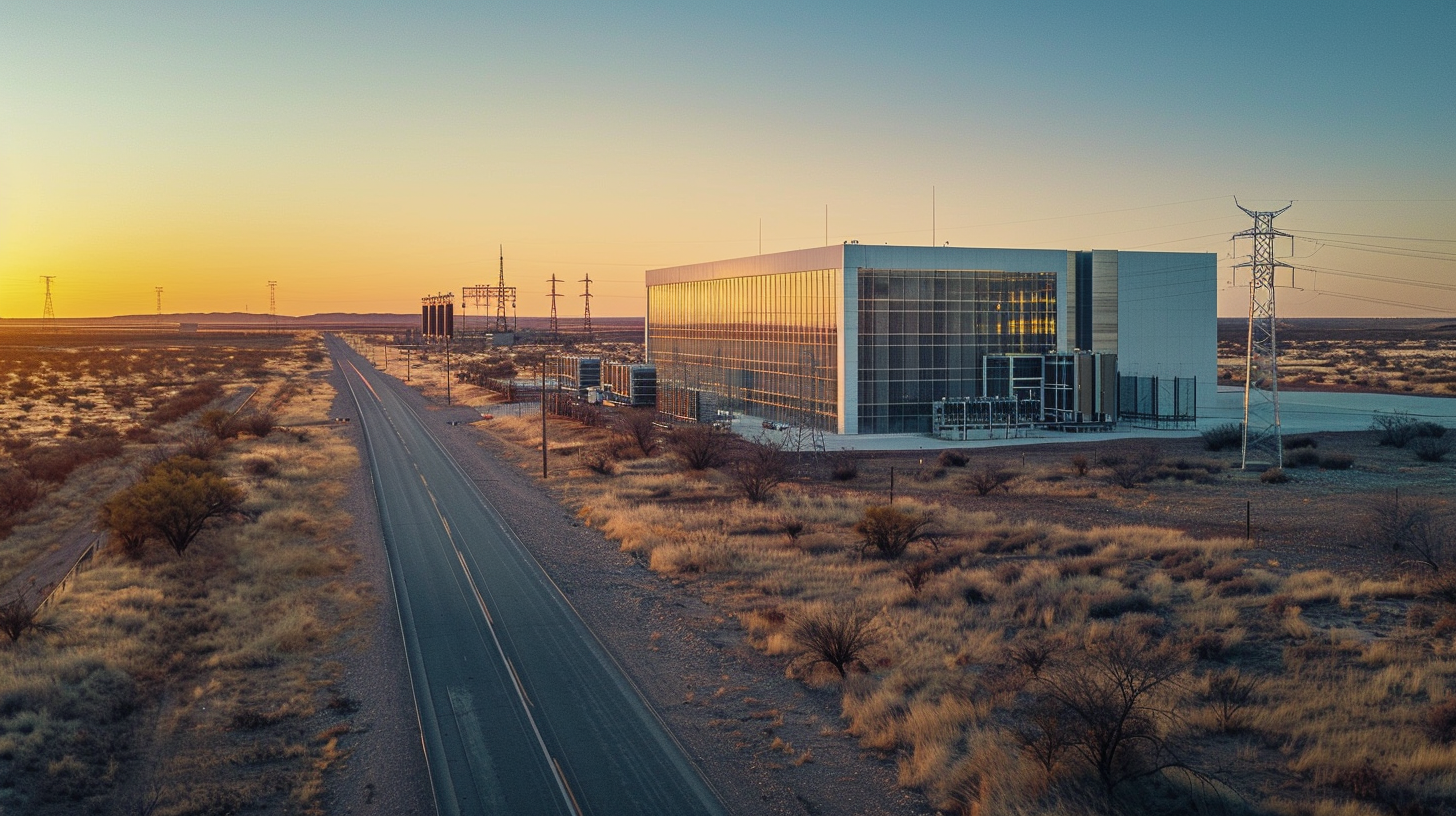
Texas’ effort to control who pays for the power that data centers demand reaches two hard markers this month. ERCOT’s Batch Zero interconnection framework takes effect July 11, and Governor Greg Abbott’s order to shield ordinary customers from data-center infrastructure costs requires the Public Utility Commission and ERCOT to deliver a joint memo by July 17.
The immediate deadlines fall on developers. Under the Batch Zero rules the PUC approved June 18, large-load interconnection entities must submit dynamic data and interconnection-option forms to ERCOT by July 10, with the framework and related provisions taking effect July 11, according to ERCOT.
Eligibility packages from transmission and distribution providers are due to ERCOT by July 24. ERCOT has said it is tracking more than 438,000 megawatts of large-load requests, nearly 90% of them data centers, and will notify Batch Zero applicants of their classification in August 2026, with a statewide transmission plan targeted for fall 2027.
The cost question runs on a parallel track. In a June 10 directive, Abbott ordered the PUC and ERCOT to identify additional actions to protect residential and small-business ratepayers from the infrastructure costs of large digital facilities and to submit a joint memorandum to his office by July 17, summarizing steps taken under existing authority, statutory limits and any legislation needed.
The governor further directed the commission to begin formal action by July 31 to reduce the transmission portion of residential customers’ bills. “The financial burden,” Abbott’s office said, must fall on the operators themselves, not on Texas families or small businesses.
That principle rewards a specific kind of project — one that brings its own generation rather than leaning on the shared grid and the region’s stretched water supplies. The clearest recent example is Microsoft’s planned 2-gigawatt campus in Pecos, in Reeves County, which the company said it would power behind the meter through a co-located gas plant under a long-term Chevron agreement, funding the generation and supporting infrastructure itself.
Microsoft executive Noelle Walsh said the company is “paying for the new generation and supporting infrastructure needed to serve our own operations” — the model state leaders have urged as they try to keep new demand from landing on other customers’ bills.
Not every project fits that template, and the distinction between adding resources and extracting them is what the July filings will start to sort out. Behind-the-meter designs and the Batch Zero maturity screens — nonrefundable fees, site control and financing milestones — are meant to separate firm projects from speculative ones and to keep operators from shifting development risk onto the public. Projects that build dedicated generation, solve the water issue and that store Texans’ data under U.S. ownership, answer the resource-additive test and public safety concerns.
The industry says operators are prepared to carry their own costs. The Data Center Coalition’s Dan Diorio has told Texas lawmakers the industry “takes water use efficiency, conservation and stewardship extremely seriously.” Critics counter that the accounting is incomplete: at a June 23 House Natural Resources hearing, the Texas Water Development Board reported that data centers in its survey grew from 22 to 341 even as only about 17% returned the legally required questionnaire, and that it cannot track groundwater pumping in the more than half of Texas counties without a groundwater conservation district.
The next few weeks will show how much of the 438-gigawatt queue is real and how firmly regulators intend to hold operators to their own costs. Abbott’s office set the markers: a joint PUC-ERCOT memo by July 17, formal transmission-cost action by July 31, and Batch Zero classifications in August that will finally name which projects clear the screen.