
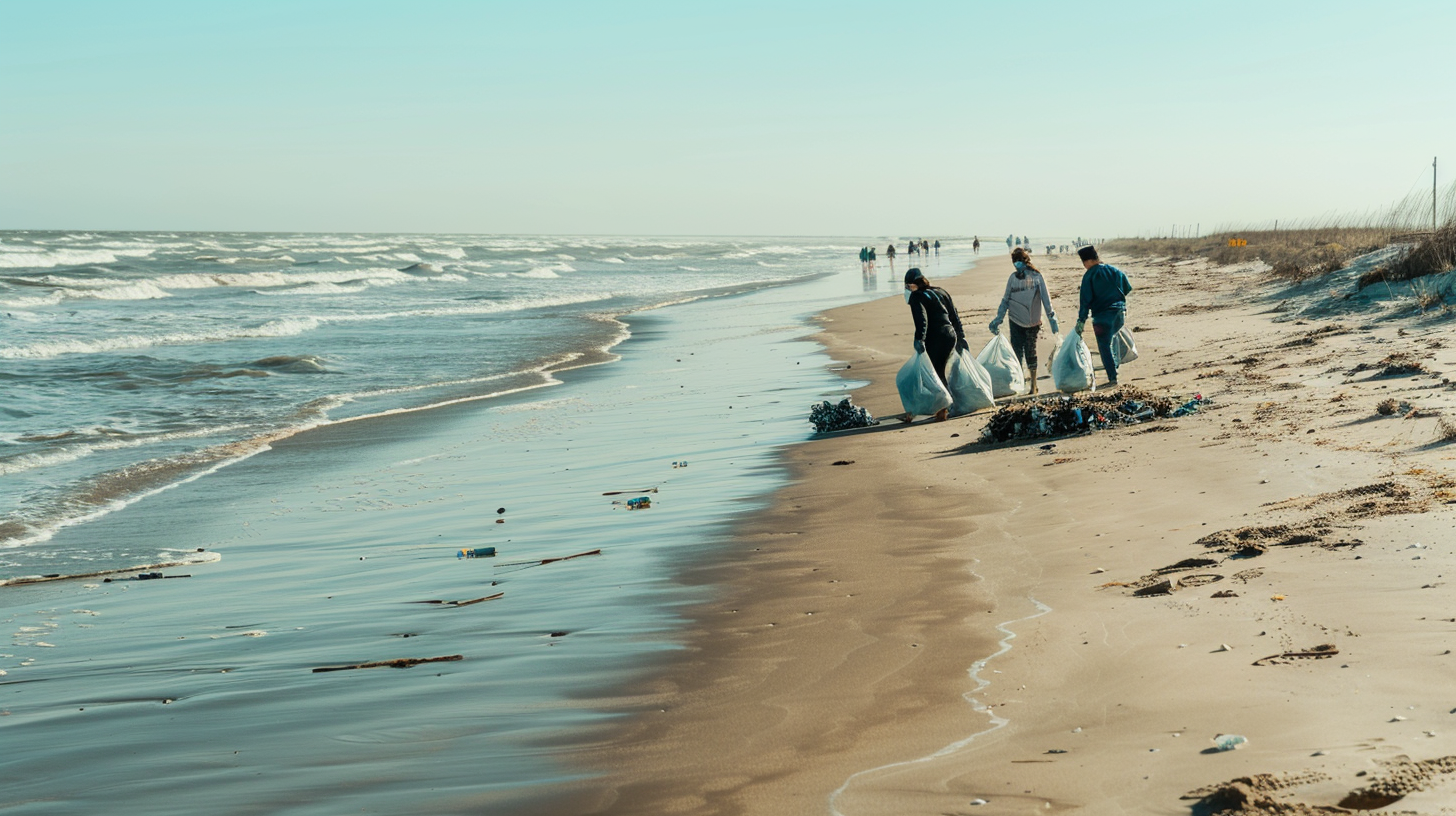
Texas beach volunteers removed more than 8,000 pounds of trash from the Coastal Bend and South Padre Island during the initial cleanups of 2026, according to the General Land Office. While cleanup totals continue to rise, the market value of the plastic bottles and aluminum cans washing up on these shores has dropped to historic lows.
The two trends represent a growing economic squeeze: Texas currently captures only a small portion of its recyclable beverage containers, leaving the rest to be landfilled or scattered as litter, and the material that is collected faces extreme price pressure from a flood of cheap, imported recycled and virgin plastics.
During the 2026 Adopt-A-Beach winter cleanups announced on February 10, 529 volunteers collected 8,073 pounds of trash. Texas Land Commissioner Dawn Buckingham stated the cleanups are off to a “fantastic start” and encouraged continued participation.
Since the program’s inception in 1986, volunteers have removed more than 10,000 tons of trash from Texas beaches. Beverage bottles, caps, and cans are consistently among the most frequent items found during these efforts, according to data from the Ocean Conservancy.
However, the domestic recycling market is struggling to remain competitive. The energy-market data firm OPIS reported that prices for recycled PET, the plastic used in water and soda bottles, reached a historic low in 2025, with national post-consumer PET bottles averaging roughly 20 cents per pound late that year. Used aluminum beverage cans, typically a highly valuable commodity, traded around 80 to 88 cents per pound in early 2026.
This price collapse has forced several U.S. reclaimers, which are plants that process old bottles into new material, to shut down in quick succession. Notable closures include California-based rPlanet Earth in September, Ohio-based Phoenix Technologies in December, and Pennsylvania-based Alpek in January.
Susan Collins, executive director of the Container Recycling Institute, noted that this trend negatively impacts both container deposit programs and curbside recycling efforts across the country.
Texas currently recycles approximately 27.5% of its per-pound municipal solid waste, according to the most recent recycling market plan from the Texas Commission on Environmental Quality. This means a majority of potentially recyclable material, including beverage containers, ends up buried in landfills.
In contrast, ten U.S. states operate container-deposit or “bottle bill” systems where consumers who return their bottles and cans get a small monetary refund. These states experience significantly different outcomes, averaging beverage-container recycling rates of roughly 60%, which is more than double the rate of states without such systems.
They also supply a disproportionate share of the raw material U.S. recyclers depend on, with approximately 60% of the PET collected for recycling nationwide sourced from those ten deposit states, according to data provided by the Association of Plastic Recyclers to a recent policy forum.
Supporters increasingly frame these systems as a domestic manufacturing necessity, arguing that a clean, steady supply of recovered material reduces reliance on foreign imports. While a bottle-bill proposal was tracked by advocates during the 2025 Texas legislative session, the measure did not advance to the House floor for a vote.
The General Land Office’s next coastwide cleanup data will offer an updated tally of what is washing onto Texas shores, and the TCEQ is due to publish fresh municipal solid-waste figures.
For advocates, the central question remains whether Texas lawmakers will reintroduce container-deposit legislation in the upcoming session to address both coastal pollution and the ongoing loss of domestic recycling resources.