
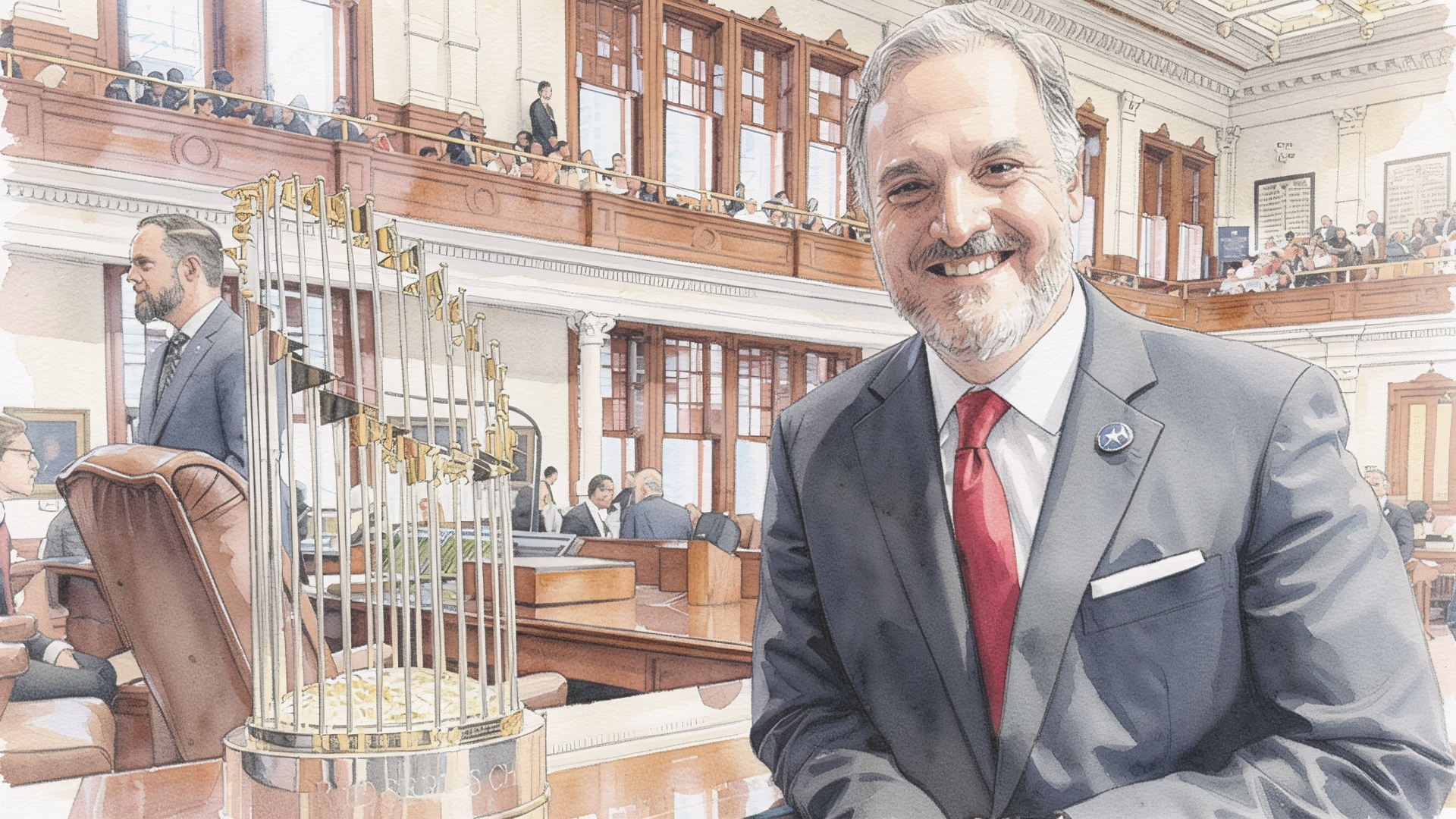
Texas lawmakers will address public safety concerns in the 2027 legislative session, as well as new areas of focus, including fraud prevention to access to legal services in rural communities. State Rep. Mitch Little says the discussions should balance government action with market realities.
Little has represented House District 65 in southern Denton County since 2025. He’s been an attorney for more than 20 years and serves on the House Criminal Jurisprudence Committee.
The legislature is under pressure from rural communities to increase funding for local prosecutors and defense attorneys. “The market determines who goes where, as far as lawyers, just like any other profession,” Little says. He argues that the government should not subsidize attorneys to move to rural areas. “There is generally not enough for them to do such that they can make a living practicing law in those areas,” according to Little.
He proposes that law schools, rather than taxpayers, bear more responsibility if they want to encourage graduates to practice in underserved communities. “If you want to encourage people to go there, put some skin in the game,” he says. “Forego a little bit of that revenue to help solve the problem. Don’t come to the legislature and expect the people of Texas to pay people to work in those areas when there’s not sufficient demand for their service.”
There will also be focus next year on new ideas to prevent elder fraud, particularly scams involving cryptocurrency. Little says fraudsters increasingly target older Texans by threatening arrest over alleged unpaid fines and directing victims to transfer money through cryptocurrency machines, or kiosks.
“Everybody has a cell phone now. Everybody’s data is literally everywhere,” he says. Scammers use the data to identify vulnerable individuals and convince them to send money through the kiosks, which operate outside traditional banking regulations. “That cryptocurrency then becomes a vehicle for fraud,” he says. “The money is almost impossible to claw back.”
Little says the kiosks occupy “this in-between space” where they are “not treated like a bank” and “not regulated by the Texas banking authorities.” He is not opposed to cryptocurrency itself but believes the kiosks have become a significant tool for fraud and money laundering. “The cryptocurrency kiosk has no known peer in Texas” as a vehicle for those activities, he says.
Little supports efforts to address what he calls “lawlessness” in some major urban jurisdictions. He says there are prosecutors and judges whose political views conflict with their duties. Gov. Greg Abbott is proposing a statewide prosecutor who could intervene when local district attorneys fail to pursue cases. Little sees value in additional oversight but opposes concentrating too much authority in the governor’s office.
“I generally disfavor appointments by the governor for positions that have that kind of power,” he says. “I think that gives the governor’s office too much power.” Instead, he says that “the people of Texas should be involved in electing that person.”
However, Little says improving affordability for Texans is among his highest priorities, and reducing property taxes in particular is at the top of his list.
“We need to work toward eliminating” school maintenance and operations taxes on homesteads, he says. He argues that meaningful reform would “put more money, more food on the table for Texans who are just trying to make a living.”
He wants structural changes that address tax rates, appraisals, and the amount of state funding dedicated to reducing property tax burdens. “Unless you get ahold of all three of those levers, you’re really spinning your wheels on property tax relief,” he says