
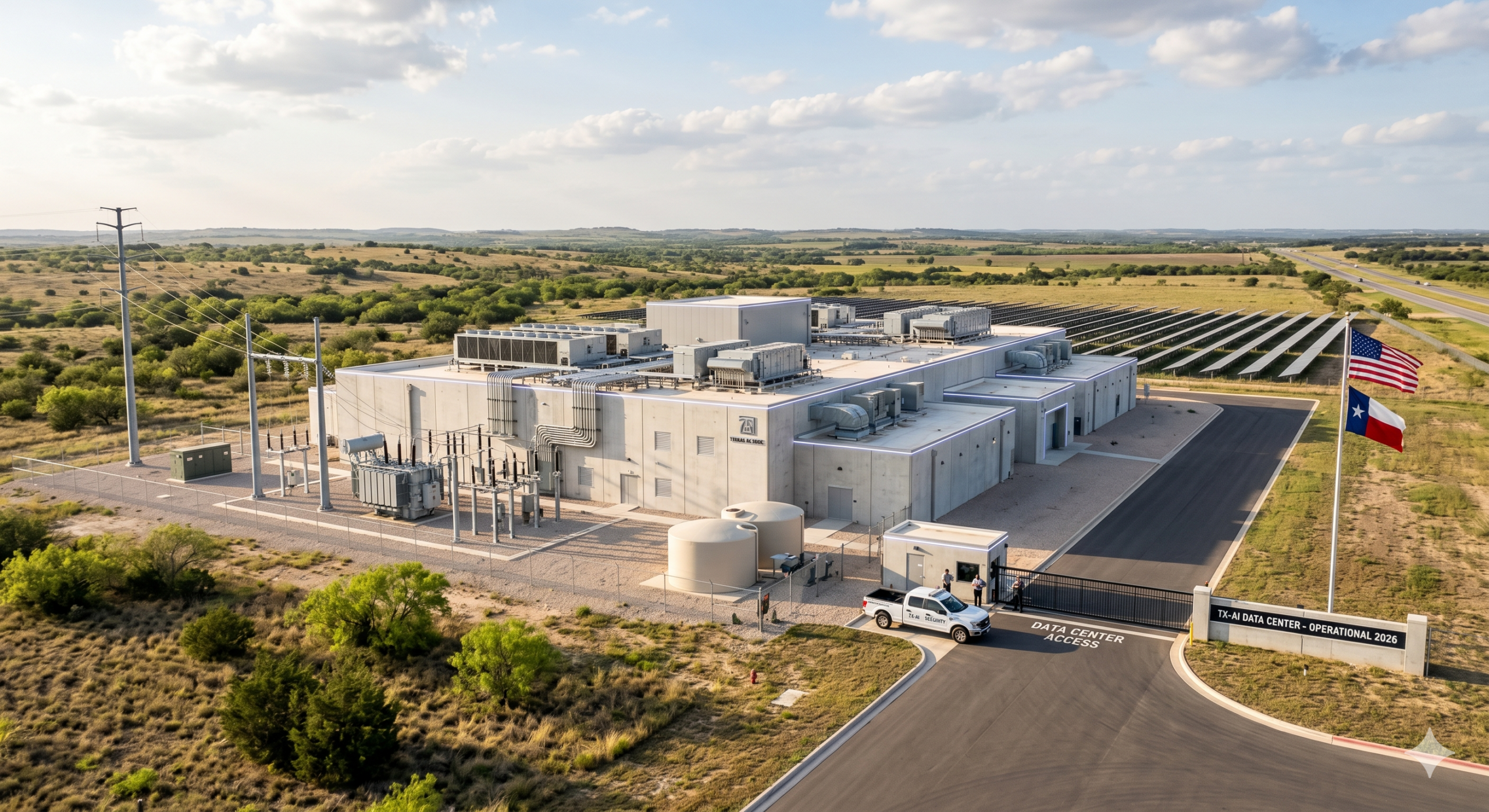
The Electric Reliability Council of Texas (ERCOT) board of directors has approved a new data center rule that focuses on how these facilities behave once they are plugged into the state’s power grid.
Alongside the widely reported “Batch Zero” screening process—which acts as a gatekeeper for deciding which new projects get to connect to the grid—this second mandate forces data centers and cryptocurrency-mining operations to upgrade their equipment so they do not abruptly shut down during grid hiccups.
Under the proposed policy, commercial facilities that cannot handle these brief power fluctuations could be ordered to disconnect from the Texas grid entirely until they upgrade their infrastructure.
To understand why this rule was passed, it helps to decode the technical jargon used by grid operators. On any power grid, “system faults” are routine, momentary disruptions—think of them as minor electrical hiccups or surges caused by a lightning strike hitting a power line, equipment overheating in the summer sun, or a tree limb brushing a wire. For an ordinary home, a system fault might cause the lights to flicker for a split second before returning to normal.
A “ride-through” requirement simply means that large industrial power users must build their facilities to weather, or “ride through,” those split-second flickers without shutting down.
While a brief flicker is harmless to a home, the advanced computers inside data centers are highly sensitive. ERCOT Vice President of Interconnection and Grid Analysis Jeff Billo stated that the Texas grid operator has already documented multiple instances where data centers and cryptocurrency miners completely tripped offline during these standard, routine system faults.
When a giant facility drawing massive amounts of power suddenly drops off the grid all at once, it creates an immediate imbalance. Grid managers nationally have warned that if several of these large loads shut down simultaneously, it can trigger a domino effect that cascades into wider, systemic power failures. This is seen by some as a significant reliability risk.
In a statewide debate where total energy load is one of the central issues, a growing point of contention is why the new connection rules do not distinguish between data centers that draw entirely from the grid and energy-neutral facilities that generate their own power.
Currently, ERCOT’s Batch Zero process and connection queue treat all data center applications purely as new power-consumption demands. The system does not give preference or faster grid approval to operators who install on-site power generation—such as dedicated natural gas microgrids, large battery storage banks, or behind-the-meter solar arrays.
Energy-neutral facilities face the same bureaucratic hurdles as grid-dependent projects. The implementation of these rules arrives just as ERCOT officials warned that total summer grid load could surpass 92 gigawatts, which would eclipse the previous historical peak of 85.5 gigawatts from August 2023.
Both the ride-through mandate and the Batch Zero screening process require final administrative authorization from the Public Utility Commission of Texas (PUCT) before taking effect. PUCT Chairman Thomas Gleeson stated that the commission will convene on June 18 to vote on the final adoption of the Batch Zero screening rules, though the specific timing for a binding commission vote on the ride-through requirement remains undetermined.
Some data center operators have expressed resistance to the engineering mandate, arguing that retrofitting existing infrastructure to meet strict ride-through capabilities could collectively cost billions of dollars and require multiple years to complete.
Technology advocates also remain cautious regarding the broader structural overhaul of the grid connection process. Cameron Poursoltan of the Data Center Coalition stated that the ultimate implementation method of the batch-study framework remains critical to delivering timely and reliable interconnections, warning that ERCOT’s administrative approach carries long-term implications for the economic competitiveness of the state.
Meanwhile, ERCOT CEO Pablo Vegas recently revised a previous long-term forecast indicating that up to 228 gigawatts of new load could come online by 2032, calling that initial projection too high of a figure based on realistic commercial expectations.
The next milestone is the PUCT’s June 18 open meeting, where commissioners will vote on the Batch Zero screening rules. Subsequent monitoring will track when the commission schedules formal action on the companion ride-through requirement, the final cost estimates submitted by digital infrastructure builders to satisfy compliance, and the publication of ERCOT’s verified Batch Zero registry detailing which specific operators cleared the screen.
Analysts are also watching real-world grid performance metrics during peak summer heatwaves to observe how large connected loads behave during localized transmission disruptions.