
Texas’ fish and wildlife agency has asked state environmental regulators not to give Corpus Christi more time than the city asked for before it must resume sending fresh water down to Nueces Bay, the nursery for the region’s shrimp and redfish.
The request comes as the obligation itself has just come back to life. Corpus Christi owed the bay nothing for more than two years while its reservoirs sat too low to trigger the requirement. Rain this summer pushed them back over the line in August — and within two weeks the city had the requirement suspended.
The Texas Commission on Environmental Quality will decide Sept. 9 whether to keep, change or throw out an emergency order its executive director, Kelly Keel, signed Aug. 25. The order lifted the requirement that Corpus Christi release water from its reservoirs into the bay and the marshes behind it.
The paperwork filed alongside it reframes who is asking. This is not one city seeking relief. The applicants are Corpus Christi, the Nueces River Authority — the regional agency that manages the basin’s water — and the City of Three Rivers, jointly. They want the suspension to run 120 days, with the option of another 60.
The Texas Parks and Wildlife Department told the commission it will not take sides, but it drew one line. “TPWD neither supports nor opposes the Application,” Executive Director David Yoskowitz wrote to Keel on Aug. 21. If the commission does grant an order, though, Yoskowitz asked that it “be limited to the requested 120-day period,” and that the commission “reassess the conditions existing at that time before determining whether any further suspension is appropriate.” In plain terms: give the applicants four months, then make them come back and prove they still need it, rather than approving six months up front.
Yoskowitz’s letter also explains why the fight is happening now. Under a 2001 agreement between the city and the state, Corpus Christi owes the bay water on a sliding scale tied to how full the Choke Canyon and Lake Corpus Christi reservoirs are. Below 30 percent full, the obligation switches off entirely. Storage “consistently dropped below 30[percent] in March of 2024,” Yoskowitz wrote, and “has not risen above 30[percent] until this month, August of 2026. This means for over two years now the inflow delivery requirements have not been triggered.”
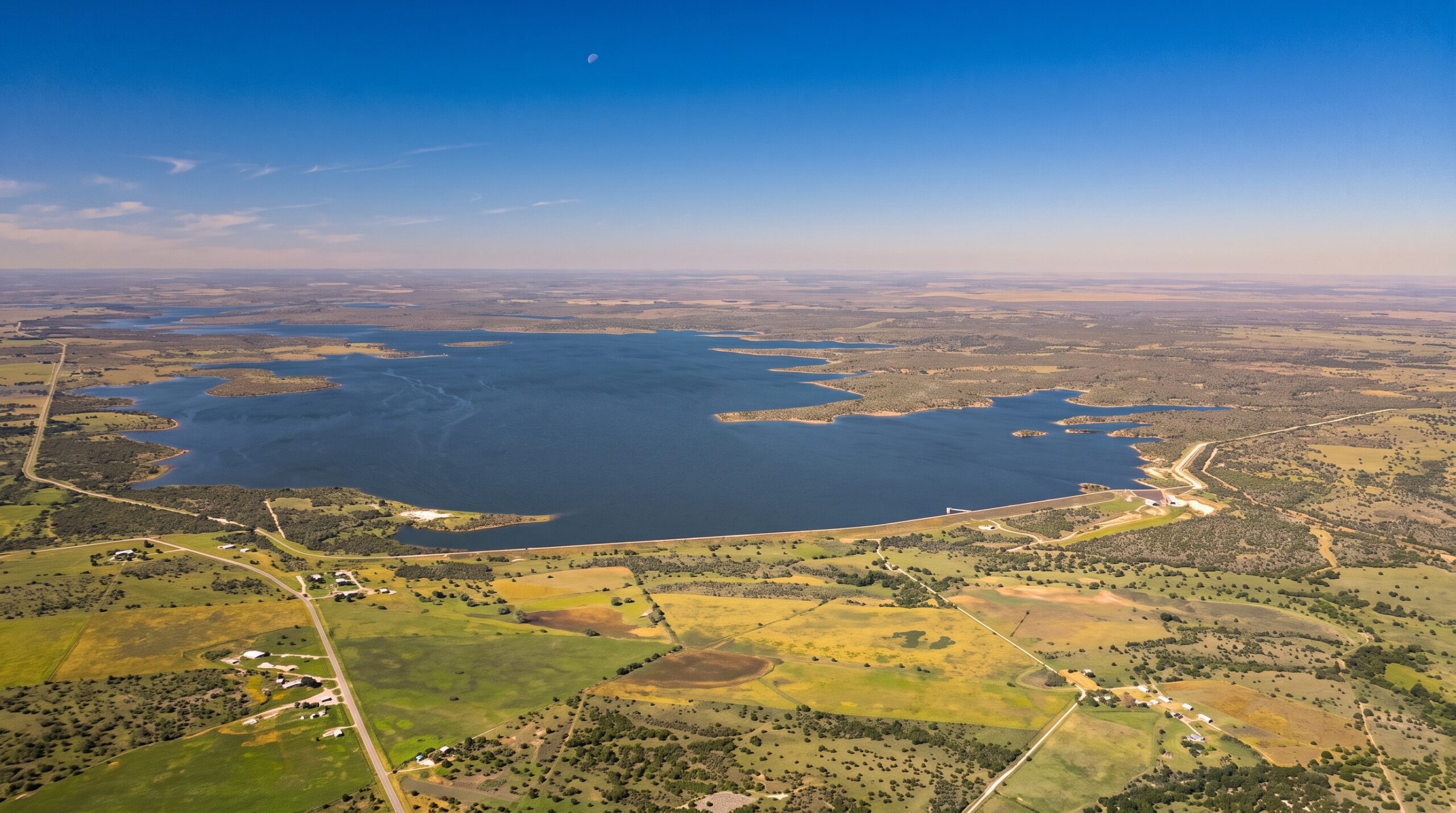
Rain refilled Lake Corpus Christi this summer. Combined storage stood at 43.1 percent when Yoskowitz wrote, and about 42 percent a week later — enough to switch the requirement back on. The city applied to suspend it on Aug. 11.
The volumes are large. The 2001 agreement was built on a finding that 138,000 acre-feet a year — roughly 45 billion gallons — is what the Nueces estuary needs to sustain a full harvest of the fish and shrimp that grow in it. Freshwater inflows keep the bay’s salinity down; without them, an estuary turns saltier than the open Gulf.
The commission’s own consumer advocate has come down on the city’s side. The Office of Public Interest Counsel, the independent office inside the agency that represents the public in contested cases, filed a comment on Aug. 24. “OPIC finds that the Application satisfies the statutory and regulatory requirements for an emergency order and that granting the requested relief is consistent with the public interest,” wrote Interim Public Interest Counsel David Timberger. “OPIC therefore recommends that the Commission grant the Application.”
Timberger’s letter walks through why the city has no other option in the near term. Expanded groundwater supply is “not expected before late 2026 or 2027.” Treating brackish water is “not projected online until 2027.” The Mary Rhodes Pipeline, which brings water in from the Colorado River basin, “has already been operated at substantially increased capacity (from approximately 43 MGD to 72 MGD)” — from about 43 million gallons a day to 72 million.
City Manager Peter Zanoni loosened Corpus Christi’s own watering rules on Aug. 27, moving the city from Stage 2 to Stage 1 restrictions, its least restrictive posture since March 2024.
Notice of the application ran in newspapers across 10 counties, and the record identifies the Nueces Estuary Advisory Council among those entitled to be heard. No protest or hearing request from any outside party appears in the commission’s file.
The three commissioners take it up at 9:30 a.m. Sept. 9 in Austin.