
More than a decade ago, two Boston firefighters lost their lives after becoming trapped inside a burning building. Rescue crews knew they were inside. They just couldn’t find them in time.
Those moments have stayed with us because they exposed one of public safety’s biggest blind spots. Once firefighters, police officers, or paramedics enter a large building and things go bad, traditional GPS technology often can’t tell the incident commanders exactly where they are. When every second counts, that’s a problem we can no longer afford to accept.
That’s why, on Aug. 19, public safety leaders from across the state and the nation will gather in Arlington for the Texas First Responder Indoor Location Summit. The event will showcase how North Texas is helping to lead on next-generation indoor location capabilities and why the rest of the country should be paying attention.
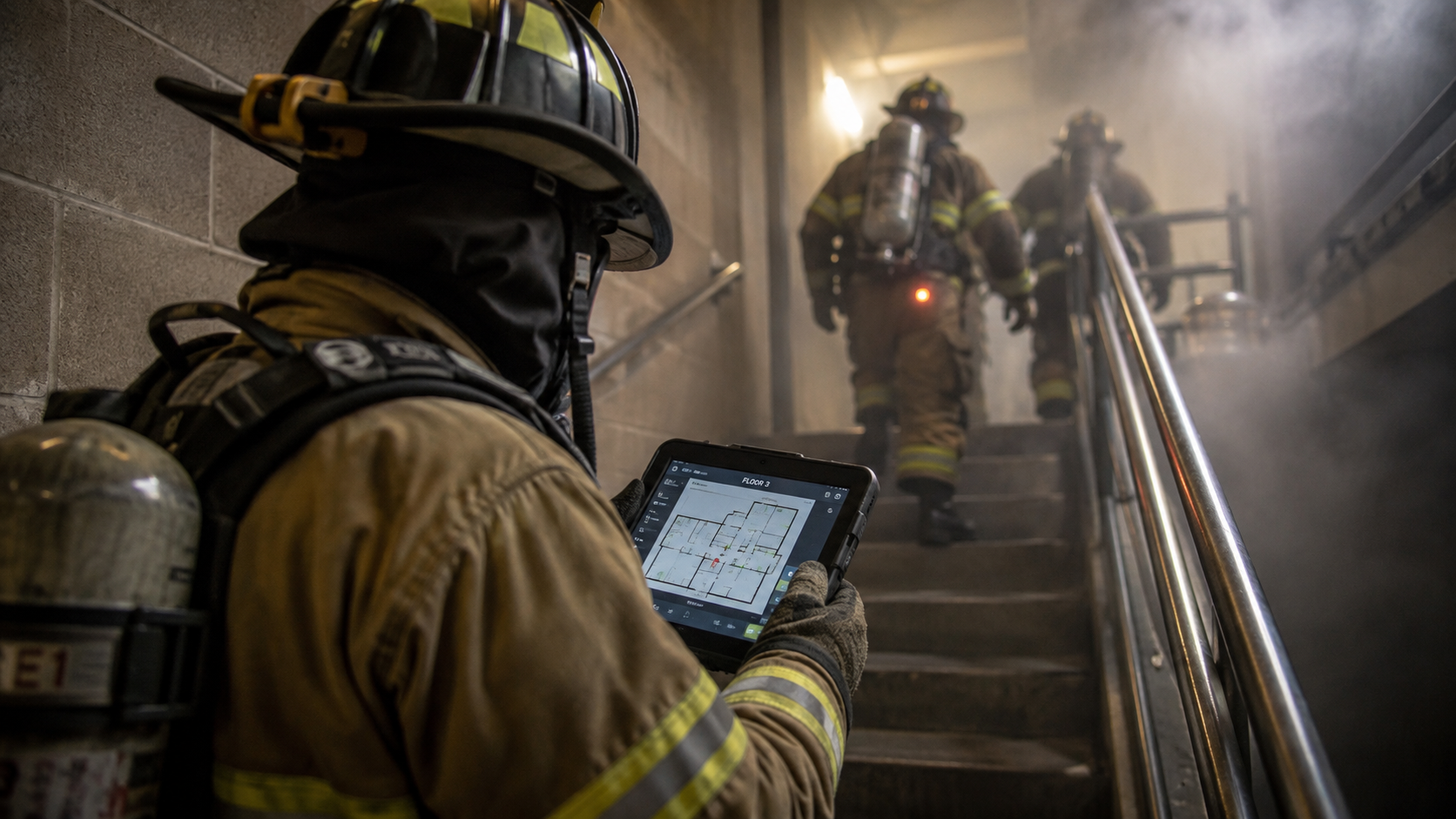
The North Central Texas Emergency Communications District (NCT9-1-1) is helping lead the deployment of indoor location capabilities that give 9-1-1 dispatchers and first responder incident commanders floor-level data. It’s a significant step toward solving a challenge first responders have faced for decades: finding civilians and first responders quickly inside buildings when every second counts.
For those of us who have spent our careers in public safety, this is about more than technology. It’s about making sure firefighters, police officers, paramedics, and the people they’re trying to save all have the best possible chance of making it home.
For years, we’ve accepted a dangerous reality. We can navigate almost anywhere outdoors using GPS, yet when someone calls 9-1-1 from inside a high-rise, apartment complex, school, hospital, or office building, responders often have to search floor by floor before reaching them.
The region’s work is showing what indoor location technology can do — and what it takes to make it effective. Knowing what floor someone is on is important, but so is knowing exactly where they are on that floor. First responders need both horizontal and vertical location information to get crews to the right entrance, hallway, room, or stairwell as quickly as possible.
Communities across the country are looking for better ways to protect first responders and improve emergency response. North Texas isn’t talking about what’s possible—it’s putting these capabilities to work.
That’s why Finn is helping launch the Find Them Now Project, a national public safety initiative focused on one simple idea: when a firefighter, police officer, or civilian calls for help, finding them shouldn’t be the hardest part. Find Them Now will bring together first responders, decision makers and industry to build support for policies that can save lives.
The Federal Communications Commission has already begun examining next-generation positioning technologies. North Texas is demonstrating what’s possible. The FCC has an opportunity to build on that momentum and open a clear path for more communities to adopt these life-saving capabilities.
When the next call comes – the next firefighter Mayday, the next officer down, the next 9-1-1 caller trapped inside a building – finding them shouldn’t depend on luck.
Rodger Mann, ENP, is Chief Innovation Officer for the North Central Texas Emergency Communications District (NCT9-1-1).
Joseph E. Finn served as the Fire Commissioner and Chief of Department for the Boston Fire Department. He is a member of the Metropolitan Fire Chiefs Association, a Division of the International Association of Fire Chiefs (IAFC), a national advocate for first responder health and safety, and a public safety advisor to NextNav.