
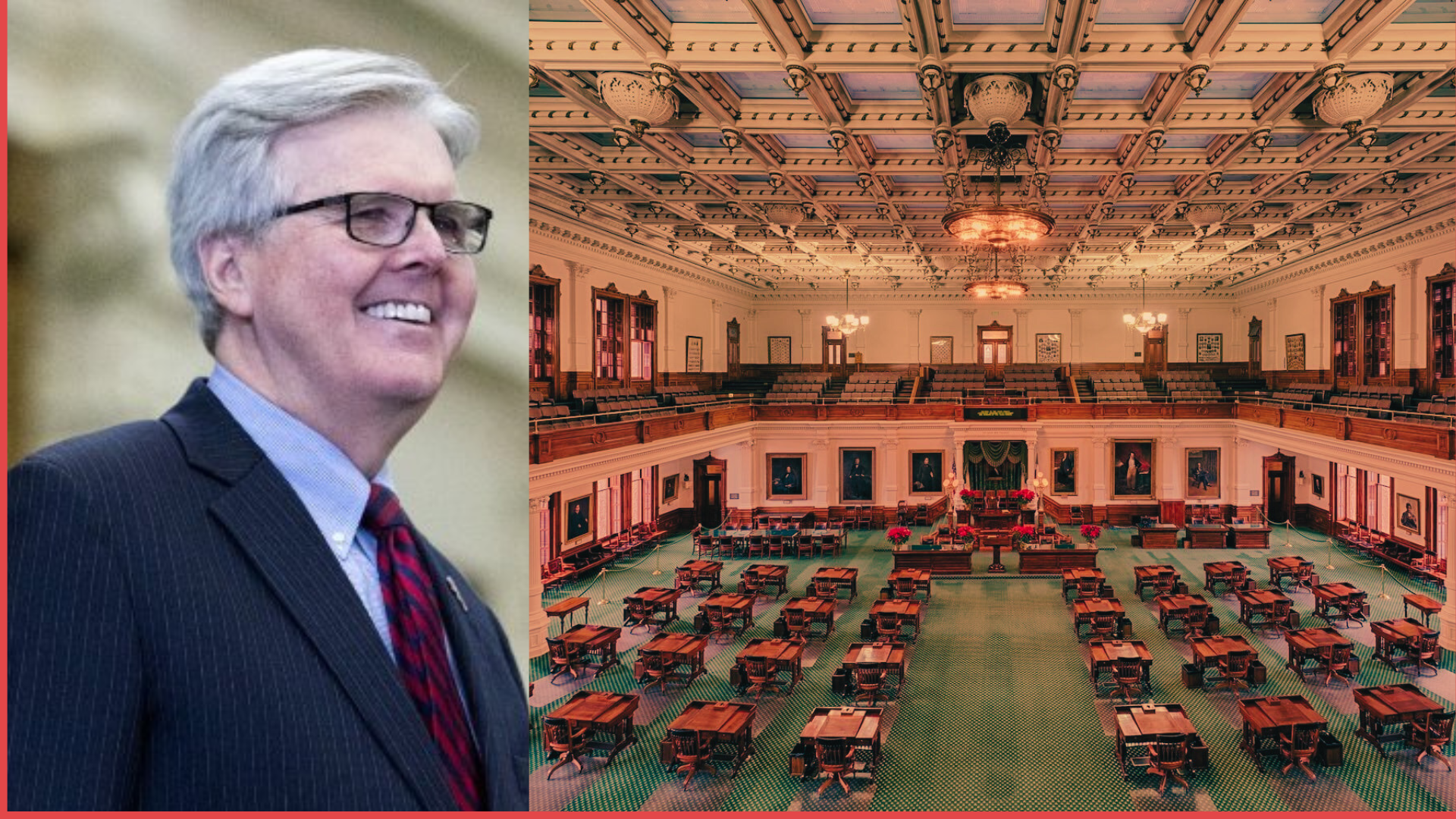
Lieutenant Governor Dan Patrick on Monday handed four Texas Senate committees a new set of interim assignments, directing them to study online ticket resale, religious liberty, child safety in online games, family-court delays and the shrinking Pecos River before the Legislature reconvenes.
The interim charges, dated July 27, adds to the charges Patrick issued earlier this year. Interim charges are the marching orders the Senate’s presiding officer gives committees between sessions: they tell each panel what to hold hearings on and where to recommend new laws ahead of the 90th Legislature, which convenes in January 2027.
The Business and Commerce Committee drew a consumer-protection assignment aimed at the concert and sports economy. Patrick directed it to evaluate how online ticket platforms operate and to recommend ways to improve price transparency “throughout the ticket purchase process,” with particular attention to the secondary market — the resale sites where tickets are marked up after the original sale. The charge asks the committee to identify unfair or deceptive practices and to consider what changes, if any, the state’s consumer-protection laws need to keep the live-entertainment ticket market “fair, competitive, and accessible.”
The Senate Select Committee on Religious Liberty received the broadest mandate. Patrick asked it to compare Texas’s religious-liberty protections — including Article 1, Section 6 of the Texas Constitution, the state’s Freedom of Worship clause — with the federal First Amendment’s Establishment and Free Exercise clauses, and to recommend whether additional protections are needed “free from discrimination or government interference.”
A second charge directs the panel to find ways to educate Texans about those rights in schools, workplaces, government and health care. The committee is also told to monitor how agencies are carrying out Senate Bill 1049, the 2025 law that requires districts to excuse students for up to five hours a week to attend a privately run “released time” religious-instruction course.
Two charges went to the State Affairs Committee, both framed around protecting children. The first directs the panel to study online gaming platforms that target minors — which games advertise to children, whether those ads are appropriate, and whether the platforms verify players’ ages — and to recommend ways to keep minors from violent and sexual content and to bar communication between children and adult strangers in games.
The second asks the committee to examine what Patrick’s charge calls the “unnecessary burden” of inconsistent divorce and custody proceedings, targeting unpredictable timelines, delays and repetitive child evaluations in family courts.
The Water, Agriculture, and Rural Affairs Committee got the most technical assignment: managing the Pecos River Basin in far West Texas. Patrick directed it to study water availability and flow decline in the basin and to evaluate the Red Bluff Water Power Control District and its irrigation districts. The charge also asks the committee to review Texas’s water accounting under the Pecos River Compact — the interstate agreement dividing the river’s flow with New Mexico — and to assess the reuse of treated “produced water,” the salty wastewater that comes up alongside oil and gas. The panel is to recommend ways to modernize special-district governance and improve coordination across the state line.
The four charges span consumer law, constitutional rights, child safety and rural water policy, but share a deadline: each committee is expected to hold public hearings over the coming months and report recommendations before senators return to Austin. Patrick has signaled that more interim charges may follow, and Texans can testify at the hearings that will shape what the Senate takes up in 2027.