
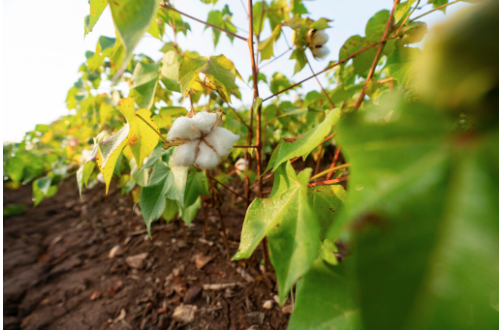
About one out of every ten acres of Texas cropland that depends on rain rather than irrigation has been given up on this year. As of Sept. 11, roughly 10 percent of the 3.7 million dryland acres Texas farmers reported to the federal Farm Service Agency had been declared failed — some 370,000 acres — according to a crop and weather report published Sept. 15 by Texas A&M AgriLife Extension.
“For sorghum and other summer crops, this has meant sharply reduced yields on irrigated fields and outright crop failure on dryland acres,” said Kevin Heflin, an AgriLife Extension agronomist at the High Plains Research and Extension Center in Canyon. Daily water demand reached half an inch a day during stretches above 100 degrees, he said, “leaving little hope that any rain can save drought-stressed summer forage crops for many producers.”
The month behind those numbers was close to a record. In the Texas Water Development Board’s weekly water report published Sept. 15, hydrologist Mark Wentzel wrote that “with a statewide average of 0.53 inches of precipitation, August 2026 was the third driest August in Texas since 1895.” Thirty-five counties took in less than five percent of their twentieth-century average for the month. The wettest place in the state was Bowie County, in the far northeast corner, at 82 percent of normal. The same report recorded “the seventh consecutive week of drought expansion within the state,” with drought covering 74 percent of Texas against 19 percent a year ago.
The U.S. Department of Agriculture’s crop progress report for the week ending Sept. 13 put 85 percent of Texas topsoil in the short or very short categories and 58 percent of pasture and rangeland in poor or very poor condition. Nearly half the state’s cotton crop was rated poor or very poor.
What that looks like on the ground is in the district reports AgriLife collects from county agents. In the Rolling Plains, “cattle were being shipped to market because producers were short of grass.” In Central Texas, “a few producers started hauling water” and “hay stores were not expected to last with feeding beginning this early.” In West Central Texas, “the dry grass that remained had lost nutritional value” and “cattle were starting to be culled.” In the Far West, “irrigation water was being cut off on cotton in some areas.” In North Texas, stock tanks were very low, burn bans were in place and “trees were dropping leaves early.”
Selling cattle into this market is not a rescue. Calf prices have fallen about $100 per hundredweight over the past six to eight weeks, David Anderson, a livestock economist with AgriLife Extension, told the Texas Farm Bureau on Sept. 14. “It’s been a dramatic decline, not only for fed cattle and calves, but the cow market is declining, too,” he said. Anderson also described the bind ranchers are in: “We’ve had high prices, which are the signal for ranchers to expand their herds and increase production. But they cannot do that if you have drought, which becomes a limiting factor in increasing beef production.”
The next crop is already short of seed. Brandon Gerrish, AgriLife Extension’s statewide small grains specialist, said dealers are reporting only 60 to 70 percent of normal wheat seed supplies. “Growers who are wanting to graze are the most eager to get seed into the ground right now,” he said.
The state’s stored water is going the same direction, though more slowly. Water Data for Texas, the reservoir monitoring service the water board runs with the U.S. Geological Survey, put monitored water supply reservoirs at 72.9 percent full on Sept. 16 — 23,013,923 acre-feet, or enough to cover 23 million acres a foot deep. That is down from 73.7 percent a week earlier and 76.3 percent a month earlier, and it is the first reading below 73 percent in the current decline. Palo Duro Reservoir in the northern Panhandle holds 227 acre-feet, four-tenths of one percent of its capacity. Falcon Reservoir on the Rio Grande is at 20.9 percent and falling about a tenth of a point a day.
Not every signal points one way. Amarillo lifted its Stage 1 restrictions on Sept. 11 after its supply recovered above 80 percent, and Dimmitt rescinded its own Stage 1 plan on Sept. 14. No Texas city, utility or river authority tightened drought restrictions in the week ending Sept. 16. San Antonio remains on Stage 2 and Corpus Christi on Stage 1, both unchanged. The Dispatch reported on Sept. 2 that the expansion then under way was the largest since 2008; it has run five weeks longer since.
The water board is taking public comment on a proposed amendment to the 2027 State Water Plan until 5 p.m. Sept. 25, with a hearing at 1 p.m. Sept. 24 in Room 170 of the Stephen F. Austin Building in Austin. The next drought map is due Sept. 17.