
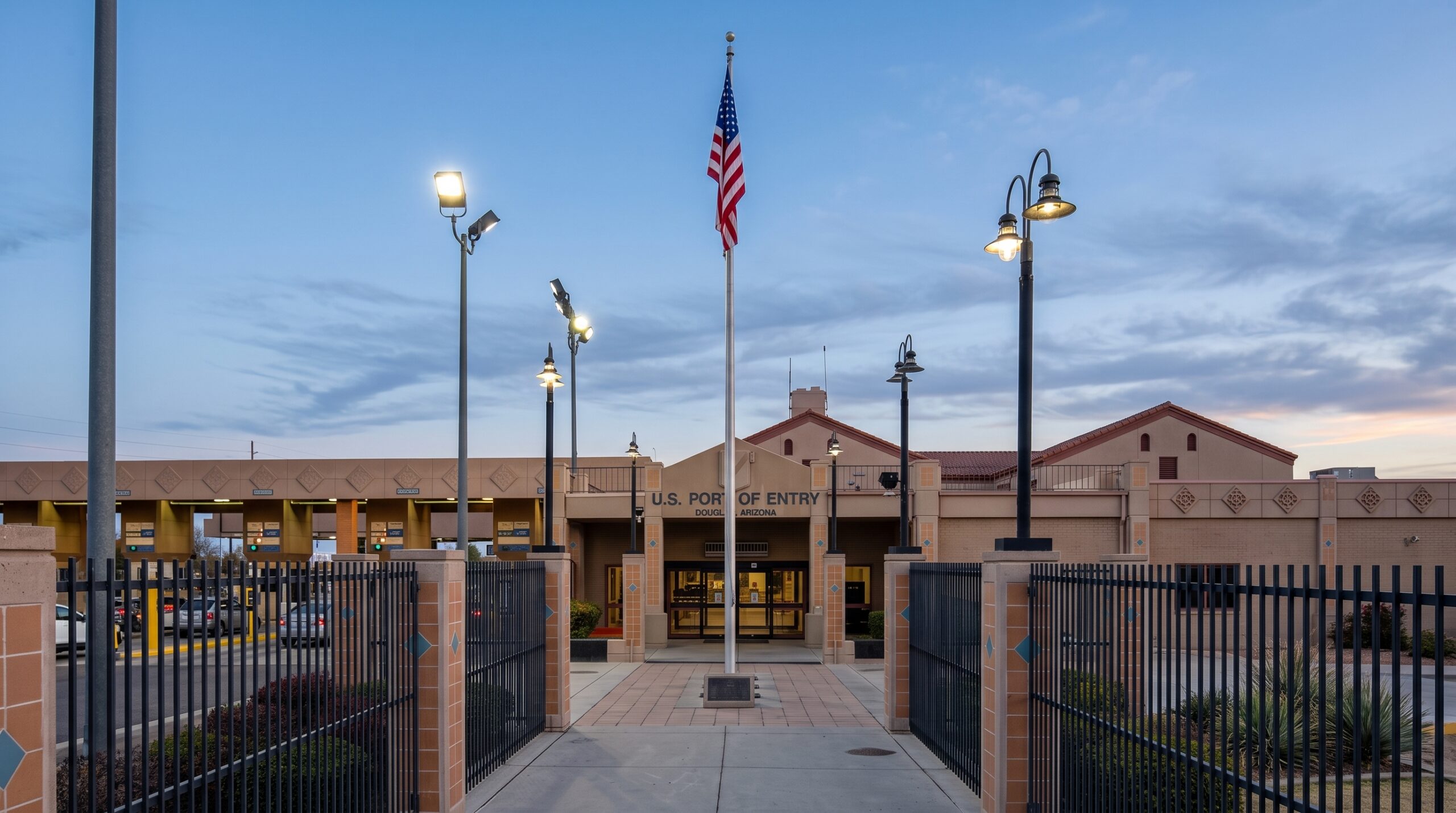
Mexican cattle began crossing into the United States again on Aug. 24 for the first time since 2025, but not through Texas. The U.S. Department of Agriculture reopened a single port of entry — Douglas, Arizona — and the two crossings it says it will consider next are both in New Mexico. No Texas port appears anywhere in the announced sequence.
The reopening matters to Texas because Texas feedyards and stocker operations have historically bought a large share of the roughly 1.1 million cattle a year that Mexico sends north. Those animals arrive light and are fattened here. With the border shut, Texas feeders have had to bid against everyone else for a domestic calf crop that is the smallest in generations — the national herd stood at 86.2 million head on Jan. 1, 2026, the lowest in 75 years, according to USDA figures cited by The Associated Press. Retail prices have followed. Ground beef averaged $6.89 a pound in July 2026, up nearly 57 percent from July 2021, and uncooked steak hit a record $13.06 a pound, the AP reported.
The closures date to the northward spread of New World screwworm, a parasitic fly whose larvae burrow into the flesh of living animals and can kill cattle, deer, pets and, rarely, people. Screwworm reached Texas in June 2026, when the Texas Animal Health Commission confirmed a case in a Zavala County calf. The state has recorded 46 confirmed animal cases since, all in domestic livestock, with four still active and 42 resolved, according to USDA’s confirmed-detections dashboard. There have been no detections in wildlife and none in fly traps. The most recent case, a sheep in Val Verde County, was confirmed Aug. 16 — nine days ago, the longest pause of the outbreak so far.
USDA rested the Arizona decision on geography. Sonora and Chihuahua, it said in its July 24 announcement, are “the lowest-risk Mexican states” because of long-standing inspection programs and their distance from southern Mexico, where most cases sit. The nearest active case to Douglas was about 325 miles away when the plan was written. “Every animal entering the United States through these ports will undergo a full USDA inspection to ensure it is free of any signs of New World screwworm,” the department said.
Texas was not always left out. Under an earlier reopening plan USDA published June 30, 2025, the department set dates for two Texas crossings: “Del Rio, TX – August 18” and “Laredo, TX – September 15.” That schedule collapsed after Mexico reported a case in Veracruz and Agriculture Secretary Brooke L. Rollins shut the ports again in July 2025. The 2026 plan names Douglas, then Santa Teresa and Columbus, New Mexico, and stops there.
Texas responded to the Arizona opening with paperwork of its own. On Aug. 24, the Texas Animal Health Commission’s executive director issued an order covering every Mexican-origin animal that enters the country somewhere else and then comes to Texas, “regardless of whether they are moved directly to Texas or held in another state prior to entering Texas.” Those cattle must carry an electronic ear tag, travel with an electronic health certificate signed by a veterinarian, and obtain a state entry permit before crossing the line. The order is effective immediately and stays in force until modified.
Whether the openings continue is not settled. USDA says it will evaluate Douglas before considering the New Mexico ports, and that the schedule “may be paused if USDA identifies increased risk in Sonora or Chihuahua via post-opening audits or other observations/information.” Sonora confirmed its first screwworm case the week of Aug. 17.
Producer groups are split. Texas Agriculture Commissioner Sid Miller, who has pressed for reopening, told KFOX14 on Aug. 24 that “I’ve been trying to get that border open for a long time” and that consumers “are paying too much for beef.” The Texas and Southwestern Cattle Raisers Association backed the phased approach but warned it “will not hesitate to urge the immediate closure of these ports should science indicate the risk has changed,” President Stephen Diebel said. R-CALF USA, a producer group that has long opposed Mexican cattle imports, called the plan “premature,” citing cases in Chihuahua and sterile-fly production still short of USDA’s target.
For Texas ranchers, the practical question is when — or whether — a Texas gate opens. USDA has not said.