
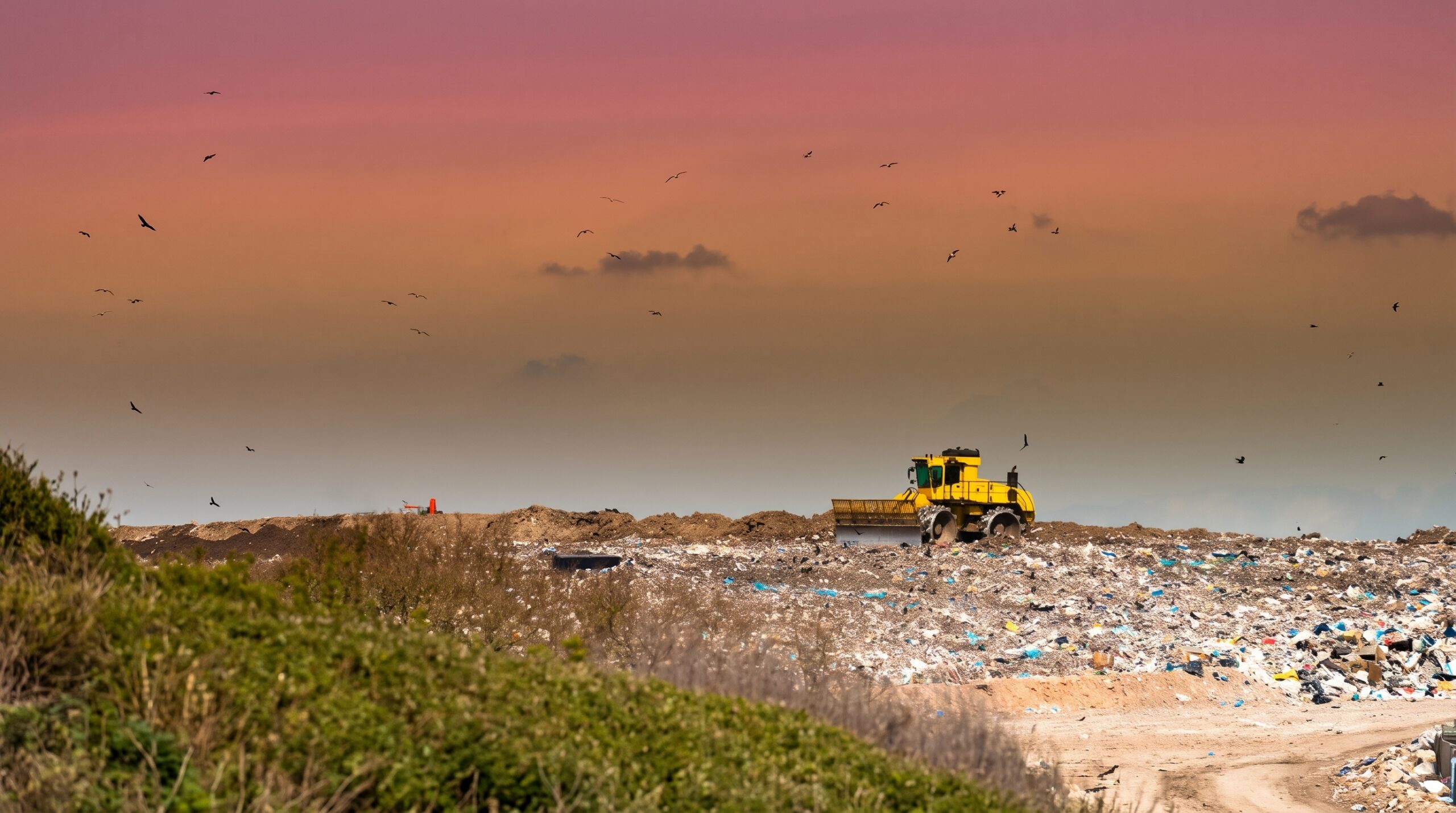
Every ton of trash buried in a Texas landfill carries a state fee, and the account that collects it ended the last fiscal year with $94.8 million available, down from $154 million a year earlier after the state sent $50 million to hurricane debris removal, according to the annual financial report of the Texas Commission on Environmental Quality, the state’s environmental regulator.
The money sits in the Waste Management Account, and state law spells out what it may pay for — from regional cleanup grants that cities and counties apply for to cleaning up illegal dumps no one will claim. How much of the balance lawmakers spend, and on what, will be set in the next state budget.
The account’s largest source is the state fee on solid waste disposal, set in law at 94 cents a ton for trash weighed at a municipal landfill, with a provision letting the commission raise or lower it to match spending levels the Legislature sets. Cities and private waste companies that run landfills pay it, according to the Legislative Budget Board, which prepares the state budget for lawmakers. The Legislature must appropriate the money before the commission can spend it.
The law divides the fee revenue two ways. A third goes to local and regional solid waste projects, passed out by formula through the state’s 24 regional councils of governments, based on population, area, fees generated and public health needs. Those projects must promote cooperation between public and private entities and may not give anyone a competitive edge over private recycling or waste companies. The other two-thirds pays for the commission’s landfill permitting, enforcement and site cleanup programs, and for a list of activities meant to strengthen the state’s waste system.
That list is where the possible uses are. It includes extra money for local governments to enforce litter and illegal dumping laws, a statewide public awareness program, research to build markets for recycled products, research into new ways to keep waste out of landfills, help for other state agencies working to divert recyclable waste, and a state fund for cleaning up abandoned tire dumps and trash dumps when no responsible party can be found or can pay.
The balance is larger than the account’s yearly income would suggest, and the reason is a one-time transfer. Before 2023, spending from the account was outpacing what came in, and the balance was expected to run out as soon as fiscal 2026, the budget board wrote in its February 2025 summary of the commission’s budget. In 2023, lawmakers folded a second landfill-fee account into it through House Bill 3461, moving in $145.2 million, according to state comptroller figures the board cited. At the end of fiscal 2024, the available balance was $154.0 million.
Then the governor’s office, on Oct. 7, 2024, authorized $50 million from the account for debris removal by local governments in East and Southeast Texas after Hurricane Beryl, the budget board reported. The commission’s fiscal 2025 report says the account’s fund balance fell 38.4 percent that year and attributes the drop to the $50 million transfer to the Texas Division of Emergency Management. On Aug. 31, 2025, the account held $94,829,846 not committed to any contract, plus $2.46 million in signed contracts and purchase orders.
The cushion is not growing on its own. The budget board projected the account would collect about $102.3 million over the 2026-27 budget period, and its recommendation for that period called for $111.0 million in spending from it — $8.7 million more than the projected income. The board wrote that the merger “stabilized” the balance in the short term, but that future revenue and spending “will determine if the account is sustainable in the long-term.”
Pressure on the account has already shown up in the regional grants. To meet a 3 percent budget reduction order in August, the commission removed $11 million in municipal solid waste grants from its baseline request for 2028-29, then asked for the money back among its requests for added funding.
Lawmakers have floated other uses. A 2025 House bill, HB 4839, would have created a separate fund for recycling grants and loans, but it made no appropriation and stalled after clearing committee. What the account pays for in 2028-29 will be decided in the budget the Legislature writes after it convenes Jan. 12, 2027.