
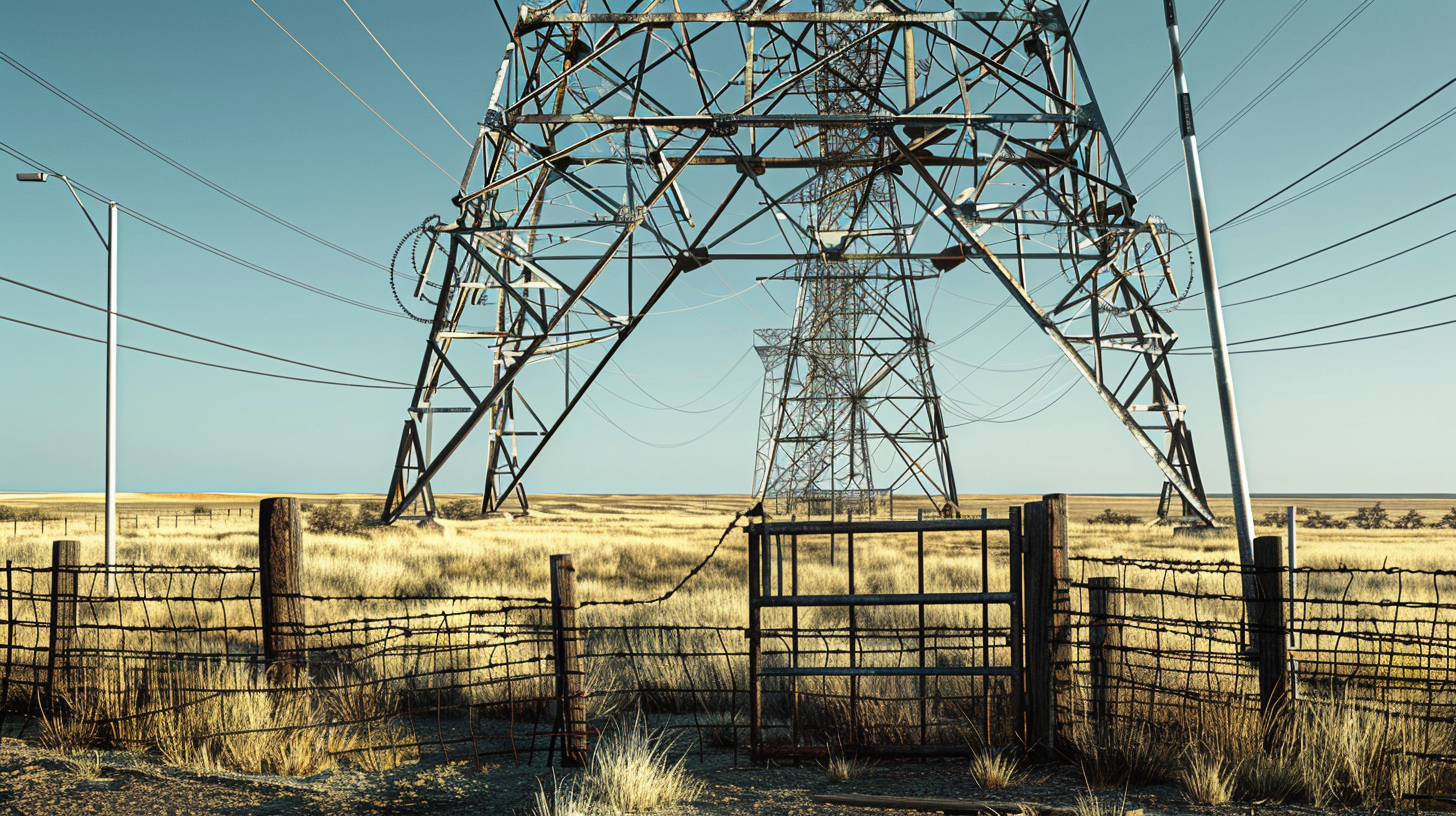
As the Public Utility Commission of Texas approaches a cluster of routing decisions on the state’s first 765-kilovolt transmission lines, the fight increasingly turns on a single question: whether the demand forecast for West Texas — driven largely by oil-and-gas electrification in the Permian Basin and, increasingly, by data centers — justifies stringing ultra-high-voltage lines across ranchland.
The Permian import paths are one part of ERCOT’s statewide Strategic Transmission Expansion Plan (STEP), a 765-kV program ERCOT estimated in January 2025 at roughly $33 billion. That figure covers the entire statewide program not the Permian lines alone. ERCOT has put the Permian import paths and associated local upgrades near $13.8 billion, and an Energy Ventures Analysis study prepared for the Texas Public Policy Foundation separates a roughly $9 billion Permian line estimate from the statewide total.
ERCOT’s Permian Basin Reliability Plan projects regional demand roughly doubling by 2030, with about half of it attributed to oil-and-gas activity, and the Far West weather zone has averaged roughly 11% annual peak-demand growth over the past decade.
Oncor spokesman Andrew Clark has said load in West Texas “is growing much faster than local generation is able to provide,” arguing that new import paths are needed “to maintain a reliable system for Texans.” Data centers are part of the statewide picture — ERCOT is evaluating more than 233 gigawatts of large-load interconnection interest across Texas, much of it from data centers — but that figure reflects statewide interest, not a Permian-specific driver.
PUC staff have backed the 765-kV design, citing a 2024 ERCOT study finding the higher-voltage lines move more power over long distances with fewer losses than conventional 345-kV construction. The Legislature reinforced the large-load framework with Senate Bill 6, which requires facilities of at least 75 megawatts interconnecting after Dec. 31, 2025, to adopt curtailment protocols and install equipment letting ERCOT disconnect them remotely during grid emergencies.
Opponents do not dispute that load is growing; they dispute that it requires this many lines on these routes. American Stewards of Liberty filed a motion asking the commission to reserve the shared “need” finding for the Permian import paths until the Bell County East–Big Hill case (Docket 59475) is fully briefed. A separate amicus brief from 43 state legislators — 34 House members and nine senators — urged additional scrutiny before what they called irreversible decisions.
At its June 17 open meeting the commission declined to grant an across-the-board deferral of the need determination, instead abating the first segment to await the companion Dinosaur–Longshore case. The need question itself was reserved by SOAH Order No. 24, a case-management decision the administrative law judges reached to consolidate a question common to the whole plan.
Landowners alleging more than 1,300 affected property owners were not properly notified after the route changed pressed a route-adequacy and notice appeal. The commission took it up at its June 18 meeting and did not grant it.
As The Texas Dispatch has reported, the marquee routing calls that once looked likely for midsummer have slid toward fall, and the reserved “need” question means the debate over whether the plan is warranted at all will be settled separately from where the lines go.
Both sides frame the coming weeks as decisive. Supporters warn that delay risks leaving the Permian — and the data centers, oil-and-gas processing and other loads clustering there — without enough transmission when demand peaks. Critics say a pause would let lawmakers weigh cost allocation and landowner protections before commitments are locked in.
“Public input is critical,” PUC spokesman Rich Parsons has said of the process, even as the commission’s own schedule now points toward routing orders this fall and a September ruling on whether the central line is needed at all.
Correction (July 15, 2026): An earlier version of this article contained three errors. (1) It described the Permian Basin Reliability Plan lines as costing “more than $33 billion.” That figure is ERCOT’s January 2025 estimate for the entire statewide 765-kV Strategic Transmission Expansion Plan; the Permian import paths are one component, which ERCOT has estimated, with associated local upgrades, near $13.8 billion. (2) It stated that landowners’ notice complaint led administrative law judges to reserve the “need” determination for Docket 59475. That reservation was made by SOAH Order No. 24 as a case-management decision, independent of the notice complaint; the commission declined an across-the-board deferral of need at its June 17 open meeting and did not grant the route-adequacy and notice appeal at its June 18 open meeting. (3) It characterized American Stewards of Liberty as asking the commission to halt the buildout until the 2027 legislative session; the group’s motion sought to reserve the shared need finding until Docket 59475 is fully briefed, and a separate amicus brief from 43 state legislators supported it. The article has also been updated to note that ERCOT attributes about half of near-term Permian demand to oil-and-gas activity and that the 233-gigawatt large-load figure is statewide, not Permian-specific.