
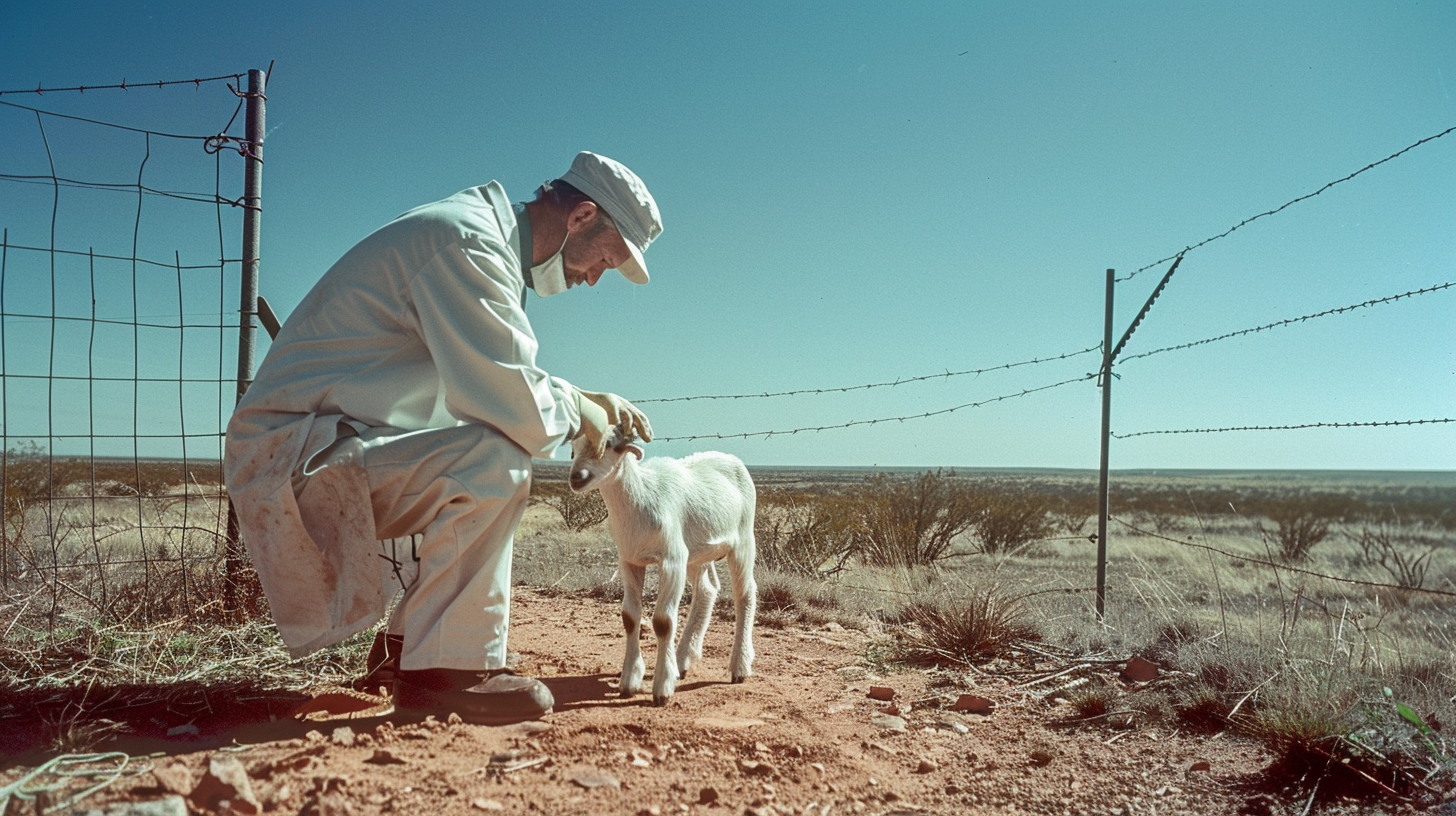
The federal registry for the New World screwworm outbreak has reached 16 confirmed cases following a new detection in a goat in Terrell County. According to the United States Department of Agriculture (USDA) confirmed-cases tracker, the nationwide total includes 15 in Texas and one isolated case in New Mexico. The Terrell County case, confirmed on June 22, 2026, marks the first time the parasite has ever been documented in that far-West Texas jurisdiction.
The Terrell County detection occurred during a procedure on a goat. This case is part of a recent cluster of four confirmations that also includes a lamb in Crockett County and two calves in Edwards County. The latest data marks the first reported infestations for both Terrell and Crockett counties.
The latest detections shift the parasitic footprint significantly farther west than the initial Hill Country and Concho Valley clusters. While the two infected calves in Edwards County were discovered within an active surveillance area, the lamb in Crockett County was detected entirely outside the established affected zone. The physical location of the Terrell County infestation sits roughly 180 miles west of the state’s original detection in Zavala County and 74 miles west of the nearest previously known case.
This expansion beyond active surveillance areas increases the risk of transmission to the state’s native wildlife populations. State agricultural and wildlife officials are monitoring regional deer populations, drawing on historical data from older generations of ranchers who documented severe screwworm impacts on white-tailed deer prior to the parasite’s domestic eradication. State agencies are working to prevent the flesh-eating larvae from establishing a foothold in wildlife to protect the state’s estimated $10 billion hunting and conservation industry.
In response to the Western expansion, the USDA New World Screwworm Rapid Response Team announced that sterile-fly dispersal flights will begin over Crockett County. The suppression strategy utilizes the sterile insect technique, which releases laboratory-sterilized male flies to mate with wild females, causing them to produce nonviable eggs and crashing the regional population over several three-week reproductive cycles.
The Texas Animal Health Commission (TAHC) continues to enforce strict movement controls on all warm-blooded animals leaving designated infested zones. Biosecurity rules mandate that no livestock or pets can be transported across boundaries without a formal inspection, preventative chemical treatment, and an official movement certificate. State veterinarians continue to emphasize that human infections remain rare, no wildlife cases have been verified, and the outbreak presents no threat to food safety because the parasite exclusively infests living tissue.