
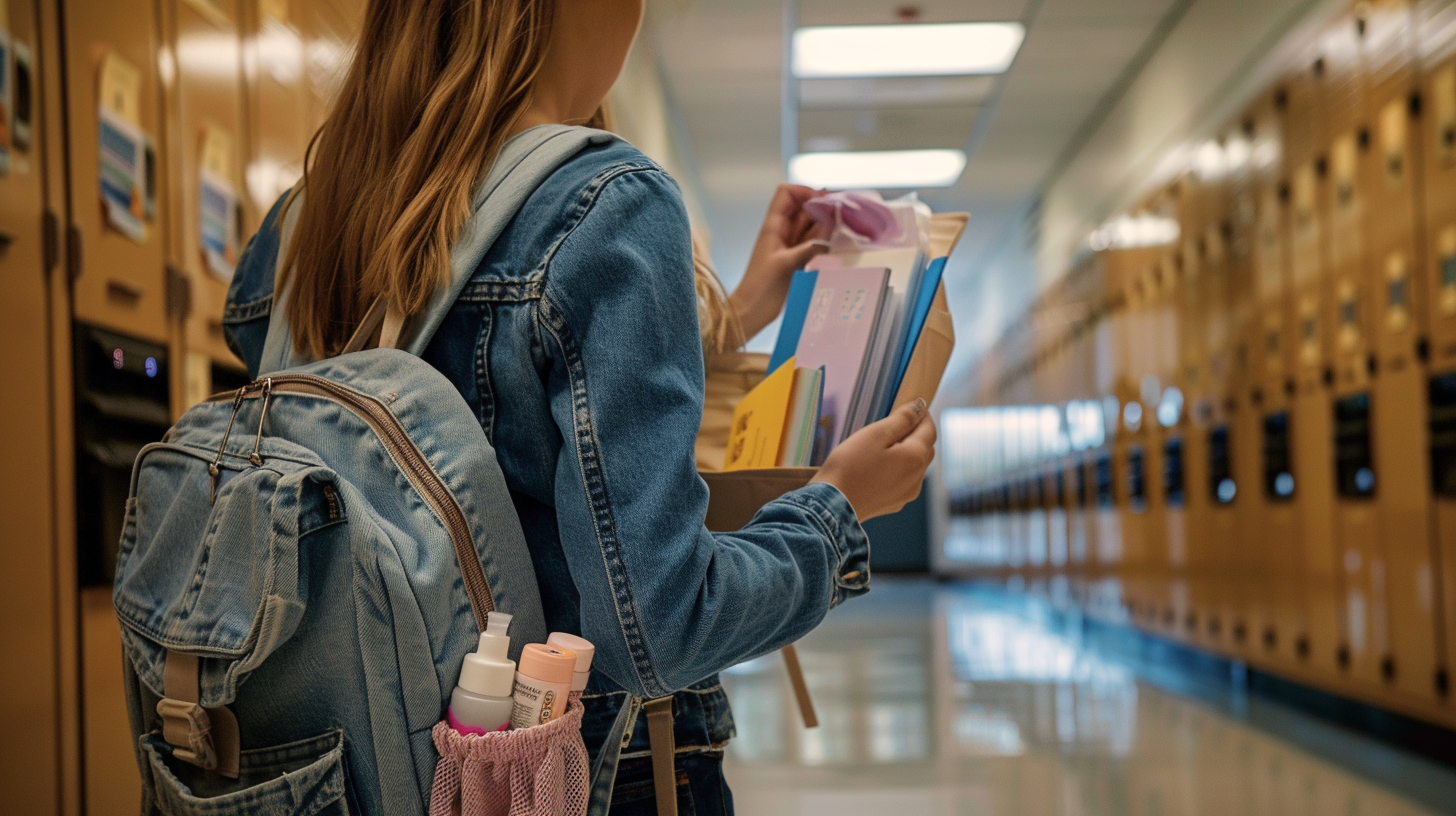
Every public school restroom in Texas contains toilet paper. No one thinks twice about why it belongs there. Yet when the conversation shifts to menstrual products, suddenly we need legislative debates and fiscal justification.
This year, Texas House Bill 550—which required middle and high schools to provide free menstrual products in school restrooms—failed to advance through the Legislature. As the 17-year-old cofounder of a nonprofit fighting period poverty, I’ve heard stories of students leaving school early or secretly asking friends for menstrual products because of cost barriers. I’ve worked to assemble resource kits to reach young women across the globe. So when I learned about HB 550, I assumed lawmakers did not value the issue. But after interviewing policymakers, public health experts, and menstrual equity organizations, I realized the question is not the importance of period poverty. It is why other legislative reforms seem to constantly take priority.
HB 550 proposed requiring Texas public schools serving grades 6–12 to provide free menstrual products in school restrooms. Although the bill was referred to the House Public Education Committee, it never received a committee hearing or floor vote, leaving product accessibility in restrooms up to individual school districts.
When I began researching this bill, I expected cost to be the primary obstacle behind this stall. Everyone I interviewed challenged that belief.
Anne Weigand from Egal Pads, an innovative menstrual product company dispensing sanitary pads in public restroom stalls, estimated that providing products costs approximately $5–7 per student annually with costs reducing significantly if districts purchase products in bulk. Economists often evaluate public investments by comparing upfront costs with long-term returns. Even a modest reduction in absenteeism or improved classroom engagement could offset the relatively small annual expense, suggesting the more important question is not simply how much menstrual products cost, but what it costs students when they are unavailable. To put that figure into perspective, schools already budget for restroom essentials such as toilet paper for every student each year without questioning if the expense is justified. If schools routinely fund one hygiene necessity, why are menstrual products—which are used by only a portion of the student population—still viewed as a financial burden? So if the financial investment is relatively modest, why didn’t the legislation move forward? There are many reasons for this.
The first answer is prioritization. Skylar Korgel, Legislative Director for Texas House Representative Lulu Flores, described the Public Education Committee’s agenda as dominated by “higher-profile” education issues that affect all students. He noted that lawmakers were trying to keep the committee agenda short and “didn’t see it [HB 550] as vital to address” during the session. Benjamin Hickman, Legislative Director for Representative John Bucy, confirmed that much of the session focused on school finance reforms, voucher legislation, and staffing capacity that garnered far more momentum than this bill did.
Taken together, these insights suggest that legislation advances not just because an issue is important, but because it earns enough popularity and urgency to advance. This high-stakes, sudden death tournament begins with several rookie bills and one committee chair that determines who makes the bracket. This process draws on a basic principle of economics: opportunity cost. Every legislative session has limited time, attention, political capital, and resources. Choosing one policy means postponing another.
The second barrier is competing ideas on public responsibility. As explained by Benjamin Hickman, menstrual products are perceived as an individual’s responsibility rather than a public good, making governments less likely to intervene. This reflects a broader policy debate over which necessities generate enough positive social benefits to justify public investment. Schools already provide items that enable every student to fully participate in the classroom environment. The question is whether menstrual products should be evaluated through that same economic lens. He also noted that the long-term costs of period poverty, including missed classroom instruction, often get benched in policy discussions— illuminating a gap in current legislative discourse.
Multiple experts also highlighted the persistent stigma surrounding menstrual equity legislation, encouraging proponents to reframe the conversation by asking why essential menstrual products are treated differently from other basic necessities. While schools secure ongoing funding to provide toilet paper, soap, water, and paper towels to students without question, menstrual products continue to fall short. The common denominator? Women.
The question here is why menstruation continues to be treated differently from every other healthy necessity that schools already accommodate for.
The third and final barrier I learned about is culture. Legislative experts, suppliers, and menstrual advocates described the same challenge: shame. Anne Weigand described period poverty as “the elephant in the room that no one wants to talk about but everyone is thinking about”, limiting awareness and political pressure on legislators. Only can informed dialogues combat cycles of shame and mobilize leaders to act.
Speaking of discussion, Texas did acknowledge menstrual products as necessities back in 2023. Through Senate Bill 379, lawmakers eliminated the state sales tax on menstrual products, public confirming their status as a hygiene must rather than luxury item. But students still lack guaranteed access during the school day because no statewide requirement exists to enforce schools.
Other states are beginning to move further. One professor I spoke to pointed out Pennsylvania Governor Josh Shapiro, who recently proposed $3 million in state funding to expand menstrual product access across schools. The treatment of menstrual equity as a public health investment may set the tone for additional policymakers in various regions of the country.
This research on HB 550 has revealed the multifaceted nature of period poverty that cannot be explained by politics alone. When lawmakers determine budget priorities, they do more than allocate bills; they decide which needs are considered essential as a result of prevailing norms and conversations. Texas has already decided that toilet paper belongs in every restroom. By starting conversations and lobbying our representatives for change, let’s make sure that menstrual products do too.
Dhiyasri Thirumurugan is a rising senior at BASIS San Antonio Shavano and cofounder of Cycles for Change, a youth-led nonprofit combating period poverty through education, advocacy, and menstrual product access. She researches menstrual equity policy and advocates for expanding access to period products in schools.