
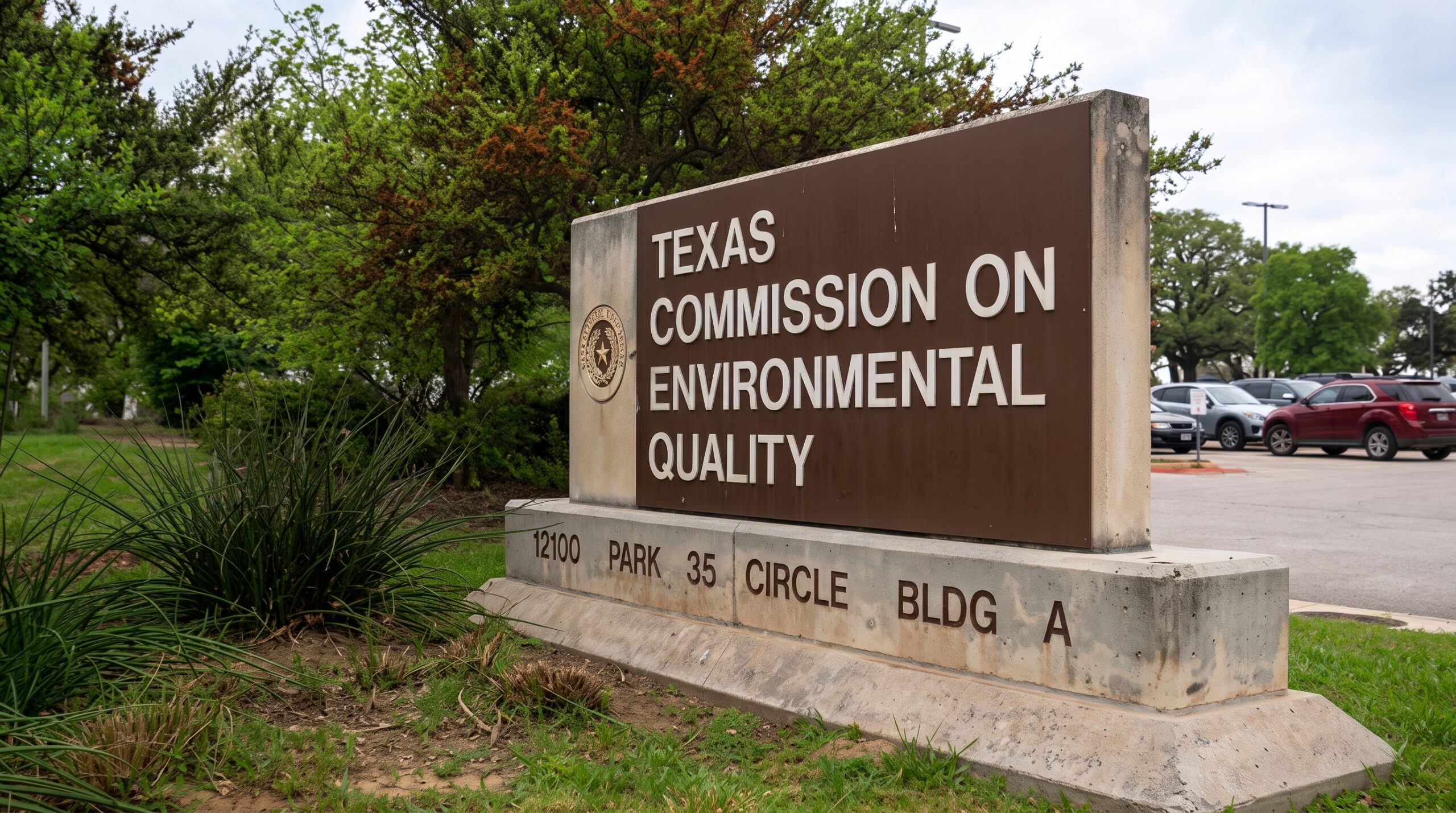
Large data centers in Texas would have to register with the state’s environmental agency before they open, file a study of their effect on local water supplies and report how much water they use every year on a public website, under a bill Rep. Salman Bhojani of Euless filed Nov. 9. The Texas Commission on Environmental Quality (TCEQ) would also have to hold a public hearing in each host county.
The bill takes a different approach from the Senate’s leading data-center water proposal. Senate Bill 338, backed by 16 senators, would require water-efficient cooling as a condition of connecting to the grid. Bhojani’s House Bill 529 does not dictate technology. It requires disclosure, puts the numbers in public view, and leaves water rights where they are.
The bill covers any facility with electric demand of at least 75 megawatts, “including electricity generated on the site,” or one that uses or is projected to use at least 300,000 gallons of water in any 30-day period. Cryptocurrency mines count.
Under the bill’s text, an operator would register “not later than the 120th day before the date the facility is expected to begin operation.” It would file a water resource impact assessment naming each source of supply: groundwater, surface water, purchased drinking water or reclaimed water. The assessment would also name the provider, the groundwater district and the aquifer or basin, with withdrawal and return points. Operators would need a water conservation plan and an annual water-use report due March 31. An updated assessment would be required before any “material expansion.”
TCEQ would publish a registry listing each facility, its operator, county, regional water planning area, water sources and suppliers, and its monthly and annual water withdrawn, consumed, returned and reused. Operators often treat such figures as trade secrets. The bill says a designation as proprietary “does not independently justify withholding” the facility name, county, source types, supplier names or volume data.
For each new facility or expansion, TCEQ would hold “at least one public informational hearing in the county in which the facility is or will be located.” Notice would be posted at least 30 days ahead. TCEQ could charge a fee limited to its direct costs. The agency would also analyze “individual and cumulative water demands” from data centers by county and planning region each year, coordinating with the Texas Water Development Board, groundwater districts and regional planning groups.
The bill has limits. TCEQ could assess administrative penalties for violations, but an enforcement order “may not independently require a reduction in a water withdrawal or water use otherwise lawful under existing law.” In other words, the bill exposes how much water a data center takes. It does not let the state cut that use.
The trade-offs mirror the broader data-center debate. Public figures would let counties, water districts and regional planners see demand they cannot measure now. Earlier Dispatch reports covered county officials who say they lack tools to weigh in, including bills to give counties a say over siting. The bill’s own proprietary clause shows the other side of the ledger: operators routinely treat site-level water and power data as commercially sensitive, and the bill would override that for core figures.
TCEQ would adopt rules by May 1, 2028. Data centers already running before Jan. 1, 2029, would register by July 1, 2029, and file their first annual report by March 31, 2030. The bill would take effect Sept. 1, 2027, and awaits House committee referral in January.
Key facts
- HB 529 by Rep. Salman Bhojani was filed Nov. 9, 2026 (Texas Legislature Online).
- Covers data centers of 75 megawatts or more, or using 300,000 gallons or more of water in 30 days.
- Requires TCEQ registration 120 days before operation, a water impact assessment, a conservation plan and an annual report due March 31.
- Creates a public TCEQ registry of water sources and volumes; a proprietary claim alone cannot withhold core data.
- Penalties cannot by themselves force a cut in otherwise lawful water use.