
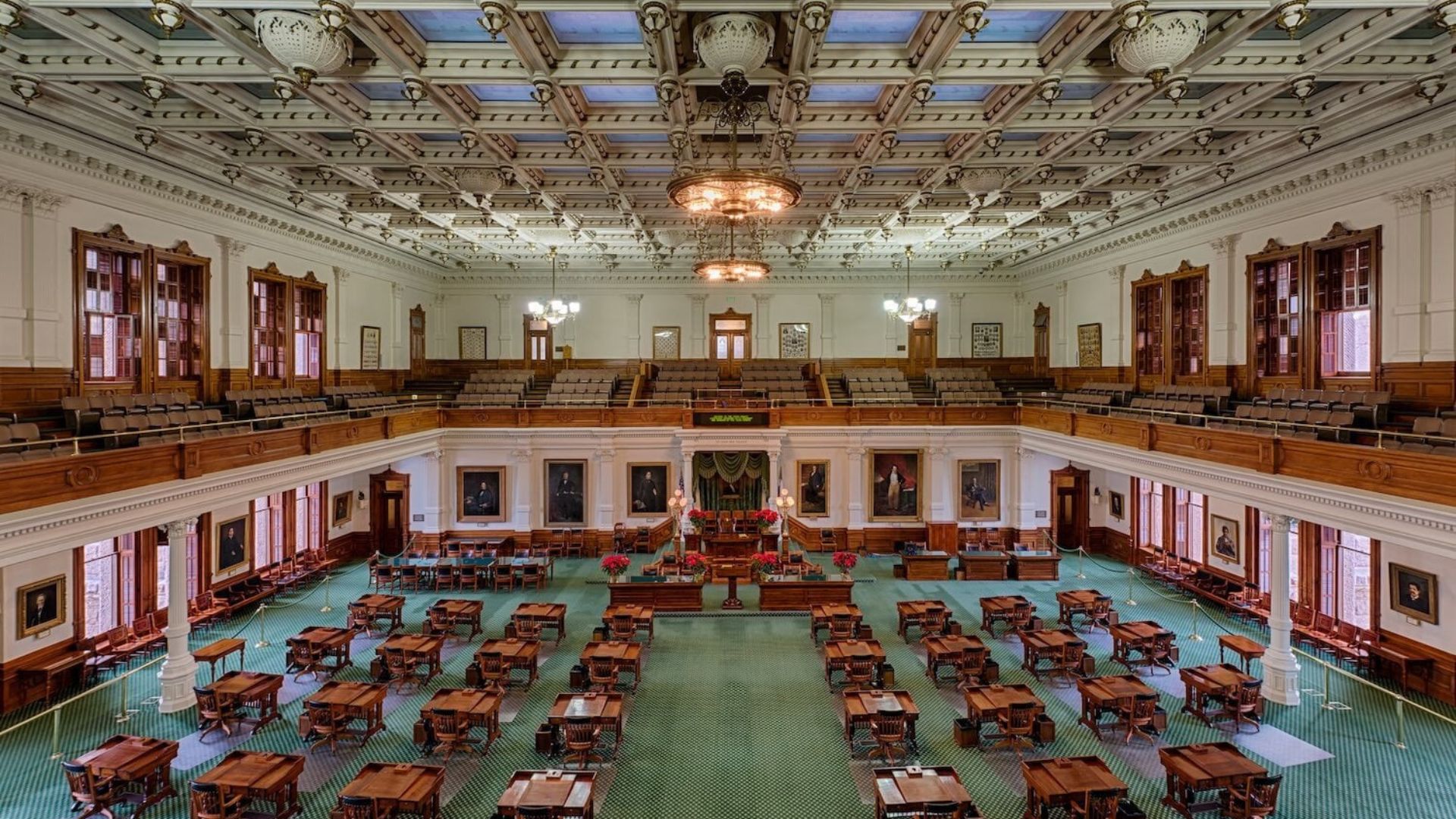
A majority of the Texas Senate has signed on to a bill that would bar new data centers from connecting to the state’s main power grid unless they cool their computers with systems that use little or no fresh water. Senate Bill 338 (90th Legislature), filed Nov. 12 by Sen. Charles Perry of Lubbock, lists 16 primary authors — a majority of the 31-member Senate — according to the Texas Legislature Online authors page.
The bill would also cap the local property tax breaks a data center can receive at half its taxable value and attach water, cleanup and ownership conditions to every such deal. For the companies racing to build in Texas, the measure would make access to the grid and to local incentives depend on whether a project brings its own answer to the water question.
Under the bill text, a data center customer would have to use closed-loop recirculating cooling, dry cooling, saline water or another method that uses less water than a closed-loop system before it could connect to the grid run by ERCOT, the nonprofit that manages power for most of the state. Saline water is defined to include desalinated seawater, desalinated brackish groundwater and water recovered from oil and gas production. Before connecting, the operator would file an estimate of its annual cooling-water needs and sources with the Public Utility Commission of Texas (PUC), then report actual use every year. The commission would share those filings with the Texas Water Development Board, the agency that plans and finances the state’s water supply.
The enforcement reaches the wires themselves. The bill directs the PUC to bar electric cooperatives, city-owned utilities and transmission companies from connecting a data center that does not comply, and to require them to disconnect a campus that later switches to other cooling or stops filing its annual report. The commission could also set noise, light and minimum-distance rules for data centers and any power plants built alongside them.
The tax provisions apply to facilities of at least 100,000 square feet. A city could not exempt more than 50 percent of a data center’s taxable value under a tax abatement — a deal in which a local government agrees not to tax part of a new project’s value for a set number of years. Current law sets no percentage cap. The same 50 percent limit would apply to the state’s school-district incentive program, known as the Jobs, Energy, Technology and Innovation Act. Every abatement, county agreement or city economic-development grant for a data center would have to require the low-water cooling, the annual water reports, ownership of the facility for the term of the deal, and payment to repair environmental damage from building, running, abandoning or tearing down the site. The owner would also record a permanent deed restriction barring other cooling systems on the land. A local government could cancel the deal for a breach after a 180-day chance to fix it and recover all forgone taxes with interest.
The Texas Commission on Environmental Quality, the state’s environmental regulator, would have to deny or suspend a data center’s construction stormwater coverage if the project does not meet the PUC’s cooling rules, and could stop construction by emergency order after a complaint.
The bill would apply only to data centers that connect after it takes effect, and only to incentive agreements signed after that date. It would take effect Sept. 1, 2027.
The authors, as listed by surname on the Legislature’s site, are Perry, Campbell, David Cook, Flores, Hagenbuch, Hall, Adam Hinojosa, Juan “Chuy” Hinojosa, Huffman, Hughes, Kolkhorst, Ligon, Parker, Paul, Paxton and Sparks, a group that crosses party lines. The Senate’s Water, Agriculture and Rural Affairs Committee heard testimony on data-center water use Sept. 1, where environmental groups and industry representatives disagreed over how much water the facilities consume and whether new cooling technology should be mandated, according to CBS Austin.
No industry group had responded publicly to the bill as of Nov. 13. The measure joins other filed proposals covered by The Texas Dispatch, including a two-year freeze on new data centers in Senate Bill 296 and Sen. Judith Zaffirini’s county zoning bills. SB 338 awaits referral to a committee when the Legislature convenes Jan. 12, 2027, with a majority of the Senate already on record as its authors.
Key facts
- SB 338 filed Nov. 12, 2026 by Sen. Charles Perry with 15 other primary authors — 16 of 31 senators (TLO authors page).
- Grid connection would require closed-loop, dry, saline or other water-efficient cooling; noncompliant sites must be disconnected (proposed Utilities Code 39.920).
- City abatements and JETI value limits for data centers capped at 50 percent; all incentives carry water, remediation and deed-restriction conditions (bill text).
- Applies to data centers of 100,000 square feet or more; effective Sept. 1, 2027 (bill text).