
Texas lawmakers are right about one thing: children should not have access to intoxicating products.
Where Texas goes wrong is assuming that prohibition is the only way to protect them.
The state’s current approach to hemp-derived THC is turning what could be a regulatory problem into another criminal-justice problem.
Texas already had the tools to regulate these products.
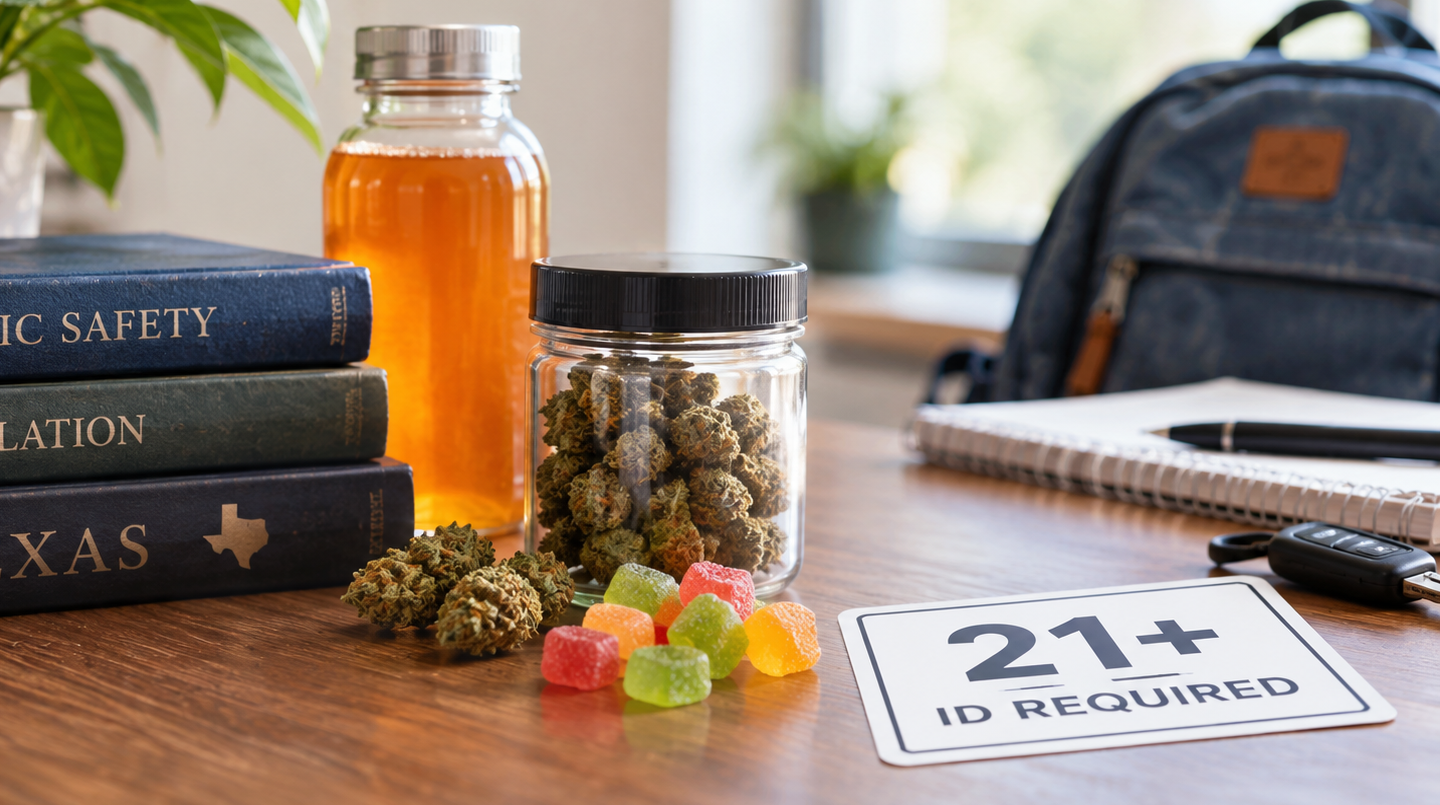
The state requires consumable hemp retailers to register, requires products to meet testing and labeling requirements, and prohibits sales to anyone under 21. Retailers must verify a purchaser’s age with government-issued identification.
Those are reasonable safeguards.
So why not enforce them?
Instead, Texas has moved toward eliminating much of the intoxicating hemp market altogether. On July 31, 2026, the state reinstated controlled-substance definitions affecting delta-8 THC and other tetrahydrocannabinols. Products containing more than trace naturally occurring delta-8 can now be detained and referred to law enforcement.
That is a major policy choice.
And Texans should ask whether it is the right one.
Consider alcohol.
Texas doesn’t ban alcohol because a teenager might obtain it illegally. The state regulates it. Businesses must follow age restrictions, and retailers can face consequences for selling to minors.
That system isn’t perfect. Kids still find ways to obtain alcohol.
But Texas recognizes an important distinction: the existence of an illegal market does not automatically mean the legal adult market must disappear.
Why shouldn’t that principle apply to hemp-derived THC?
If a THC beverage is properly tested, properly labeled and sold only to adults, why should the state automatically prefer criminalization over regulation?
The answer cannot simply be that THC is intoxicating. Alcohol is intoxicating.
The answer cannot simply be that children might gain access. Children can obtain alcohol.
And the answer cannot simply be that some THC products have packaging that appeals to young adults. Alcohol manufacturers sell products using familiar beverage brands, bright colors and flavors that consumers already recognize.
The standard should be consistent.
If Texas believes certain packaging is inappropriate, regulate the packaging.
If a company markets an intoxicating product directly to children, punish that conduct.
If a retailer sells to a minor, revoke its license.
If a product fails testing requirements, remove it from the shelf.
There are many ways to protect children without criminalizing adults.
Houston provides another warning about where criminalization can lead.
Recent reporting shows that misdemeanor marijuana arrests have increased dramatically since Mayor John Whitmire took office. Houston Public Media data cited by the Houston Chronicle show 538 misdemeanor marijuana arrests in 2024, compared with only 10 in 2022. There were 426 in 2025 and 232 through 2026 at the time of the report.
Those numbers aren’t just statistics.
They represent people entering the criminal-justice system for low-level marijuana possession.
As someone who works in reentry advocacy, I know that a criminal record can follow a person long after the original case ends. It can complicate employment, housing and the effort to rebuild a stable life.
Texas should be asking whether those consequences actually make communities safer.
There is another reason to ask that question now.
Houston voters are preparing to decide whether the city should make low-level marijuana possession one of its lowest enforcement priorities. The debate has already exposed a larger conflict between local control and state authority.
Texas Attorney General Ken Paxton has previously sued cities including Austin, San Marcos, Killeen, Elgin and Denton over local marijuana policies.
Whatever the legal outcome, Texans should be able to debate whether police resources are being used wisely.
Nobody is asking police to ignore serious crime.
Nobody is asking Texas to abandon public safety.
The question is whether every marijuana possession case deserves the same priority as violent crime, domestic violence, trafficking or other threats that can cause immediate harm.
Texas has a choice.
It can continue expanding the list of conduct that brings people into the criminal-justice system.
Or it can regulate intoxicating products, enforce age restrictions, require testing and focus law enforcement resources where they are most needed.
The state already knows how regulation works.
It uses that model for alcohol.
It can use the same basic principle for cannabis.
Protect children.
Regulate products.
Punish irresponsible businesses.
Keep impaired drivers off the road.
And stop pretending that putting another adult into the criminal-justice system automatically makes Texas safer.
Public safety should be measured by the harm we prevent—not by how many people we arrest.
Texas can protect its children without creating another generation of Texans carrying criminal-justice records for conduct that could have been addressed through smart regulation.
That isn’t being soft on crime.
It’s being serious about public safety.
________________________________________________________________________________________________________________________________________________________________________________
Michael A. Davis is an Austin-based writer, author and reentry advocate whose work focuses on criminal justice, public policy, reentry and Texas communities. He is the author of The Road to Reentry, Pursuing Redemption, Reclaiming Freedom and The Mind You Inherited.