
Texas has drawn more than $140 billion in capital commitments across four major artificial intelligence and infrastructure projects, making the state the industrial backbone of American AI, according to a new economic report released this month by Build American AI, a 501(c)(4) nonprofit that advocates for U.S. leadership in emerging technologies. The group argues that AI’s future is being poured in Texas concrete, etched into Texas silicon, and hauled down Texas highways.
The report, titled The Texas AI Machine and released this month, contends that the AI revolution is less a software story than a new industrial revolution — an energy, construction, manufacturing, logistics, and workforce story all at once — and that no state sits closer to the center of it than Texas. Before a chatbot answers a single question, the group notes, someone has to generate the electricity, manufacture the chips, build the data centers, run the fiber, and move the freight.
The numbers behind that argument are striking. According to the report, 59 percent of Texas businesses are already using traditional or generative AI, up from 38 percent a year earlier — adoption the group says is accelerating faster than the early commercial internet. Texas recorded 57,785 AI job postings in 2024, second only to California and 8.77 percent of the national total. And an estimated 1.86 million of the state’s small businesses are actively using AI platforms to draft estimates, automate paperwork, manage inventory, and streamline customer service.
“AI is fundamentally an industrial transformation, and Texas is proving that the future of tech is built with steel, power, and American labor,” said Nathan Leamer, executive director of Build American AI, in a news release accompanying the report. “From Central Texas semiconductor plants to nearly two million small businesses using these tools to grow, Texas’s success demonstrates how technology can reindustrialize our nation.”
The physical footprint is easiest to see in a handful of signature projects. In Abilene, the $47 billion Project Radiance data center expansion is expected to generate hundreds of direct jobs and billions of dollars in long-term economic activity for the region, according to the report. In Taylor, Samsung’s semiconductor commitment — which the group values at more than $37 billion — supported nearly 18,700 direct and indirect construction jobs in 2024 and produced more than $8.6 billion in construction output. Google and Hut 8 round out the list of major investors the report tracks.
The transformation is not confined to construction sites. In Houston, the report says physicians using AI-powered documentation tools are saving two to four hours of administrative work each day, and commercial driverless freight is already moving goods between Dallas and Houston along one of the nation’s busiest corridors.
On the question of jobs, the group pushes back on fears of displacement. Research highlighted in the report includes a National Bureau of Economic Research study finding that generative AI increased worker productivity by 14 percent on average, with the largest gains among newer employees, and a separate study of more than 21,000 U.S. firms that found no evidence AI adoption was causing layoffs — the heaviest AI investors instead grew employment, including entry-level hiring.
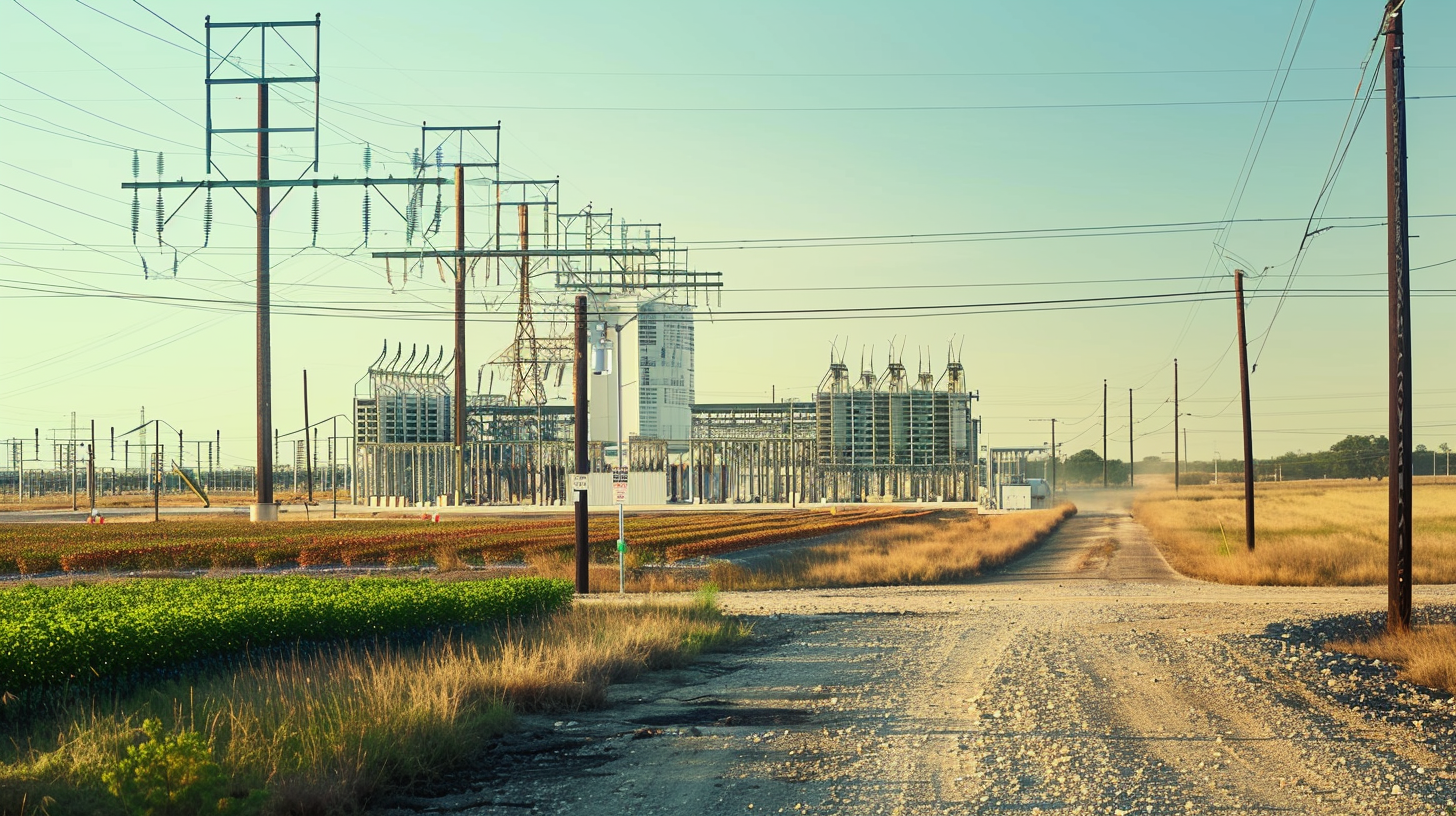
The boom, however, is arriving faster than the infrastructure meant to carry it — a tension that has dominated recent state policy debates covered by The Texas Dispatch. ERCOT is currently weighing roughly 474 gigawatts of grid connection requests, more than five times the state’s record peak demand, with data centers making up about 90 percent of the new load, according to an Aug. 3 news release from Gov. Greg Abbott’s office. Abbott directed the Public Utility Commission of Texas and ERCOT to audit every data center in the interconnection queue — covering power, water, financing, and community impacts — before any project can connect to the grid.
Regulators had already begun tightening the front door. In June, the PUCT approved ERCOT’s Batch Zero process for connecting large electricity users while protecting system reliability, according to an ERCOT news release. .
Build American AI does not entirely dismiss the concerns. The report acknowledges that Texas will need more power generation, transmission capacity, and workforce training to stay competitive, and says communities hosting AI projects deserve transparency, local workforce opportunities, and investments that create lasting public value.
Still, the group’s bottom line is bullish: AI is becoming one of the state’s defining economic development stories. The future of AI, the report concludes, will not only be written in code — it will be generated through power plants, manufactured in semiconductor facilities, and shipped along Texas highways. Whether the grid, the water, and the workforce keep pace is the question Texas policymakers now have to answer.