
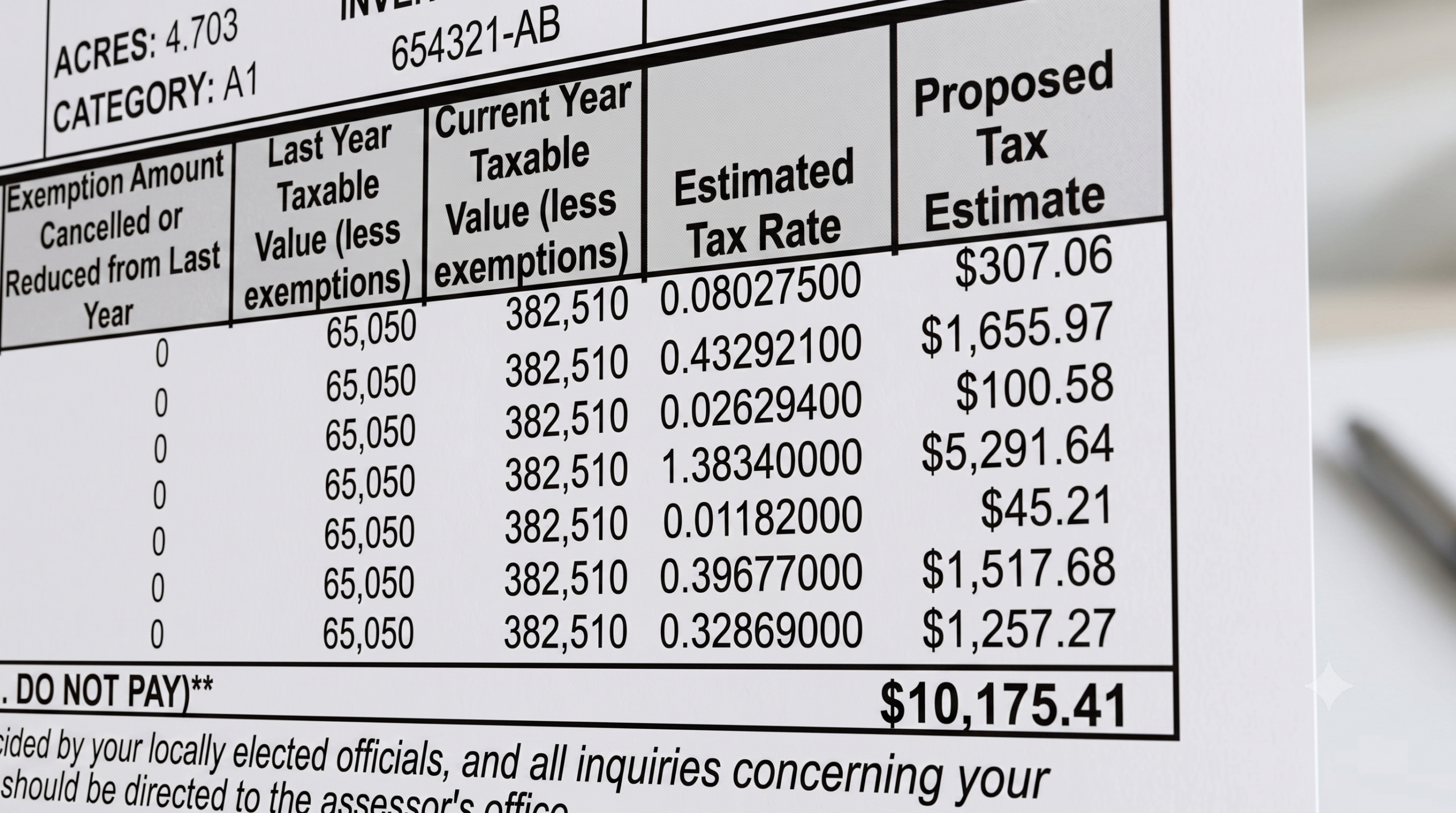
The appraisal rolls are certified and the argument moves to the only number that actually sets a tax bill. Under Section 26.04(e) of the Texas Tax Code, the officer each taxing unit designates to run its rate math must submit two calculated rates to the governing body by August 7 or as soon thereafter as practicable, and post them prominently on the unit’s website: the no-new-revenue rate and the voter-approval rate.
Those two numbers are the whole game. The no-new-revenue rate, as the Texas Comptroller’s truth-in-taxation guidance explains, is roughly last year’s taxes divided by the current value of property that was on the roll in both years — the rate that raises the same money from the same property. The voter-approval rate is the ceiling a city or county can adopt without asking voters: last year’s operating revenue plus 3.5 percent, plus any tax revenue from new development, plus whatever it needs for debt.
Community colleges, hospital districts and taxing units with very low operating rates get 8 percent instead. Adopt above the voter-approval rate and an election follows.
The mechanism cuts against taxpayers this year in a way it did not during the boom. When taxable values fall, the no-new-revenue rate rises automatically, because the same dollars come out of a smaller base. A jurisdiction can raise its rate several cents and still say truthfully that it is collecting no more money than last year. The check on that is the August 7 posting, the required hearing and the taxpayer impact statement, which must compare a median homestead’s current bill against next year’s under the proposed budget.
San Antonio is the clear example. City Manager Erik Walsh has proposed raising taxes as high as state law allows without an election, using new development and the 3.5 percent increase, against a $158 million two-year budget gap. The city’s earliest estimates put the effect on an average homestead at about $6.75 a month, roughly $81 a year, according to the San Antonio Report, which tallied every proposed local increase. The city’s current combined rate is $0.541590 per $100 of value; its debt portion, $0.21150, has not changed since 2004. The formal budget proposal is due August 13 and the council vote is set for September 17.
It is not only the city. The Alamo Colleges District board approved a fiscal 2027 budget that depends on raising its operating rate by $0.0125, taking the total from $0.149 to $0.162 — its first increase since 2013, against a $28 million deficit and about $33.84 a year on a median $271,000 homestead.
Bexar County, where roughly 80 percent of the general fund comes from property taxes, expects revenue to fall about 1.5 percent; County Manager David Smith has said he intends to close the gap with cuts rather than a rate increase, holding at $0.276331. Northside ISD, San Antonio ISD and South San Antonio ISD are all weighing November tax-rate elections. Added up, the San Antonio Report puts the increases disclosed so far at about $167 a year for an average homeowner, before school districts.
Property owners can compare proposed rates against the no-new-revenue rate for their own parcel at the state’s property tax transparency site, which taxing units are required to keep current. Meanwhile the comptroller’s office has said it will certify the final 2025 school district property value findings and publish the final appraisal district ratio study results this month, per its April property tax newsletter.
The rates get posted Friday. The hearings follow, and every unit other than a water district must adopt a rate before September 30 — which leaves taxpayers about eight weeks to object before the bill is written.