
Texas is racing to meet soaring electricity demand from population growth and, now, a desire by the state to welcome energy-hungry data centers. The reliability of the grid and affordability of energy, especially since Winter Storm Uri, are two major risks that the Texas grid architects must tackle.
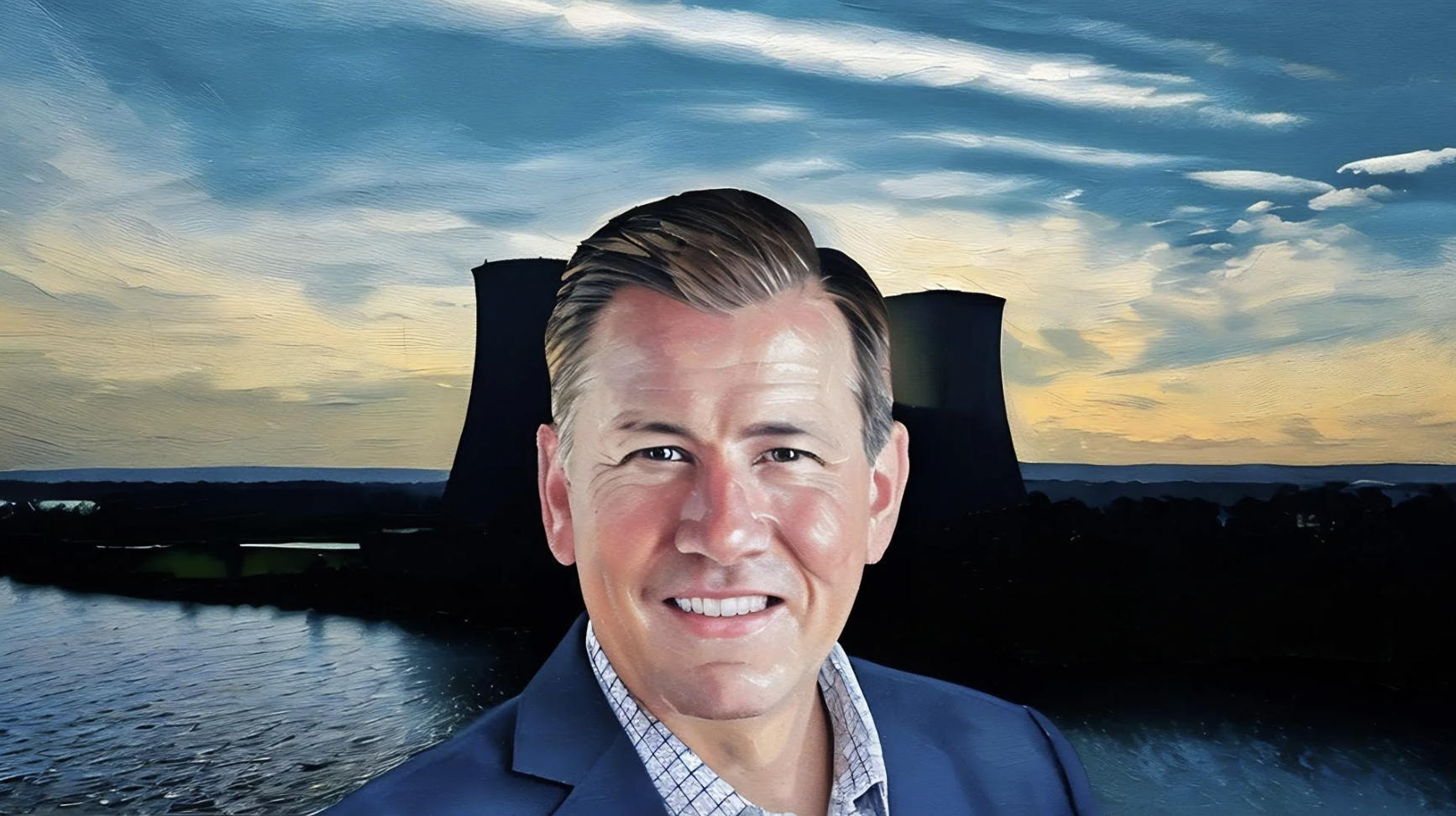
Reed Clay, president of the Texas Nuclear Alliance, says that nuclear energy should expand in the Texas energy mix to ensure dependable, carbon-free power.
Clay is a lawyer who served as chief operating officer for Governor Greg Abbott during his first term, then left in 2018. After Uri, he founded the Texas Nuclear Alliance to “tell the positive story about nuclear energy” and build an industry association for the state. “My wife says it is my midlife crisis,” he says.
According to Clay, Texas now relies on too-few nuclear power sites. “Texas has two utility-scale sites that supply about five gigawatts to ERCOT,” he says, referring to Comanche Peak in North Texas, owned and operated by Vistra, and the South Texas Project southwest of Houston, a joint venture with Constellation, CPS Energy of San Antonio, and Austin Energy.
“We haven’t built any new nuclear plants for over 30 years,” he says. Plans for four reactors at each site “get almost all the way through the NRC process and are scuttled” by politics and shifting natural gas prices.
Local acceptance, he says, is strong. “People in the communities where nuclear is, love nuclear,” Clay says. Facilities become “pillars of the community” because they create high-quality jobs and steady economic activity. Workforce training will matter, but “attracting people to these facilities is not a huge issue.”
He traces the long pause in U.S. nuclear build-out to a sustained anti-nuclear campaign that predates the Three Mile Island disaster. “Overregulation makes it much more expensive to get through the process to even build a reactor,” he says.
Environmental groups also stoke fears over waste and safety, says Clay. He counters that government safety oversight is intense and volumes of waste are small. “There is no other industry where you know where every atom of waste is and where it came from–maybe not down to the atom, but that is the idea,” he says.
Clay agrees that the Three Mile Island incident was “a major accident,” but that “no one was killed and no one receives dangerous levels of radiation.” He also points out that the other reactor at the site “continues to operate almost 30 years after the accident.” Plans are moving forward to restart the reactor under a deal with a tech company to provide power for its data center.
Meanwhile, the four reactors in Texas have a “near-perfect safety record over decades of operation,” Clay says. “Technology has advanced substantially since the 1970s, and new designs use passive safety features so the chain reaction stops itself.”
Nuclear energy is under renewed consideration today because AI and data centers are shifting the conversation, according to Clay. “Nuclear is by far the most reliable source of energy and the most dense form of energy we commercialize,” he says.
The proliferation of data centers has also changed how energy generation is being considered. Small modular reactors (SMRs) could place generation “next door to the load,” cutting transmission costs. “Dow and X-energy plan about 320 megawatts of SMRs at the Seadrift site to pull electrons and heat,” Clay says. The manufacturing approach behind SMRs, he adds, “brings speed and scale.”
Clay’s view is that Texas needs a grid built on complementary strengths. “Natural gas and nuclear are extremely complementary,” he says. This is compared to wind and solar, which he says “are not very reliable.” Their capacity factors–an industry measure–are in the 20–30% range, while “nuclear is around 95% and gas is somewhere around 70%.”
Relying too much on gas alone exposes ratepayers to price spikes, says Clay. “A proper mix is a substantial amount of nuclear, complemented with natural gas.”
Lawmakers are listening, and have passed “a suite of legislation” that Clay says is modeled on recommendations from the Advanced Nuclear Working Group that Governor Abbott established in 2023. The centerpiece, House Bill 14, created the Texas Nuclear Energy Office, led by George Schaefer, and a phased nuclear deployment reimbursement grant program funded at $350 million.
“All eyes are on getting implementation right,” Clay says. “They’ve given us tools, now we need to use those tools and deliver.” He says this means “attract projects, attract manufacturing, make Texas competitive.”
From the consumer’s perspective, Clay says they are currently stuck in a market where “energy prices are a one-way ratchet.” ERCOT’s relatively innovative and deregulated market can deliver cheaper reliable power, however growth in demand for energy and over-reliance on wind and solar energy as intermittent sources are pushing costs higher.
“If we had built more nuclear over the past three decades, prices would not be going up so much,” he says.