
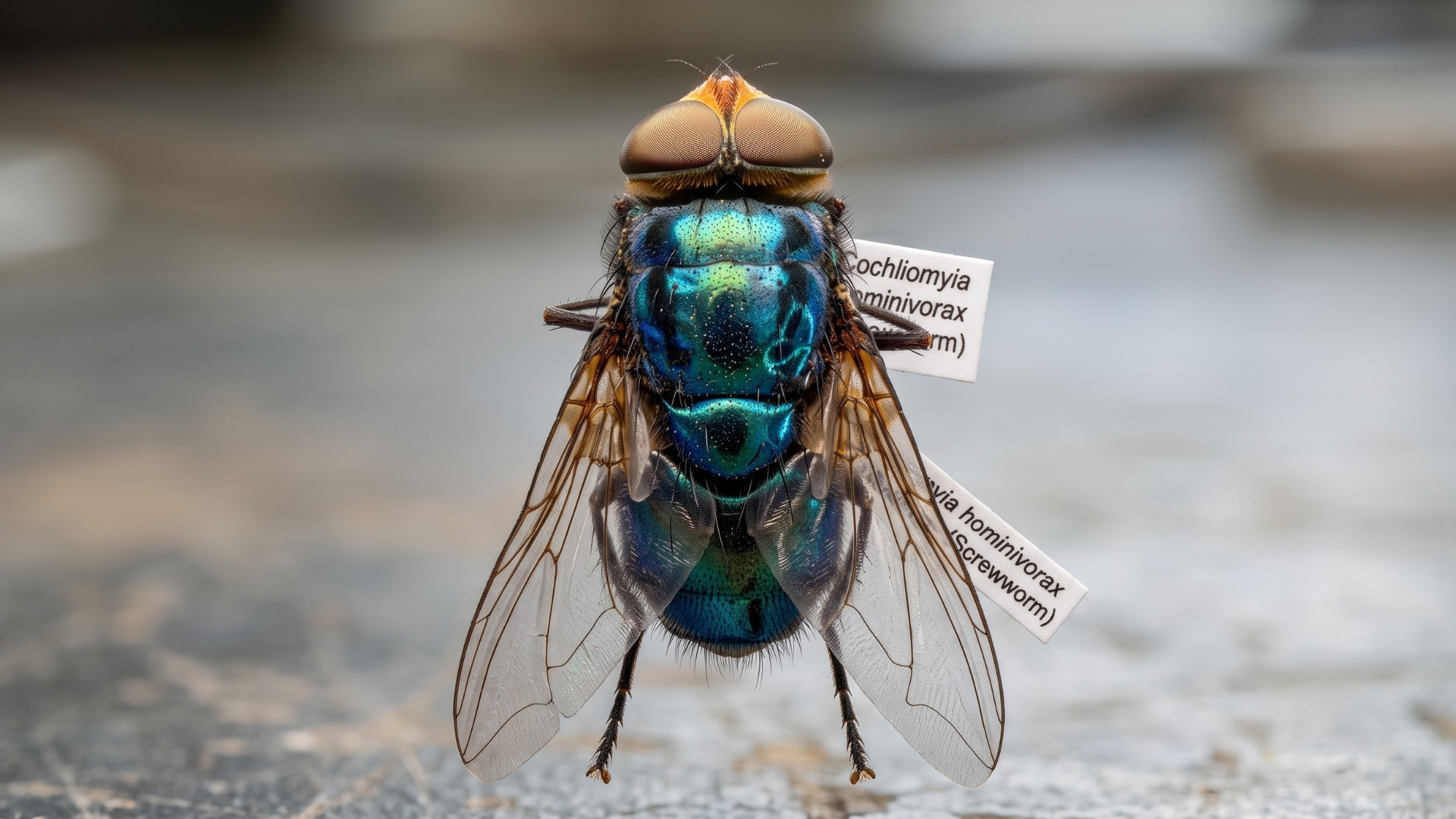
Confirmed New World screwworm infestations in the United States have risen to 39, according to the U.S. Department of Agriculture’s confirmed-detections dashboard, which the agency updates daily at 6 p.m. Eastern. As of Wednesday, July 15, all 39 cases were in domestic animals across two states — Texas, which accounts for all but the outbreak’s single New Mexico detection — and the most recently reported animal case, logged July 14, was a sheep in Pecos County, Texas.
The dashboard classifies 18 of the cases as active and 21 as inactive, the latter meaning the infested animal has recovered or that appropriate control measures have been completed. USDA APHIS reports zero wildlife or feral cases and zero fly-trap detections of wild screwworm flies to date. The first U.S. case was confirmed June 3 in a calf in Zavala County, the countri’s first domestic detection since screwworm was eradicated in 1966; the agency’s dashboard notes the United States has now recorded 39 cases in two states since that date.
The rising share of inactive cases is one measure animal-health officials watch for signs the response is containing the pest. Recent detections have clustered in West and South-Central Texas: beyond the July 14 Pecos County sheep, the dashboard lists July cases in Brewster, Sutton and Crockett counties, with Crockett — where cattle, sheep, goats and a dog have tested positive — remaining the state’s hardest-hit county.
The Texas Animal Health Commission maintains New World Screwworm Infested Zones with movement restrictions on warm-blooded animals across parts of more than 20 counties.
The federal response continues to rely on the sterile insect technique, in which sterilized male flies are released to collapse the wild population over time. A converted plant in Metapa de Domínguez, Mexico, began producing sterile flies in late June and is scaling toward tens of tives per week, supplementing the long-running COPEG facility in Pacora, Panama. USDA broke ground in April on a domestic production plant at Moore Air Base near Edinburg, projected to open in late 2027. USDA’s southern ports of entry have remained closed to livestock trade since July 9, 2025, when Agriculture Secretary Brooke Rollins ordered the closure to slow the pest’s spread from Mexico.
Puman infections remain rare. The Centers for Disease Control and Prevention says the risk to people stays “very low,” and the only recent U.S. human case was an August 2025 traveler who had returned from El Salvador. USDA has said screwworm is not a food-safety threat, because the parasite feeds on living tissue in open wounds rather than on meat entering the food supply, and inspection systems are designed to keep infested animals out. The outbreak has affected livestock and pets, including dogs, but the dashboard shows no confirmed wildlife case. Officials remain especially watchful for the state’s white-tailed deer, which are difficult to treat in the wild and could serve as a reservoir if the fly becomes established.
The stakes are large for a state whose cattle industry the Texas Biomedical Research Institute has valued at roughly $41 billion a year. For most Texans, animal-health authorities say daily routines need not change; the Texas Animal Health Commission urges livestock and pet owners to inspect wounds, avoid transporting animals with suspicious injuries, and report suspected infestations immediately.