
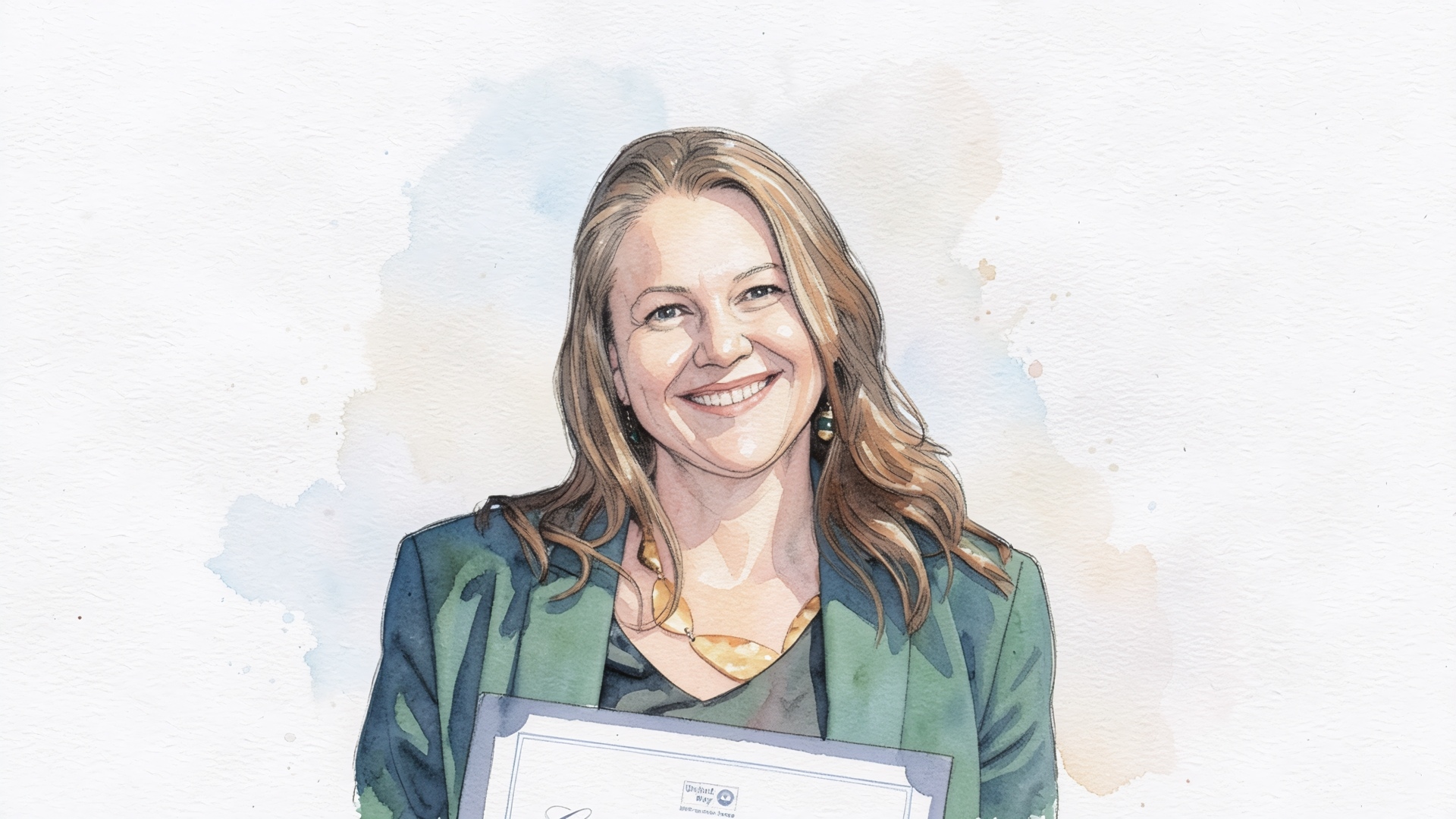
Elizabeth Henneke had come to check on a client: a 13-year-old boy with autism, held at one of the state’s five youth prisons.
It was a Friday afternoon, she says, and the facility — home to more than 120 children — was so quiet “you could have dropped a pin and heard an echo.” When the boy was brought in, he could barely stay awake, groggy from a recent medication change. It took about an hour and a half before he was alert enough to talk.
She asked what he needed.
“Miss Elizabeth, the one thing that I would really like is to see the sun,” he told her. He said he hadn’t been outside in three months.
She turned to the officer who had escorted him. Surely he’s mistaken. The officer said he wasn’t.
“I will not leave,” Henneke told the staff. “We will not leave without this child feeling the sun.” To their credit, she says, they walked him out. He raised his arms and said he’d forgotten what a breeze felt like.
“I don’t think any Texan wants that,” she says. “I just don’t believe it of my state. I don’t believe it of my neighbors.”
Henneke, founder and CEO of the Lone Star Justice Alliance, is pressing lawmakers to restructure how Texas handles its most troubled young people before the 90th Legislature convenes in January. The timing matters. The executive director of the Texas Juvenile Justice Department resigned last month, and a state Sunset Commission review released last week faulted the agency on several fronts.
The family business
Henneke’s résumé is a list of advisory roles — on the State Bar of Texas Juvenile Law Council, a federal advisory committee on juvenile justice, and judicial commissions on mental health and juvenile justice. Her family background explains more.
“My dad was a corrections officer, my grandfather was a warden, and my grandmother was a Walker County sheriff’s deputy,” she says. Her husband is a federal prosecutor, an assistant U.S. attorney. “My entire life has been thinking about and being surrounded by issues of public safety and justice reform.”
Her first lesson in juvenile justice, she admits, came from her grandfather after she stole bubblegum from a convenience store. He marched her back, made her confess to the owner and had her work there for three days for free. “I never stole any more bubblegum,” she says. For years afterward she blushed whenever she ran into the store owner.
That’s still her model: firm accountability, kept personal and close to home. She left Texas for part of her career and calls returning to start the Lone Star Justice Alliance a continuation of “the family business of trying to make our communities safer.”
What Texas gets right
Henneke is quick to praise most of the Texas system. About 99 percent of young people who enter the juvenile system, ages 10 through 16, are handled by local county probation departments. Trained officers often use what’s called a supervisory caution: they talk with the young person, connect the family to resources and send the child home without pulling them deeper into the system. Juvenile records stay confidential.
“Texas continues to be at the forefront of youth justice nationally,” she says. “I’m very excited you’re giving me the opportunity to brag on our state.”
The state’s reliance on its own lockups has also shrunk dramatically. The Texas Public Policy Foundation, the conservative think tank whose Right on Crime initiative has backed juvenile reform for years, has noted that the state’s committed youth population fell from more than 5,000 in 2005 to fewer than 900 by 2018. Henneke says that when she moved back to Texas, about 2,400 youth were in state facilities; today the average is around 750.
That, she argues, is the reason the young people still in state custody are the hardest cases — and a sign of success, not failure. “That’s what happens when you do a good job,” she says. “You reserve your most intensive services for your highest-risk, highest-need population.”
The wrong beds
Her central critique is about where the state has put its money.
Texas has about 164 community mental health beds for children, she says, compared with about 6,500 juvenile justice beds. “We built the wrong beds,” she says.
She illustrates with a hypothetical teenager she names Suzanne. Suppose Suzanne, 14, has been sexually assaulted and starts self-harming. If a community bed is available, her parents can get her into treatment that day, for as long as she needs. If none is available, Suzanne may start acting out — say, shoplifting layers of clothing, a common trauma response, Henneke says. Depending on the value, that can be a felony. Now her treatment depends on a court process that, in Dallas at one point, took as long as 120 days, and on a sentence set for accountability rather than need.
“We don’t want to condition someone’s access to treatment on them committing a crime,” she says. “That’s exactly what my family for decades worked against.”
Where Suzanne lives matters too. Dallas has strong community mental health providers; most of West Texas, outside Lubbock and its Texas Tech-backed services, is “a resource desert,” Henneke says. A girl in a small West Texas county might be detained in another county simply to reach treatment.
Keeping kids close to home
In 2015, the Legislature created a regional system: counties band together to share resources, and the state provides extra funding so local departments can keep kids who would otherwise be sent to a state facility.
Henneke’s organization has analyzed how that’s worked and plans to release the findings soon. Its numbers are striking. By the alliance’s count, young people kept local through regionalization are re-arrested about 25 percent of the time, while those sent to state facilities — with similar risk profiles — are re-arrested about 75 percent of the time. The group estimates that every dollar spent locally saves the state nearly $4.
Those figures come from her organization and haven’t been published or independently reviewed yet. But the cost side lines up with the state’s own numbers: the Sunset Commission put the cost of holding a youth in a state facility at roughly $770 a day — about $281,000 a year.
Henneke walked the host through the comparison: more than a year of public school, plus four years at UT, and still not close.
“That’s a CEO salary per kid,” she says, “to get a re-arrest rate of 75 percent.”
The problem, she says, is that regionalization is underfunded. By her estimate, counties request about three times as much regional funding as is available, and state rules make it harder than it should be — for example, for Lubbock to take a child from Amarillo and fill its empty beds.
What happened inside the state units
Henneke’s harshest criticism is reserved for the leadership of the Texas Juvenile Justice Department over the past five years. She says many line staff are good people. Leadership, she says, failed both the local departments and the roughly 750 kids in state custody.
The record supports parts of that critique. A 2024 U.S. Department of Justice investigation found the agency exposed youth to excessive force, prolonged isolation and sexual abuse. In August 2026, after an assault on a correctional officer, TJJD put all of its youth prisons on an extended lockdown. Executive Director Shandra Carter resigned Oct. 23 without giving a public reason; Deputy Executive Director Sean Grove is serving as interim director.
On Nov. 12, the Sunset Commission’s staff report found the agency violated state law in awarding a county diversion grant, struggled to track program costs, mishandled communication during the lockdown, and saw increased self-harm while it lasted.
Henneke’s own account goes further, and is hers alone. She says youth spent an average of 23.5 hours a day in cells for at least 12 days starting Aug. 12, were shackled to go to the bathroom, and in some units received schooling through locked doors. She says internal documents show a unit leader asked whether youth could be pepper-sprayed while fully restrained, and that restrained youth were later pepper-sprayed. When she first began representing youth in the units at the governor’s office’s request, she says, she reported three potential sexual assaults by staff in her first month; two were later substantiated. The Dispatch could not independently verify those accounts.
The agency’s main defense, as the host noted, is that it’s dealing with more young people with severe mental and behavioral health needs, and that it’s chronically understaffed — some units, she says, run at under 40 percent of required staffing. TJJD is seeking more funding for staff and has received money to replace facilities that in some cases are more than a century old.
Henneke agrees the buildings need replacing. Her objection is to adding positions the agency can’t fill. Corrections, she says with respect for her own family, “is just not a popular profession anymore,” and few people want to work with the highest-need kids in remote rural facilities. “We need to start living in that reality,” she says, “instead of asking for money to make that reality not true.”
What she wants from the Legislature
The Sunset Commission takes public testimony next month, and Henneke has a list:
- Fund every county that asks to keep its kids. She would redirect money from TJJD’s request for more risk-based funding to local probation departments, including salary increases so county officers keep pace with state pay. Doing so, she estimates, could cut the state-facility population from about 750 to about 500 — a level she says the units could actually staff.
- A Justice Efficiency Fund. Modeled on the incentive funds Texas uses to recruit companies like Tesla and Oracle, it would offer startup money to community mental health providers to fill gaps across the state, with savings from fewer state commitments reinvested locally. She points to Colorado as a model.
- An outside investigation of the lockdown — ideally by the Texas Rangers, who she calls her “favorite law enforcement agency,” working with experts in interviewing children. The Sunset Commission reviews agencies but isn’t an investigative body.
Long term, she thinks Texas could need just one state unit by 2030, reserved for the young people who pose a real threat to public safety.
Just kids
Henneke closes by pushing back on her own framing. After an hour of talking about trauma and deficits, she wants listeners to remember what these young people could become.
“These are the future poets. They are the future entrepreneurs,” she says. “Many of them, if given even a first chance, will thrive.”
They are also, she says, the kids sitting next to your kids at school. “If Suzanne got treated the same way as my 11-year-old,” she says, “I think our whole state would be better for it.”