
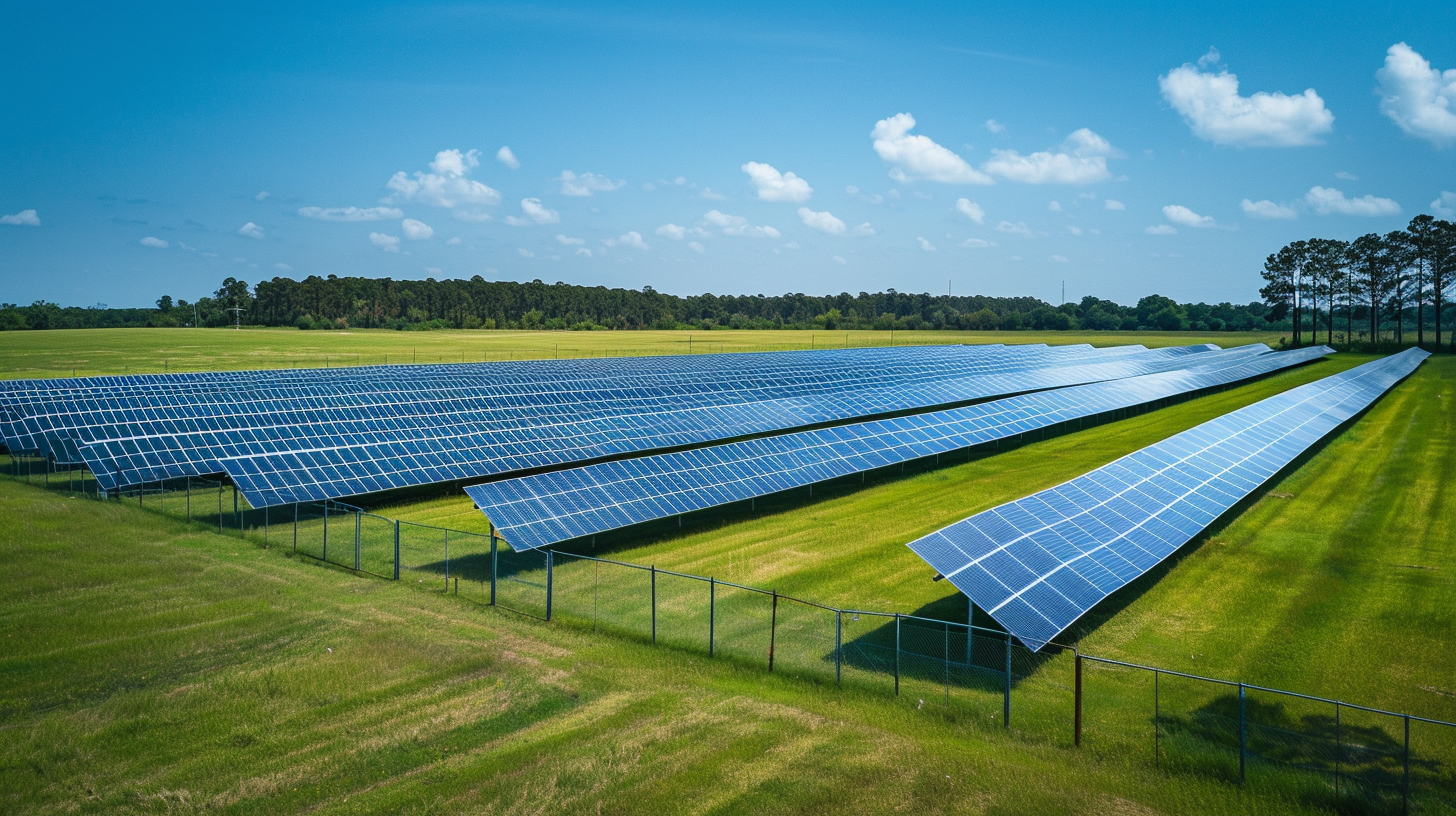
An Arizona company said Sept. 10 it will build what it calls the first end-to-end recycling plant for retired solar panels in the United States, on a 10-acre site near Dallas, and that it expects to start running it in the third quarter of 2027. Three weeks before that announcement lands in Texas, a state rule takes effect that will require plants like it to set aside enough money, up front, to pay somebody else to clean up whatever they leave behind.
The Texas Commission on Environmental Quality adopted those rules on Sept. 9 and posted the signed documents the same day. They take effect Oct. 1. They carry out House Bill 3229, which Rep. Stan Lambert authored in 2025, and they reach what the rule calls “a recycling facility that accepts, processes, and repurposes components to recover valuable materials from a wind turbine generator, a solar energy device, or a battery energy storage system.” Battery storage counts only at one megawatt-hour of capacity or more.
Every covered recycler must file a report by Jan. 15 each year listing what it has taken in and not yet recycled, and must include “a written cost estimate for hiring a third-party to recycle or dispose of the unrecycled components, prepared by an independent, third-party Texas licensed professional engineer, in current dollars.” It must then post financial assurance — a bond, a letter of credit or the backing of a parent company — equal to 100 percent of that estimate. A parent standing behind a recycler “must be a parent company with a minimum investment grade credit rating.” Facilities holding nothing still have to file. Penalties run to $500 a day for each violation. The commission will publish a list of compliant facilities by March 1 each year.
The point of the rule is the pile that does not move. The commission defined the trigger: speculative accumulation occurs “when unrecycled components accumulate and have no feasible means of being recycled and when at least 75% by weight or volume of the accumulated unrecycled components remain unrecycled for the one-year reporting period.” That is the scenario a bond is supposed to cover — panels or blades or battery racks sitting on a yard after the operator is gone.
What the commission never published is how many Texas businesses this reaches. Its own fiscal analysis says the opposite of what the rule does. Kyle Girten, an analyst in the agency’s Budget and Planning Division, certified in the Texas Register that the rulemaking “is not anticipated to result in fiscal implications for individuals or businesses during the first five-year period the proposed rule is in effect,” and, separately, that “no adverse fiscal implications are anticipated for small or micro-businesses.” Neither the proposal nor the adoption contains an estimate of how many facilities are covered, or what a professional engineer’s cost estimate would run.
Only three parties commented. Harris County’s pollution control agency asked the commission to charge a fee and build a fund for cleaning up abandoned renewable-energy recycling sites. The commission said it cannot: Health and Safety Code Chapter 376 “authorizes financial assurance for recycling facilities, but does not authorize the commission to collect a fee.” Harris County also asked that the cost estimate cover cleaning up contamination. The commission again said the statute does not reach that far, only “recycling or disposing of the (unrecycled) components.” Harris County warned about inspection delays at wind sites in rural counties; the commission replied that it was “not clear what staff training was requested by the commenter.”
Against that, the Dallas-area project is the kind of plant the rule anticipates. We Recycle Solar Inc., based in Yuma, Arizona, says the site will recover “up to 96 percent of the silver, copper, silicon, aluminum and glass contained in end-of-life panels,” process about one panel a minute, and be the first of five locations backed by roughly $100 million over four years. Those are the company’s figures, released through its own announcement and reported by the trade publication Recycling Today on Sept. 10. The company already advertises decommissioning and panel recycling service across Texas, which would put it inside the new rule.
The company’s argument for building is an argument about where the value goes. It says roughly 90 percent of America’s retired panels are landfilled or shipped to processors overseas, mostly in Asia, and that the metals inside them are recovered there and never come back. Silver is the reason that stings: China controls an estimated 60 to 70 percent of global supply and tightened export licensing in January, the company said. Every panel that leaves the country is silver Texas paid for twice.
The rules publish in the Texas Register on Sept. 25. The first reports, and the first bonds, are due Jan. 15.